Showing posts with label Japan. Show all posts

Friday, November 10, 2017

Tokyo and Yokohama Regional Farmers Markets: Saturday, November 11 and Sunday, November 12

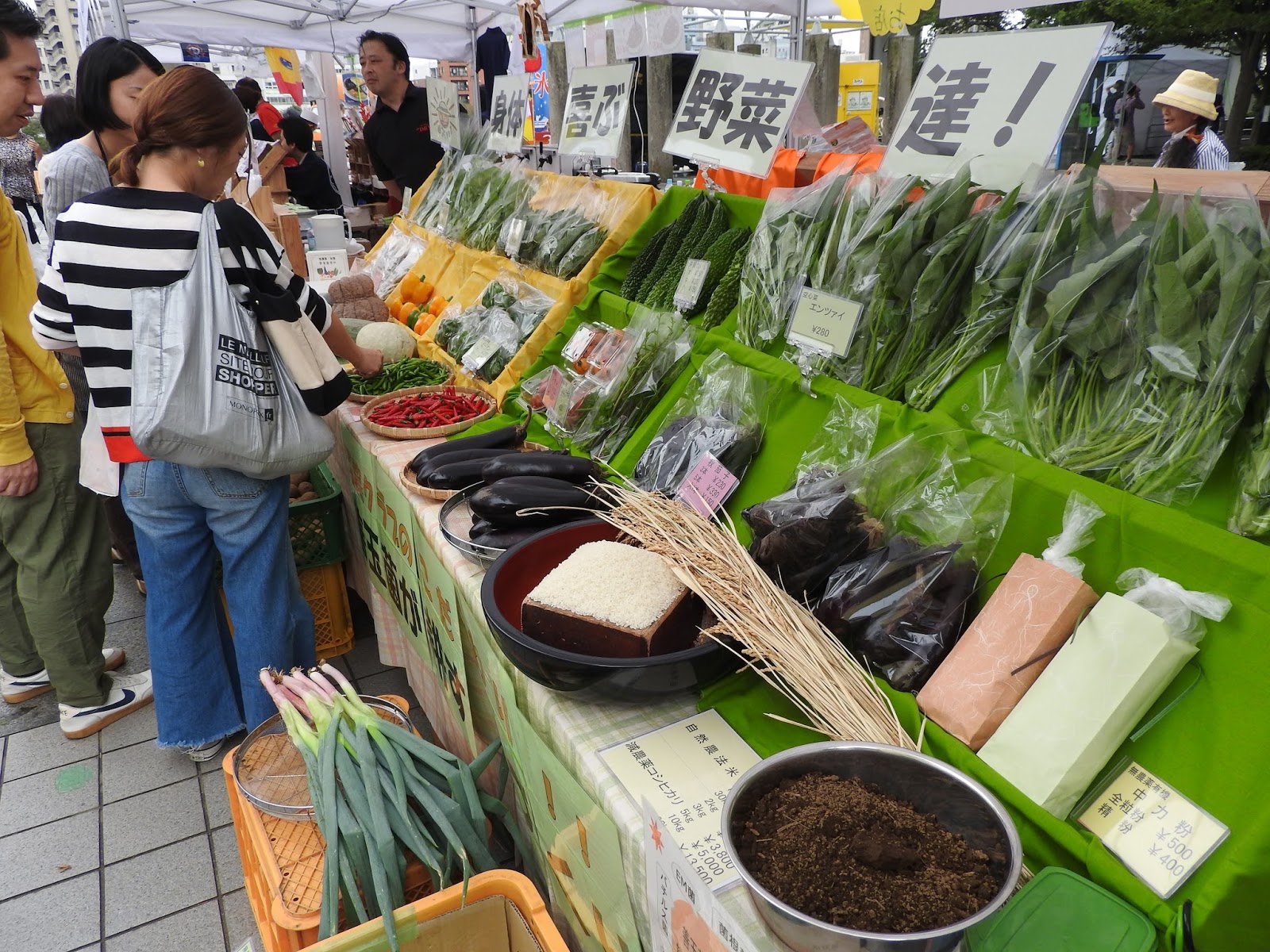
Organic treats at the Greenmarket Sumida!
Autumn is in full swing, and as the leaves turn and fall it is time to look and see what delights are on offer at the farmers' markets around the area. Sweet potatoes and satoimo are on offer, and the last of the eggplant can still be found, too. The UNU Market is having a sake festival of sorts this weekend, and Taiyo Marche (Market of the Sun) will surely have a number of seasonal delights, too. Happy eating!

Sunday, November 11 and Monday, November 12
One of Tokyo's newer markets, Market of the Sun (a.k.a. Taiyo Marche), professes to be one of the largest. A short walk from Tsukiji Market and its wonderful surrounds, this market is worth a visit for its lovely selection of foodly and crafty items that rivals the goodies found at the UNU Market.
10am to 4pm
Step out of Kachidoke Station at Exits A4a or A4b and look for the tents.

Kamakura Farmers Market
Every day
This market is an absolute treasure of a small local affair featuring Kamakura heirloom fruits and vegetables raised in or nearby another one of Japan's former capitals. Head in early to get the best selection and pick up a loaf of Paradise Alley's charcoal-infused bread while you're there. They also make an excellent cup of coffee.
7am until sold out
Map

Ebisu Market
Every Sunday
A small handful of years ago, the Ebisu Market became a weekly Sunday event. Part of the original Marche Japon movement, this market carries on with a nice selection of regional farmers, seasonal veg, baked goods, and the addition of arts and crafts. It does bill itself as all organic, and there are some; however, I recommend asking vendors to be sure. I also recommend a trip to Afuri Ramen to fortify yourself with some of the best yuzu tsukemen in town.
11am to 5pm
Map

UN University Market
Every Saturday and Sunday
A massive weekend affair that started out as the flagship market for Marche Japon busted out on its own a few years back. Now one of the most happening places on the weekend, the market features a variety of fruits and vegetables and prepared products from all over Japan. Winter vegetables can be found here, but produce offerings do vary in amount by season. There is a most excellent selection of food trucks whipping up everything from salad to zingy curry to roast chicken and falafel! Oh, and don't forget the craft beer truck, too!
10am to 4pm
Map

Hills Marche Farmers Market
Every Tuesday and Saturday
The Ark Hills Marche in Roppongi is perhaps one of the best things going in this part of Tokyo. Originally created to serve residents of the nearby high-rise, it is a bountiful and booming event. Don't miss the chance to meet a grower from Tokyo's very own Kokobunji, take in a little music, and sample a variety of other seasonal delights.
Saturday, 10am to 4pm
Tuesday, 11am to 7pm
Map

Yurakucho Farmers Market
Every Saturday and Sunday
Smaller than the UNU Market, the Yurakucho Market takes its cue from the antenna shops located nearby and features a particular region of Japan each week along with an excellent selection of seasonal fruit and vegetables. Growers from nearby Chiba, Kamakura, and Saitama do come weekly, though, with some excellent treats.
11am to 5pm
Directions: Turn left out of Yurakucho Station and cross the courtyard toward Tokyo Kouku Keitan. Look for the fun under the overhang!

Know of a market? Give me a shout, and I'll add it to the list!

Monday, November 6, 2017

HealthyTokyo Bento Review

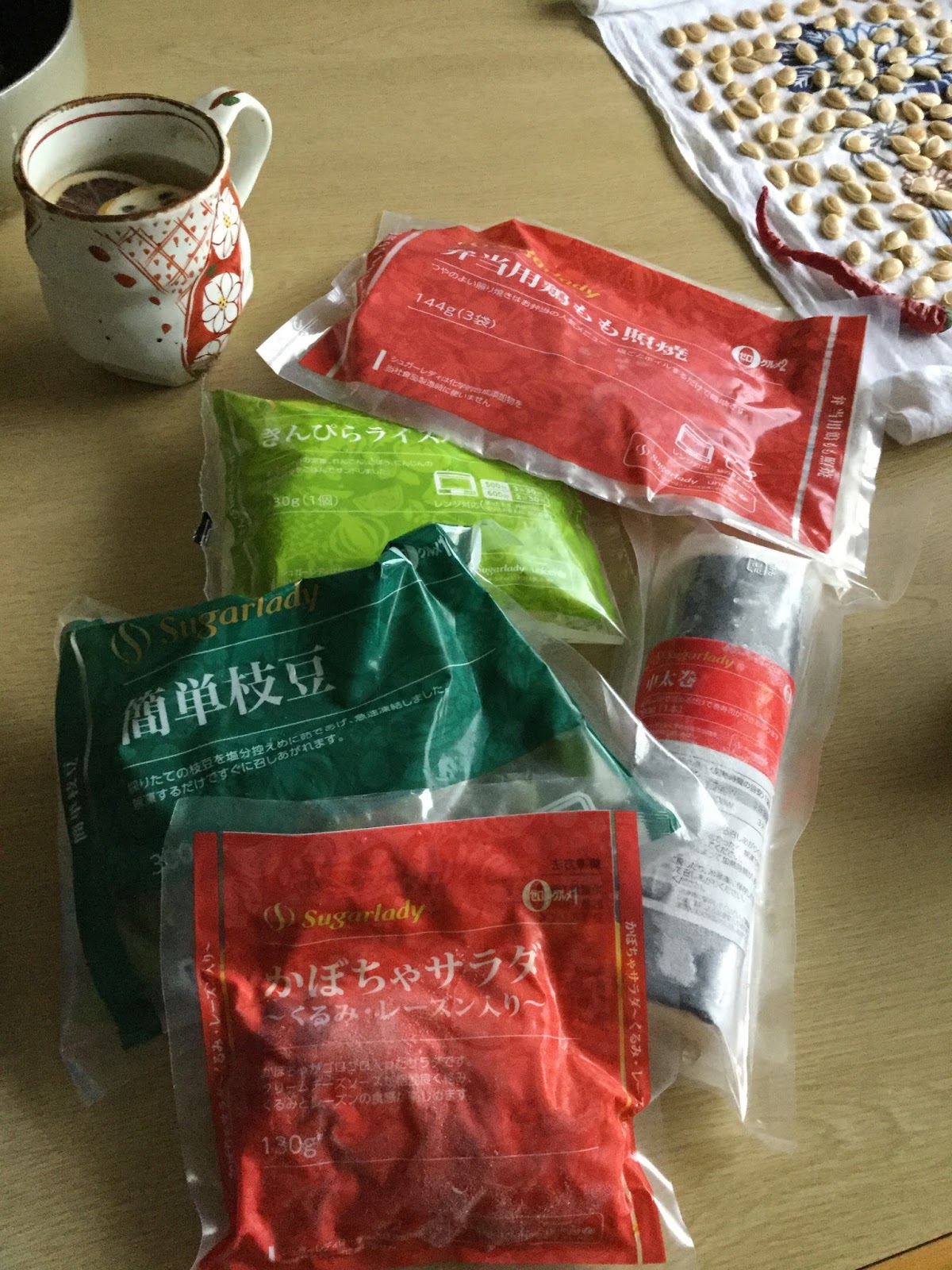
The food from HealthyTokyo upon arrival.
A few weeks ago I was contacted by HealthyTokyo, a somewhat new company on the food delivery and lifestyle scene here in Japan, to see if I might be interested in trying one of their frozen organic meals. I'm a big advocate of getting people to eat well, and while I would prefer that people go to farmers markets, sign up for a CSA, or cook using raw ingredients, I well remember my own early forays into such things. Some days, I ordered pizza or invited myself to a friend's house for dinner. I know how it goes, so I decided to give it a whirl.

I chose the Back to School Set - Japanese Obento Lunch Box as the included dishes sounded good.

The Food

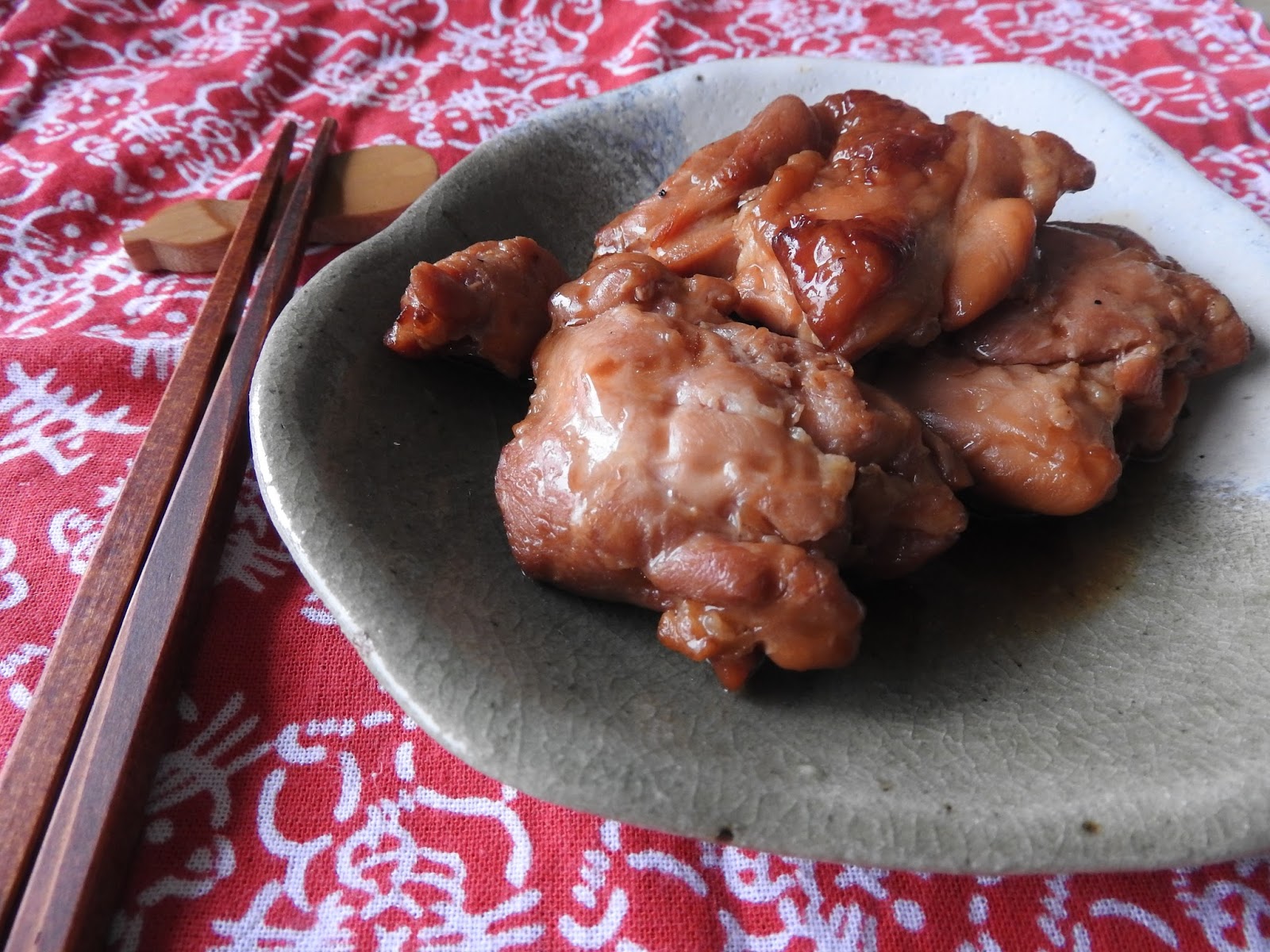
Chicken Teriyaki

The Chicken Teriyaki was tender and tasty and cooked up pretty easily. I'm not a big boil-in-the-bag fan as hot plastic freaks me out a bit, but I was pleased with the results. I cooked all of it up in one go as my husband and I shared it, which worked out very well as the portion sizes are generous.

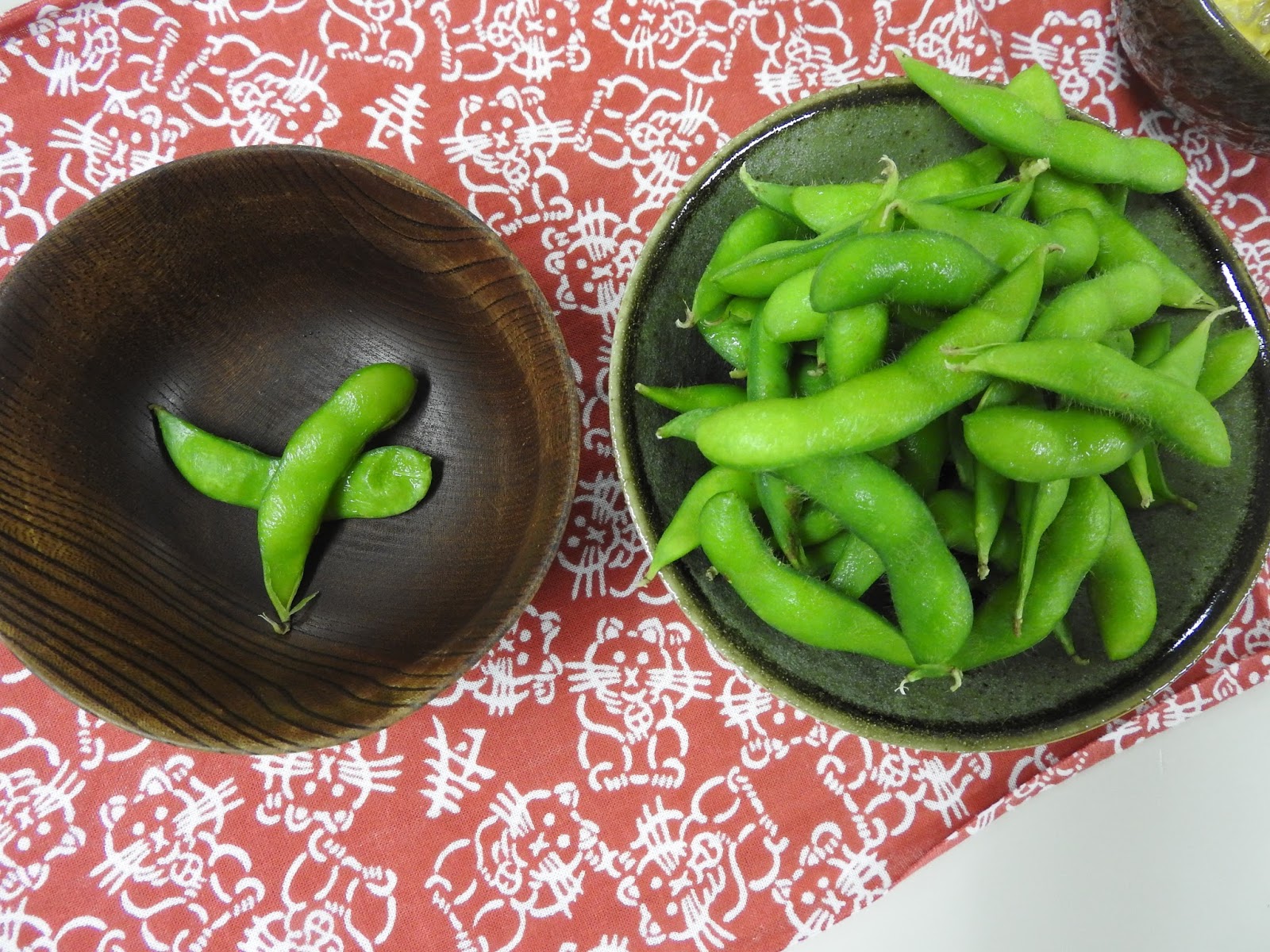
Edamame

The edamame were crisp and good. I added salt so it would better go with my beer (not included in the set but a nice pairing).

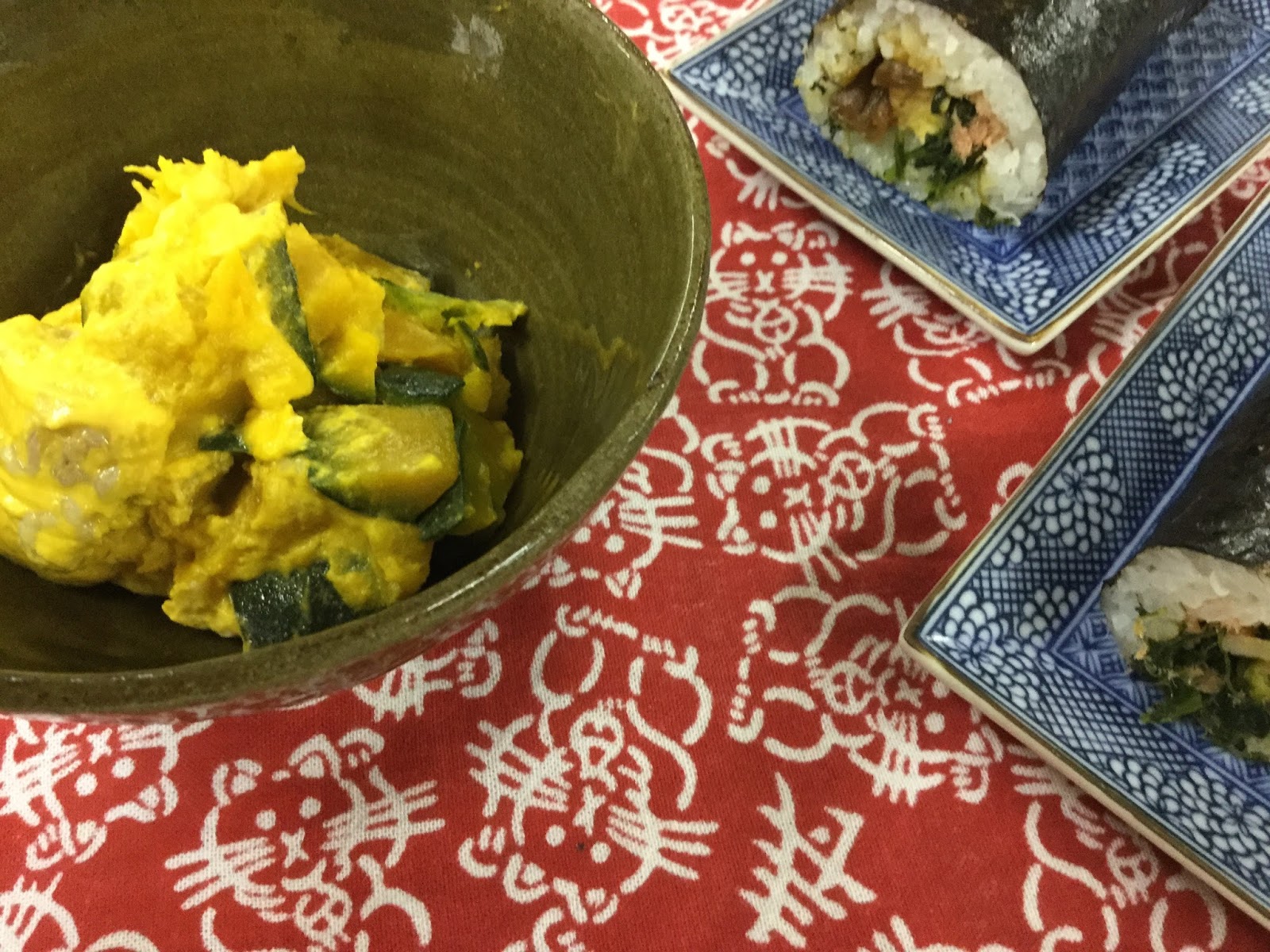
Kaboucha salad

The kaboucha (pumpkin) salad, I admit, drew me to this set. I am a huge fan, and it is in season at the moment. It was pleasantly sweet, but the kaboucha was a little bit overcooked. The texture felt more like a kaboucha whip, but it was still tasty with the mix of raisins and walnuts.

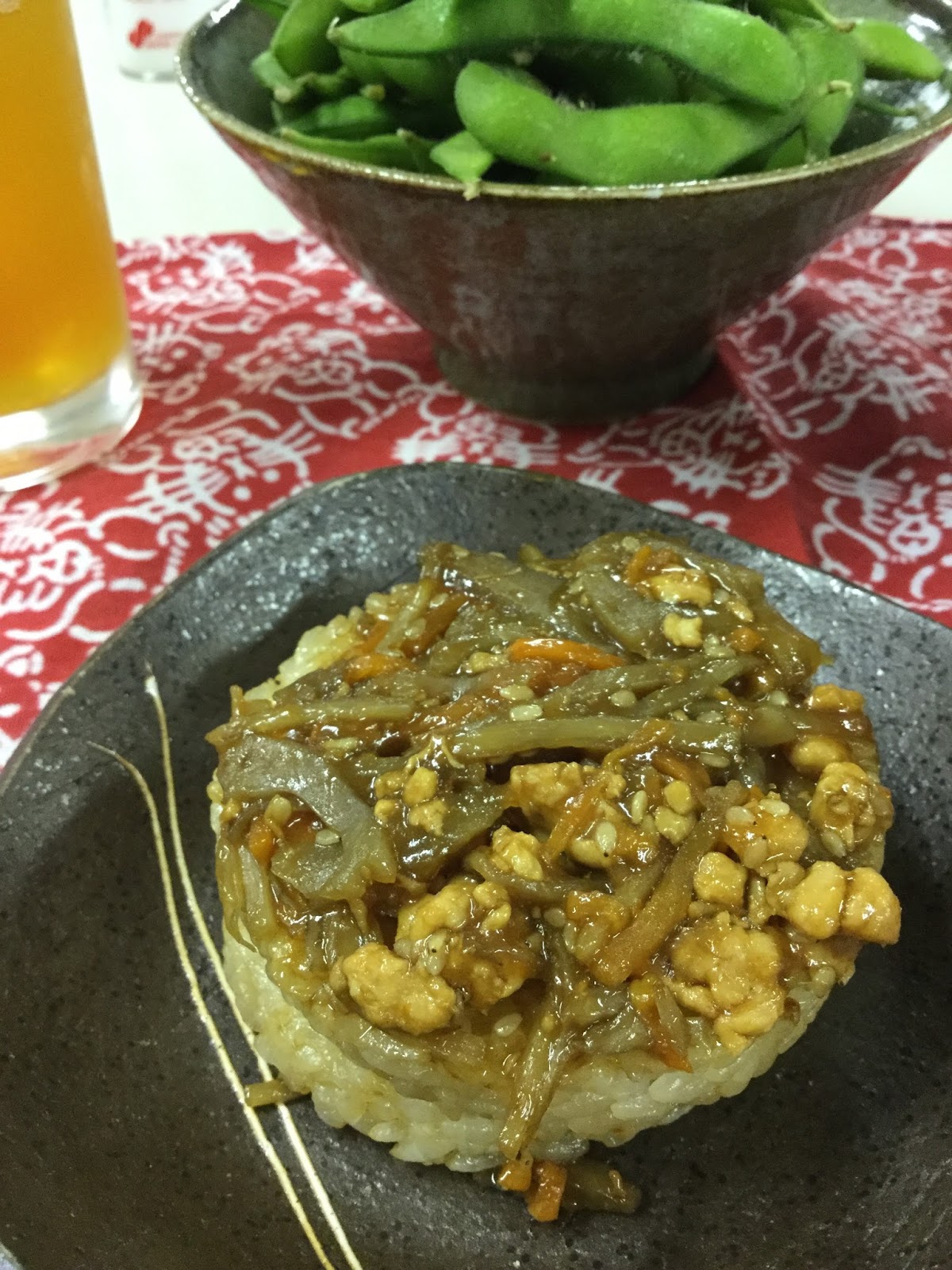
Kinpira rice burger with edamame and beer in the background.

The kinpira rice burger was tasty, very tasty and nearly resulted in a spousal battle. We served it the wrong side up, but that had no negative impact on the taste at all. Yum.

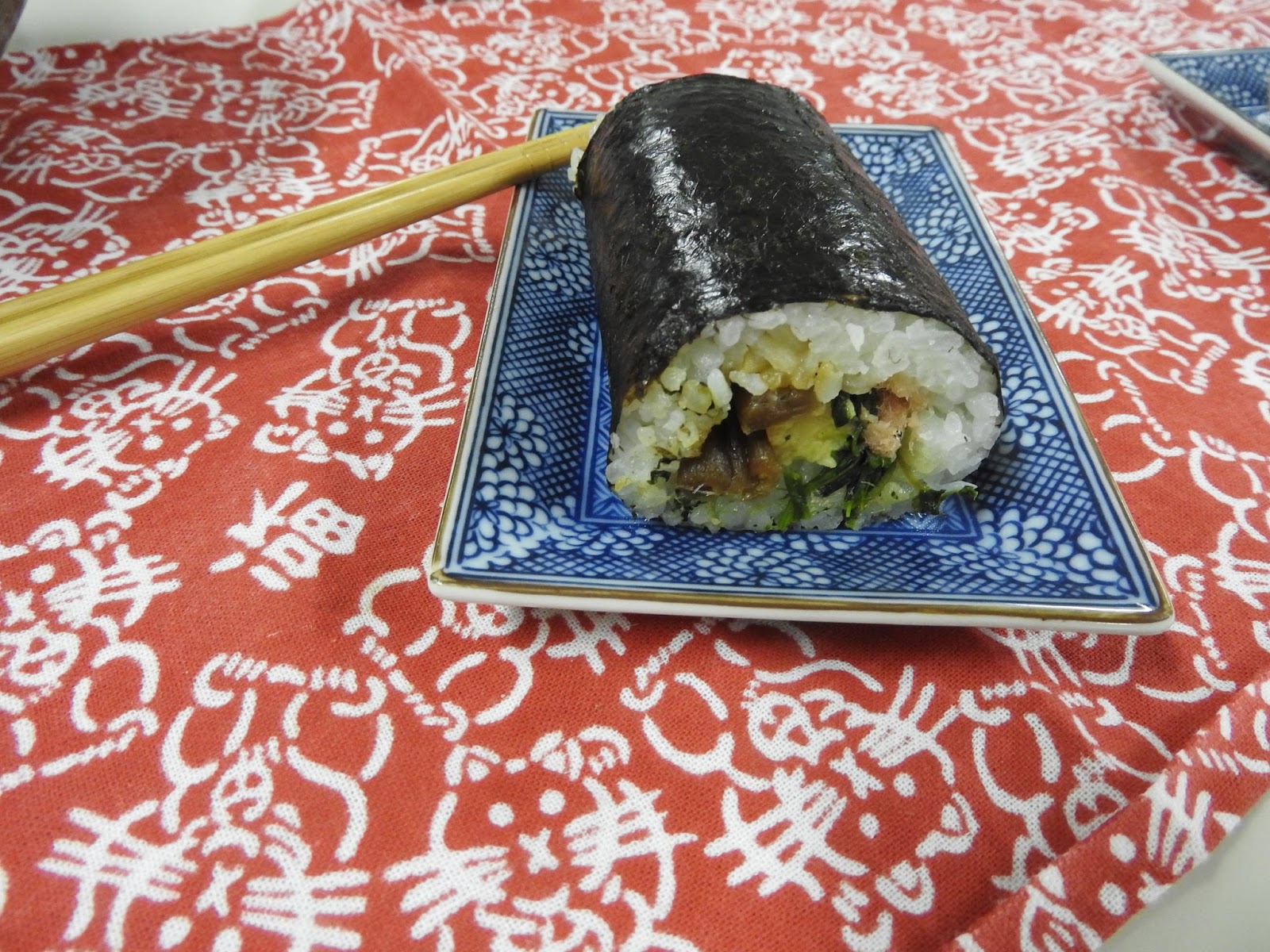
Half of the maki roll

The maki roll was really nice, too, and was perfect for sharing. The directions recommend microwaving it, but if I had to do it again, I would take that as optional advice. I think it would be just as satisfying served cold.

Overall Impression
I liked it. It was a nice balance of dishes, ingredients and colors and definitely a nice amount of food for the price.

The presentation, I have to say, was a bit lackluster. It was simply a cardboard box with the food rattling around inside. Call me sentimental, but I wanted a note or a recipe handout or some sort of biodegradable packaging to make it feel less industrial.

Would I buy it?
If I didn't already make much of this myself, there is a good chance I would buy this if I wanted to start investing in eating healthier. The ingredients come from various places - chicken from Brazil, edamame from Taiwan, and the walnuts and raisins from the U.S. - but much of it is from Japan. For people who don't cook much for themselves but who want to give themselves healthier choices, HealthyTokyo is a good place to start.

It is also possible to custom order your bento, which I think could be fun and tasty as they have a nice selection of greens and the staff are very helpful.

Recommendations for Use
I split the bento with my husband, which mostly proved to be just fine as the portions are pretty generous. Single people will find, for example, the Chicken Teriyaki in individual packages nice as they can save some for later.

There were no instructions in English, which was not a huge problem for me, but might prove a bit daunting for others. I double-checked the instructions on the website, which was reasonably straight-forward, but my recommendation would be to plan ahead and have it ready. Nothing was very complicated, but a PDF of the cooking instructions for each included item would be easy to put together for a set like this. I could simply check a box when I order and have it included.

Friday, November 3, 2017

November Farmers Markets in the Tokyo and Yokohama Region

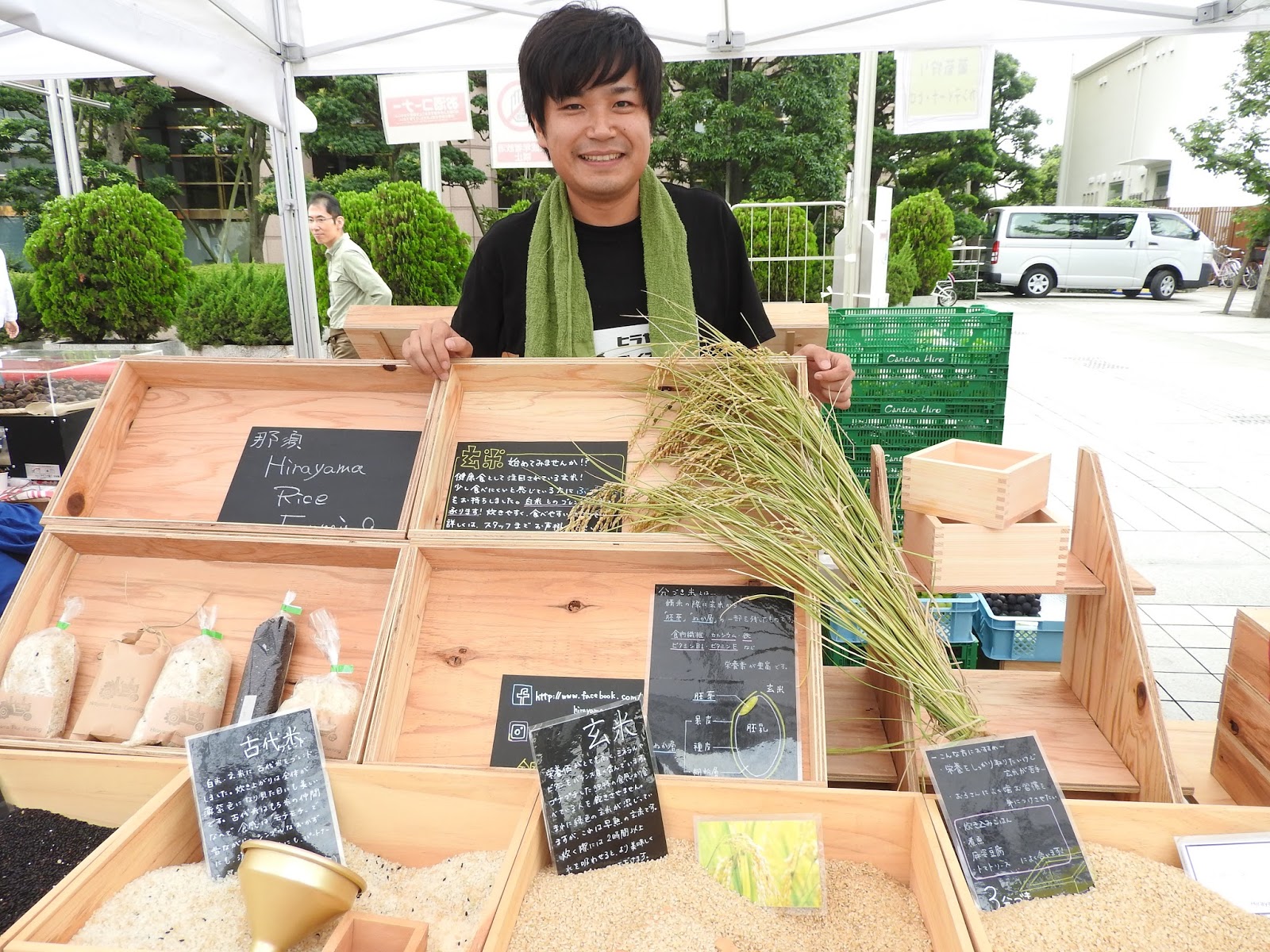
Hirayama Rice Farm and Hirayama-san at the Greenmarket Sumida.

Full moons and cooling temperatures are characteristic of these shortening days. The markets now feature new rice and plenty of lovely sweet potatoes, which are perfect for roasting or popping in soups. Look for mabiki of daikon, a seasonal favorite that makes use of the thinned plants, and some early kabu, too. Take advantage of these bright days to explore and taste something new!

Greenmarket Sumida
Saturday, November 4 and Sunday, November 5
Just over the bridge from Senso-ji is the newest market in the heart of the city. A collaborative effort between the local government and the same folks who manage Market of the Sun and Yokohama's Kitanaka Marche, Greenmarket Sumida aims to fill the supermarket gap in this old neighborhood. An excellent selection of food trucks nourish weary shoppers while the Beer Truck is often on hand to slake their thirst.
10am to 4pm
Asakusa Station
Exit the station and cross the river towards the Asahi Building. Turn left and follow the path to the pocket park on the right.

Sunday, November 11 and Monday, November 12
One of Tokyo's newer markets, Market of the Sun (a.k.a. Taiyo Marche), professes to be one of the largest. A short walk from Tsukiji Market and its wonderful surrounds, this market is worth a visit for its lovely selection of foodly and crafty items that rivals the goodies found at the UNU Market.
10am to 4pm
Step out of Kachidoke Station at Exits A4a or A4b and look for the tents.

Earth Day Market
Sunday, November 26
I could wax on forever about how great this market is and how important it is for the future of Japanese farming and global food security. However, I'll just insist that folks go and see for themselves what great things the market and these innovative growers are doing. Come find some good food and fun!
10am to 4pm, Rain or shine
Map

Kichijoji Harmonica Yokocho Asaichi
Sunday, November 19
Early birds on Tokyo's west side should count themselves lucky to find this little market in the warren of shops just north of the station. While fruits and veg are a bit lacking, the market is big on craftsmen and women doing interesting work, excellent baked goods, miso, rice, and other tasty treats. It's worth noting that a number of places offer breakfast deals in the market!
Look for my review in Outdoor Japan's Spring Traveler!
7am - 10am

Koenji Farmers Market
Saturday, November 18
Spotted a handful of years ago while riding the Chuo Line, this little market is still going strong. A circle of red awnings in front of the Za-Koenji Public Theatre marks the spot where friendly folks with good food and interesting stories await.
11am - 6pm
Map

Nippori Farmers Market
Saturday, November 18 and Sunday, November 19
This charming market in the heart of old Tokyo abounds with a sense of community and friendliness as well as good food. Small but lively, particularly on Saturday, it features a monthly geographical theme although regular vendors include Tohoku growers and some of the best steamed manju in the world.
No map, but just head out the East Exit and look for the green awnings
10am to 5pm

Yokohama Kitanaka Marche
Saturday, November 18 and Sunday, November 19
One of the best markets going in the Yokohama area, and it's perhaps no coincidence that they are only moments away from Baird Beer's Bashamichi Taproom. Started by the same folks who created the Market of the Sun, the Kitanaka Marche to be growing steadily with tasty offerings of fresh seasonal veg, fruit, baked goods and preserves. Read my other review over at Outdoor Japan's Traveler Magazine for the full scoop.
10am to 4pm
Bashamichi Station, Exit 2*
Note that the market has moved, so come out of the station, turn right, and take the next right turn. Keep walking past the construction site and keep an eye out for the white tents running along next to the river.

Oiso Farmers Market
Sunday, November 19
This little gem of a community shindig is one of the best things going outside of the Earth Day Market. Started a handful of years ago, it blossomed into a full-on monthly festival that just happens to feature Shonan area produce in its fresh, seasonal form as well as pickled, dried, and prepared-hot-in-a-bowl varieties. In summer, it transforms into a night market, while year-round a much smaller version takes place every Saturday. Lee's Bread alone is worth the journey. Read my full review at Outdoor Japan's Traveler Magazine.
10am to 2pm
Oiso Port Building

Kamome Marche
Saturday, November 25
Set on the upper level of the Yokohama Bay Quarter, this little market offers nice variety given its size. Vendors from Yamanashi, Yokohama, and other parts of Kanagawa brave the steady ocean breeze and offer everything up from fruit to wine to fresh vegetables.
11am - 5pm
Map

Kamakura Farmers Market
Every day
This market is an absolute treasure of a small local affair featuring Kamakura heirloom fruits and vegetables raised in or nearby another one of Japan's former capitals. Head in early to get the best selection and pick up a loaf of Paradise Alley's charcoal-infused bread while you're there. They also make an excellent cup of coffee.
7am until sold out
Map

Ebisu Market
Every Sunday
A small handful of years ago, the Ebisu Market became a weekly Sunday event. Part of the original Marche Japon movement, this market carries on with a nice selection of regional farmers, seasonal veg, baked goods, and the addition of arts and crafts. It does bill itself as all organic, and there are some; however, I recommend asking vendors to be sure. I also recommend a trip to Afuri Ramen to fortify yourself with some of the best yuzu tsukemen in town.
11am to 5pm
Map

UN University Market
Every Saturday and Sunday
A massive weekend affair that started out as the flagship market for Marche Japon busted out on its own a few years back. Now one of the most happening places on the weekend, the market features a variety of fruits and vegetables and prepared products from all over Japan. Winter vegetables can be found here, but produce offerings do vary in amount by season. There is a most excellent selection of food trucks whipping up everything from salad to zingy curry to roast chicken and falafel! Oh, and don't forget the craft beer truck, too!
10am to 4pm
Map

Hills Marche Farmers Market
Every Tuesday and Saturday
The Ark Hills Marche in Roppongi is perhaps one of the best things going in this part of Tokyo. Originally created to serve residents of the nearby high-rise, it is a bountiful and booming event. Don't miss the chance to meet a grower from Tokyo's very own Kokobunji, take in a little music, and sample a variety of other seasonal delights.
Saturday, 10am to 4pm
Tuesday, 11am to 7pm
Map

Yurakucho Farmers Market
Every Saturday and Sunday
Smaller than the UNU Market, the Yurakucho Market takes its cue from the antenna shops located nearby and features a particular region of Japan each week along with an excellent selection of seasonal fruit and vegetables. Growers from nearby Chiba, Kamakura, and Saitama do come weekly, though, with some excellent treats.
11am to 5pm
Directions: Turn left out of Yurakucho Station and cross the courtyard toward Tokyo Kouku Keitan. Look for the fun under the overhang!

Know of a market? Give me a shout, and I'll add it to the list!

Friday, October 27, 2017

Tokyo and Yokohama Regional Farmers Markets: Saturday, October 28 and Sunday, October 29

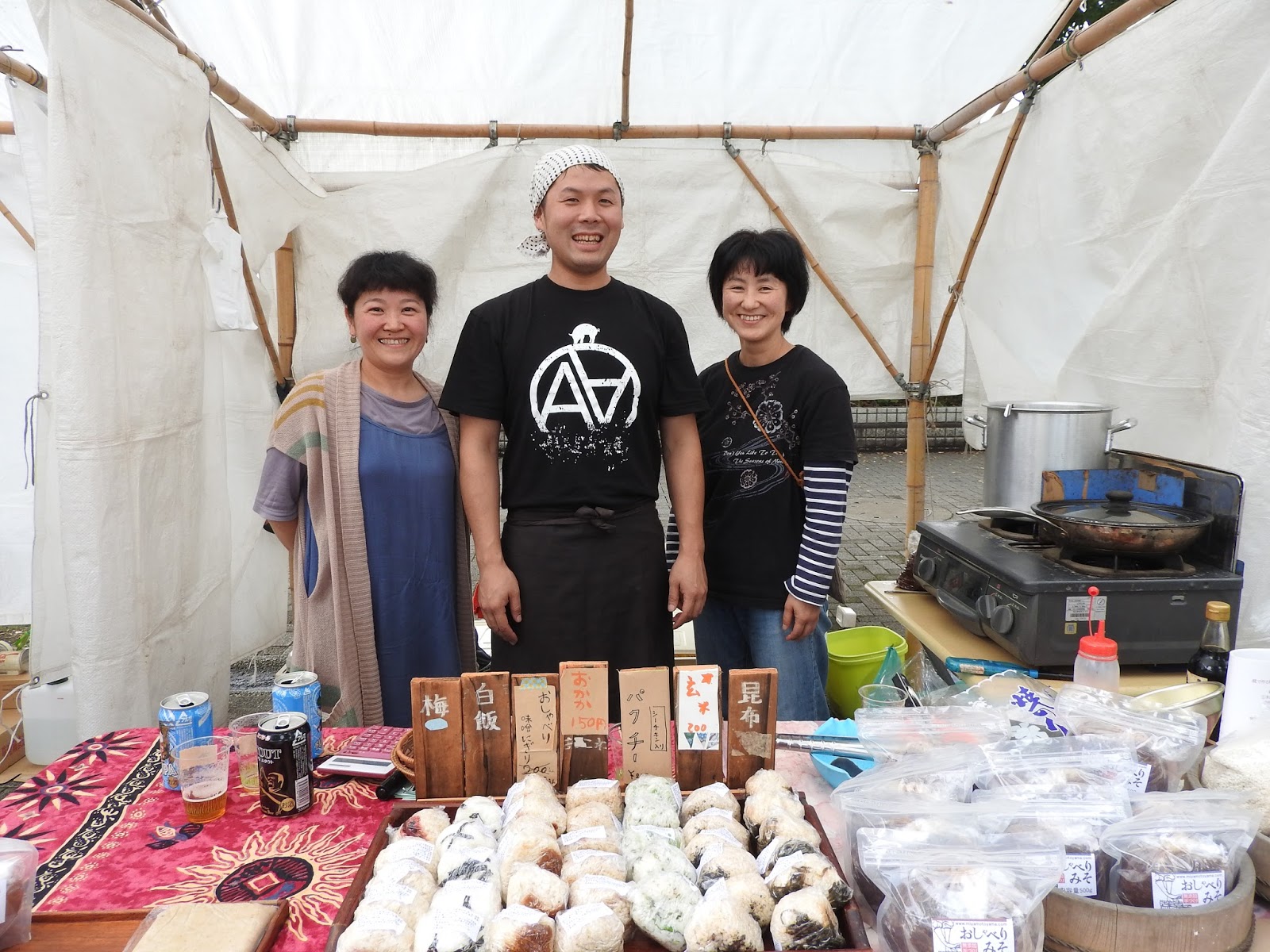
For the best mochi and homemade onigiri in town, head on over to Miyamotoyama Farm at the Earth Day Market!

A sweet little round of markets this weekend to satisfy the hungries for the week. Don't miss the adorable little Kamome Marche in Yokohama, and certainly the Kamakura Market has plenty to serve up throughout the week.

Kamome Marche
Saturday, October 28
Set on the upper level of the Yokohama Bay Quarter, this little market offers nice variety given its size. Vendors from Yamanashi, Yokohama, and other parts of Kanagawa brave the steady ocean breeze and offer everything up from fruit to wine to fresh vegetables.
11am - 5pm
Map

Kamakura Farmers Market
Every day
This market is an absolute treasure of a small local affair featuring Kamakura heirloom fruits and vegetables raised in or nearby another one of Japan's former capitals. Head in early to get the best selection and pick up a loaf of Paradise Alley's charcoal-infused bread while you're there. They also make an excellent cup of coffee.
7am until sold out
Map

Ebisu Market
Every Sunday
A small handful of years ago, the Ebisu Market became a weekly Sunday event. Part of the original Marche Japon movement, this market carries on with a nice selection of regional farmers, seasonal veg, baked goods, and the addition of arts and crafts. It does bill itself as all organic, and there are some; however, I recommend asking vendors to be sure. I also recommend a trip to Afuri Ramen to fortify yourself with some of the best yuzu tsukemen in town.
11am to 5pm
Map

UN University Market
Every Saturday and Sunday
A massive weekend affair that started out as the flagship market for Marche Japon busted out on its own a few years back. Now one of the most happening places on the weekend, the market features a variety of fruits and vegetables and prepared products from all over Japan. Winter vegetables can be found here, but produce offerings do vary in amount by season. There is a most excellent selection of food trucks whipping up everything from salad to zingy curry to roast chicken and falafel! Oh, and don't forget the craft beer truck, too!
10am to 4pm
Map

Hills Marche Farmers Market
Every Tuesday and Saturday
The Ark Hills Marche in Roppongi is perhaps one of the best things going in this part of Tokyo. Originally created to serve residents of the nearby high-rise, it is a bountiful and booming event. Don't miss the chance to meet a grower from Tokyo's very own Kokobunji, take in a little music, and sample a variety of other seasonal delights.
Saturday, 10am to 4pm
Tuesday, 11am to 7pm
Map

Yurakucho Farmers Market
Every Saturday and Sunday
Smaller than the UNU Market, the Yurakucho Market takes its cue from the antenna shops located nearby and features a particular region of Japan each week along with an excellent selection of seasonal fruit and vegetables. Growers from nearby Chiba, Kamakura, and Saitama do come weekly, though, with some excellent treats.
11am to 5pm
Directions: Turn left out of Yurakucho Station and cross the courtyard toward Tokyo Kouku Keitan. Look for the fun under the overhang!

Know of a market? Give me a shout, and I'll add it to the list!

Thursday, October 26, 2017

A Walk in Tohoku: My Story at Metropolis Magazine

Photo by Robin Lewis

I  had the great pleasure of speaking with Robin Lewis about a walk he took on the Michinoku Coastal Trail in northeastern Japan. It runs the coast of the region most affected by the March 11 earthquake and tsunami and was created in part to help recovery efforts still very much underway there. Please do take the time to read about Robin and check out his fantastic photographs. I'm hoping to join him the next time he goes!

Other Useful Links

Explore Tohoku (Robin's site about the trip)

Michinoku Coastal Trail website (English)

Sanriku Fukko National Park
(English and Japanese available)

Japan Foundation Asia Center
http://jfac.jp/en/

The Next Challenge
http://thenextchallenge.org/

-->


Monday, October 23, 2017

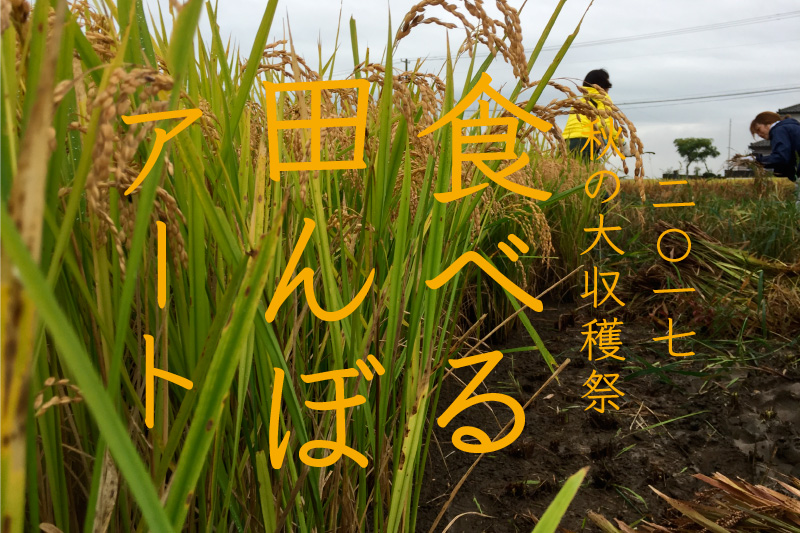
Soma Tambo Art Project: The Harvest

Image courtesy of Soma Tambo Art

I can't even begin to say how excited I am to be going up to Soma this weekend to help with the rice harvest there. The food and company will be more than excellent, and the work will be highly satisfying. I should also mention that the onsen is pretty spectacular, too. Don't miss the chance to go! (Deadline Tuesday, October 24!)


Friday, October 20, 2017

Tokyo and Yokohama Regional Farmers Markets: Saturday, October 21 and Sunday, October 22


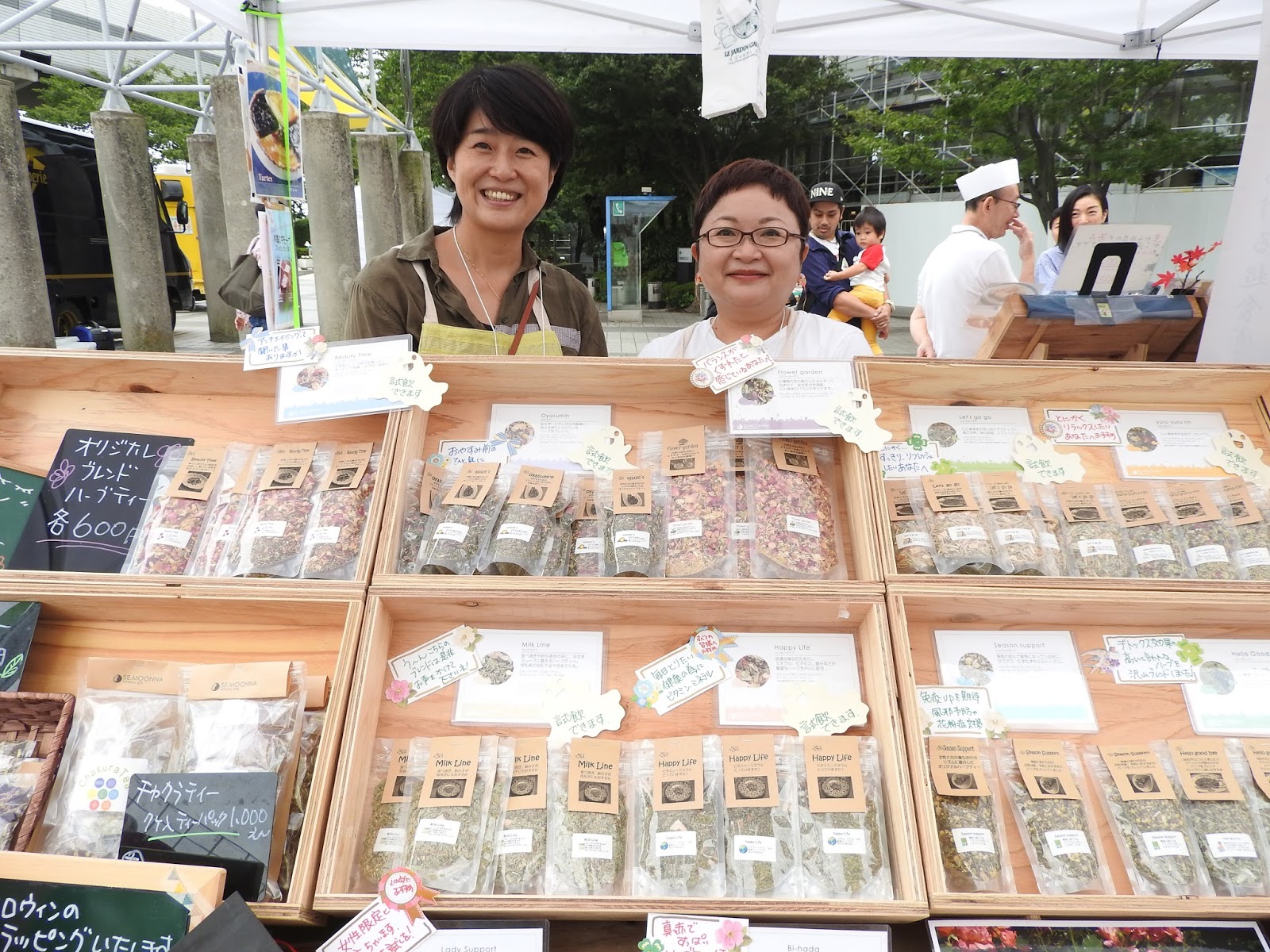
Tasty teas at the Greenmarket Sumida!

A nice round of only the tried and true markets this weekend as the Earth Day Market is not running this month. Any and all of these will surely yield tasty treats of the season. Head on out to see what autumn has up for offer and enjoy!

Nippori Farmers Market
Saturday, October 21 and Sunday, October 22**
This charming market in the heart of old Tokyo abounds with a sense of community and friendliness as well as good food. This month is their annual Hokkaido Fair. Lots of treats, I'm told, from Kushiro as well as games and other fun. Small but lively, particularly on Saturday, it features a monthly geographical theme although regular vendors include Tohoku growers and some of the best steamed manju in the world.
No map, but just head out the East Exit and look for the green awnings
10am to 5pm

Kamakura Farmers Market
Every day
This market is an absolute treasure of a small local affair featuring Kamakura heirloom fruits and vegetables raised in or nearby another one of Japan's former capitals. Head in early to get the best selection and pick up a loaf of Paradise Alley's charcoal-infused bread while you're there. They also make an excellent cup of coffee.
7am until sold out
Map

Ebisu Market
Every Sunday
A small handful of years ago, the Ebisu Market became a weekly Sunday event. Part of the original Marche Japon movement, this market carries on with a nice selection of regional farmers, seasonal veg, baked goods, and the addition of arts and crafts. It does bill itself as all organic, and there are some; however, I recommend asking vendors to be sure. I also recommend a trip to Afuri Ramen to fortify yourself with some of the best yuzu tsukemen in town.
11am to 5pm
Map

UN University Market
Every Saturday and Sunday
A massive weekend affair that started out as the flagship market for Marche Japon busted out on its own a few years back. Now one of the most happening places on the weekend, the market features a variety of fruits and vegetables and prepared products from all over Japan. Winter vegetables can be found here, but produce offerings do vary in amount by season. There is a most excellent selection of food trucks whipping up everything from salad to zingy curry to roast chicken and falafel! Oh, and don't forget the craft beer truck, too!
10am to 4pm
Map

Hills Marche Farmers Market
Every Tuesday and Saturday
The Ark Hills Marche in Roppongi is perhaps one of the best things going in this part of Tokyo. Originally created to serve residents of the nearby high-rise, it is a bountiful and booming event. Don't miss the chance to meet a grower from Tokyo's very own Kokobunji, take in a little music, and sample a variety of other seasonal delights.
Saturday, 10am to 4pm
Tuesday, 11am to 7pm
Map

Yurakucho Farmers Market
Every Saturday and Sunday
Smaller than the UNU Market, the Yurakucho Market takes its cue from the antenna shops located nearby and features a particular region of Japan each week along with an excellent selection of seasonal fruit and vegetables. Growers from nearby Chiba, Kamakura, and Saitama do come weekly, though, with some excellent treats.
11am to 5pm
Directions: Turn left out of Yurakucho Station and cross the courtyard toward Tokyo Kouku Keitan. Look for the fun under the overhang!

Know of a market? Give me a shout, and I'll add it to the list!

Monday, October 16, 2017

Sourdough Rice Cooker Bread

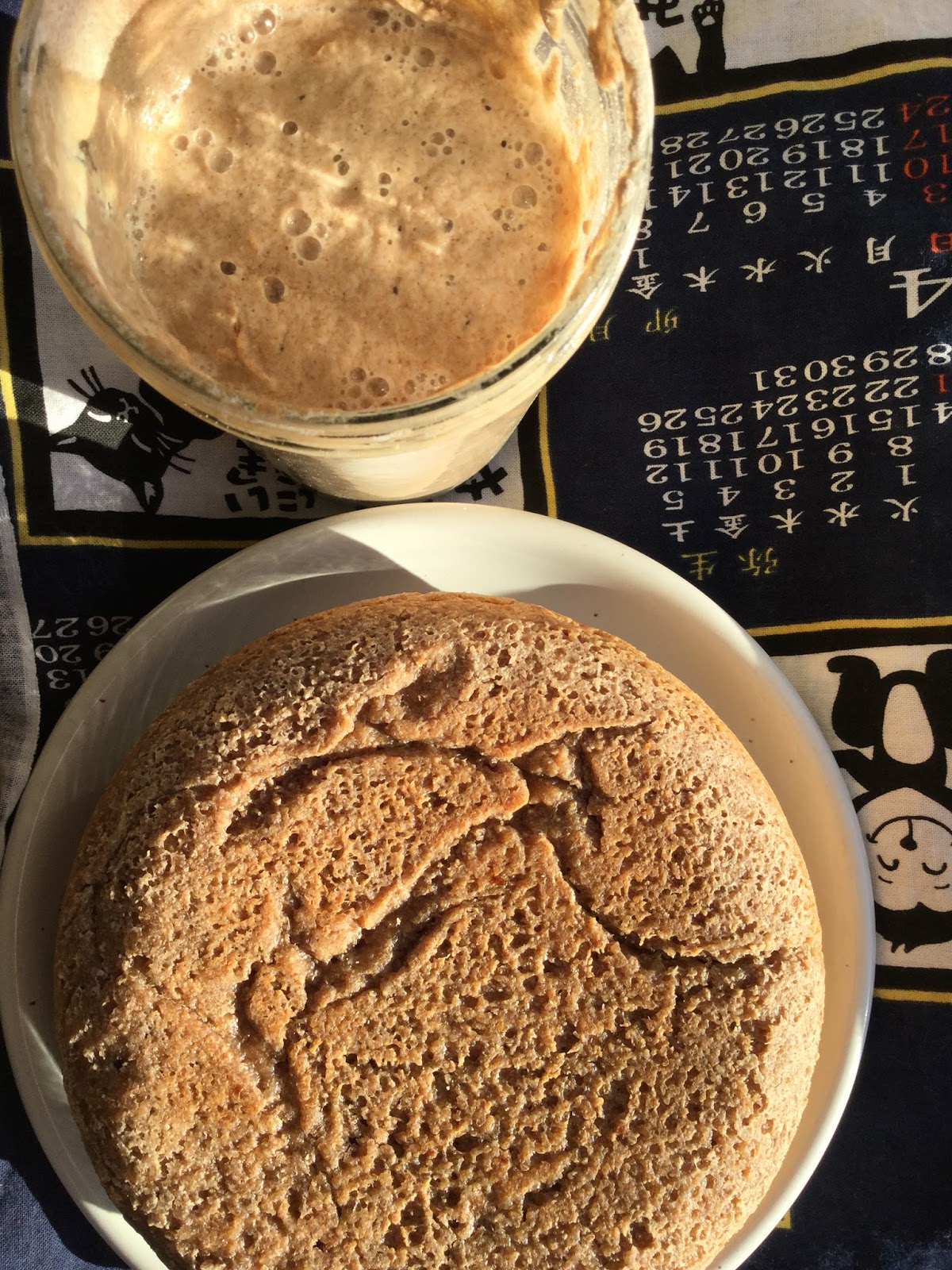
A finished loaf of rice cooker sourdough with starter.

Good bread is, as I've said before, one of the things that it can be difficult to find in Japan. Japanese bread is tasty, but it tends not to have the heft or flavor I prefer. To be fair, this was also true in the U.S., and I also made my own bread there. In Japan, this proved to be a challenge as I don't have an oven. I've made good use of my rice cooker, though, which you can read all about here along with a recipe for rice cooker yeast bread.

My inspiration for sourdough came while watching Michael Pollan's Cooked. Based on the book by the same name, the documentary takes a look at some basic, traditional methods of making food. One segment examines bread and its history particularly as it pertains to the United States. While I was aware of many of the issues discussed, I was still shocked to understand how flour and bread evolved over the years as well as yeast. As farming and milling practices changed (industrialized and became reliant on chemicals and additives), nutrition levels dropped. This made it necessary to add nutrients to the recipe. By taking out much of the bran, we lost nutrients, and the yeast, too, lost many of its vital, living components that actually helped people get those nutrients from bread. (There are those who argue that gluten allergies are really an issue with the modern process of making the bread, not the grain, but that is another interesting story for another day.)

As I watched and listened, I thought about another food writer, Sandor Katz, and his classic book on making fermented dishes. It seemed to me that sourdough would be a logical next step. So, that evening I mixed flour and water and waited for the yeast to come to the buffet I'd laid out.

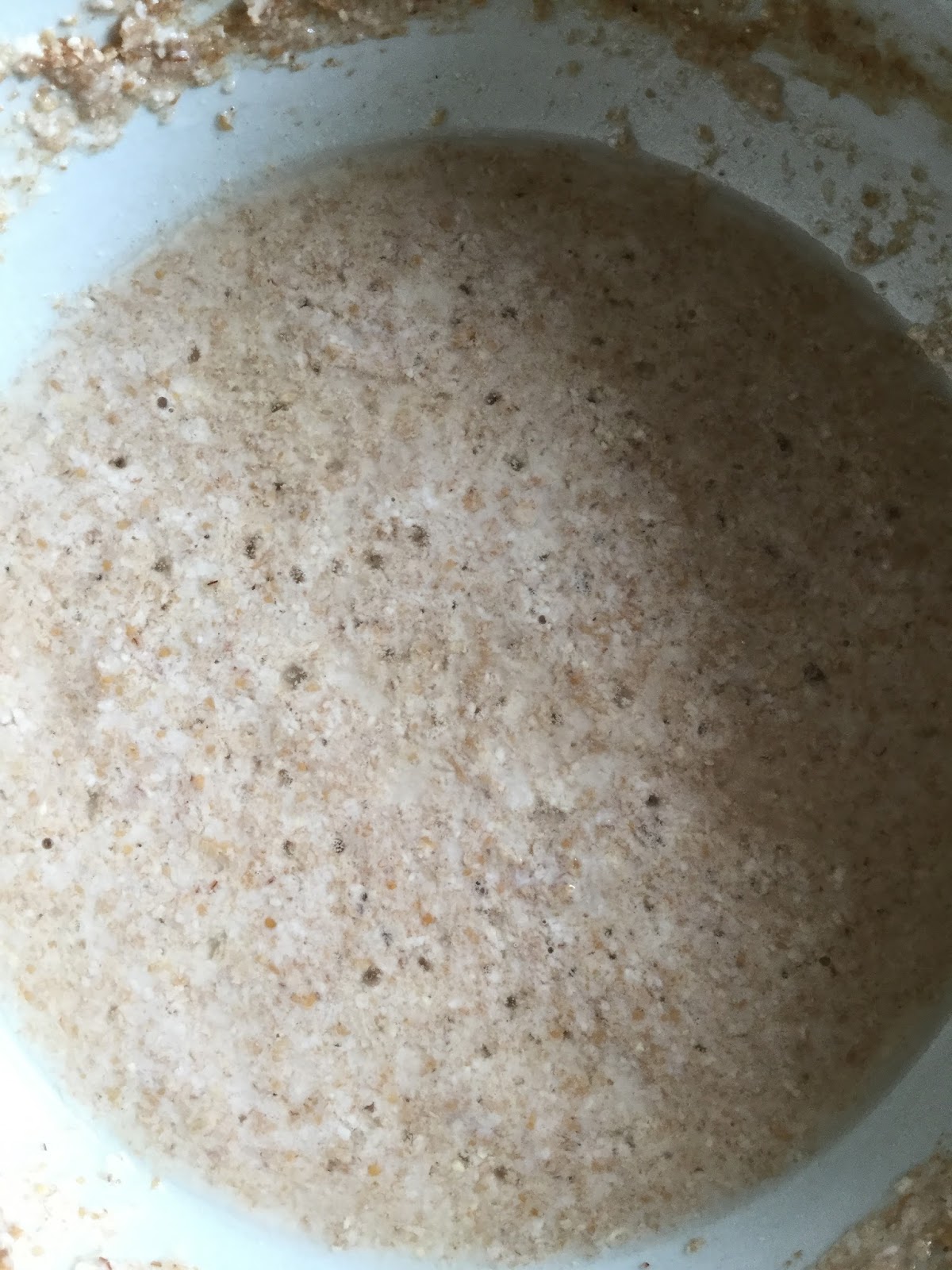
Sourdough starter just starting to bubble.

Yeast is, like dark matter, all around us all the time.  It is a natural part of our environment, and so we attempt to harness it to help out in the kitchen. Foods like beer, wine, kimchi, natto, kombucha, chocolate, and sauerkraut are delicious examples. By setting out a bowl with flour and water in my kitchen, I aimed to entice some of my very local yeast to settle there and have a snack.

After about three days of nervous watching, regular stirring and aerating (lifting the spoon up about three inches or so as I fed the starter) small bubbles appeared. The yeast, you could say, was at the table.

I continued feeding and stirring my sourdough starter and soon had a very lively, bubbly mass. The smell was definitely sour, but also yeasty in a lovely, bready way.

Using a combination of Katz's recipe and mine adapted from The Tassajara Bread Book, I made my first batch of sourdough bread. Everything essentially followed the same steps as my rice cooker yeast bread, but with a few caveats.

Sponge
I still mixed up a sponge, the goupy mixture of flour and yeast, that is a very traditional beginning of bread. An important difference in this case is that using a sourdough starter means I don't need to add any sweetener. Unlike dry yeast, the starter is already raring to go, so a sweetener like honey or molasses isn't necessary. (On occasion, though, I have added molasses as I am fond of that flavor.)

I find the best timing is to mix the sponge up in the evening, wrap it in blankets and tuck it on the couch. (In winter, I even give it a hot water bottle.) By morning, the sponge is bubbly and happy and has risen considerably.

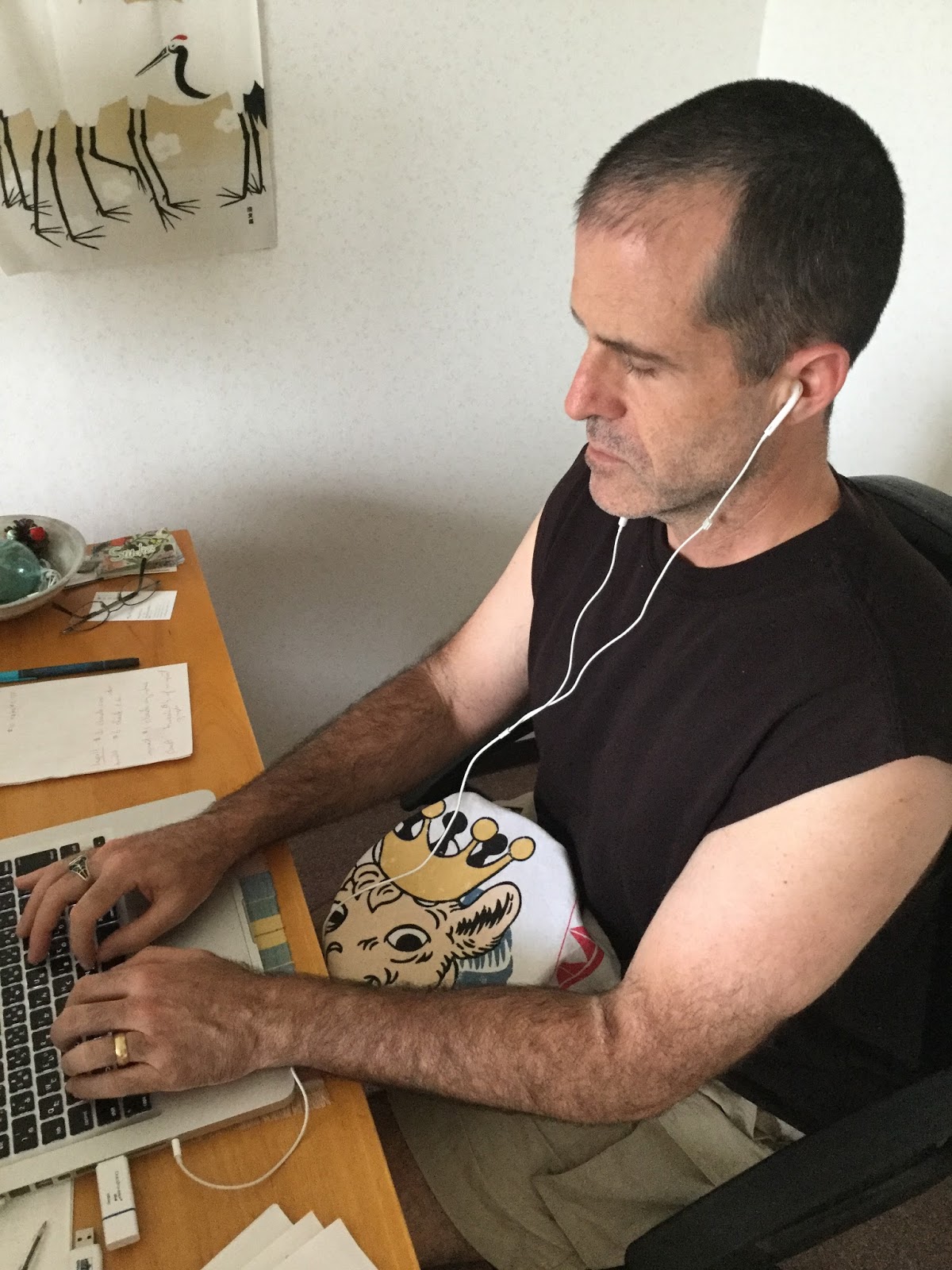
My husband keeping the sourdough warm while he works.

Rising Times
The rising times tend to be a little bit longer depending on the weather. In summer or on warmer days, the sponge and dough tend to be more active and rise faster. I set it in a sunny spot and wrap it in a dark blanket. Again, a hot water bottle in winter is also not a bad idea or simply holding it on your lap while you work.

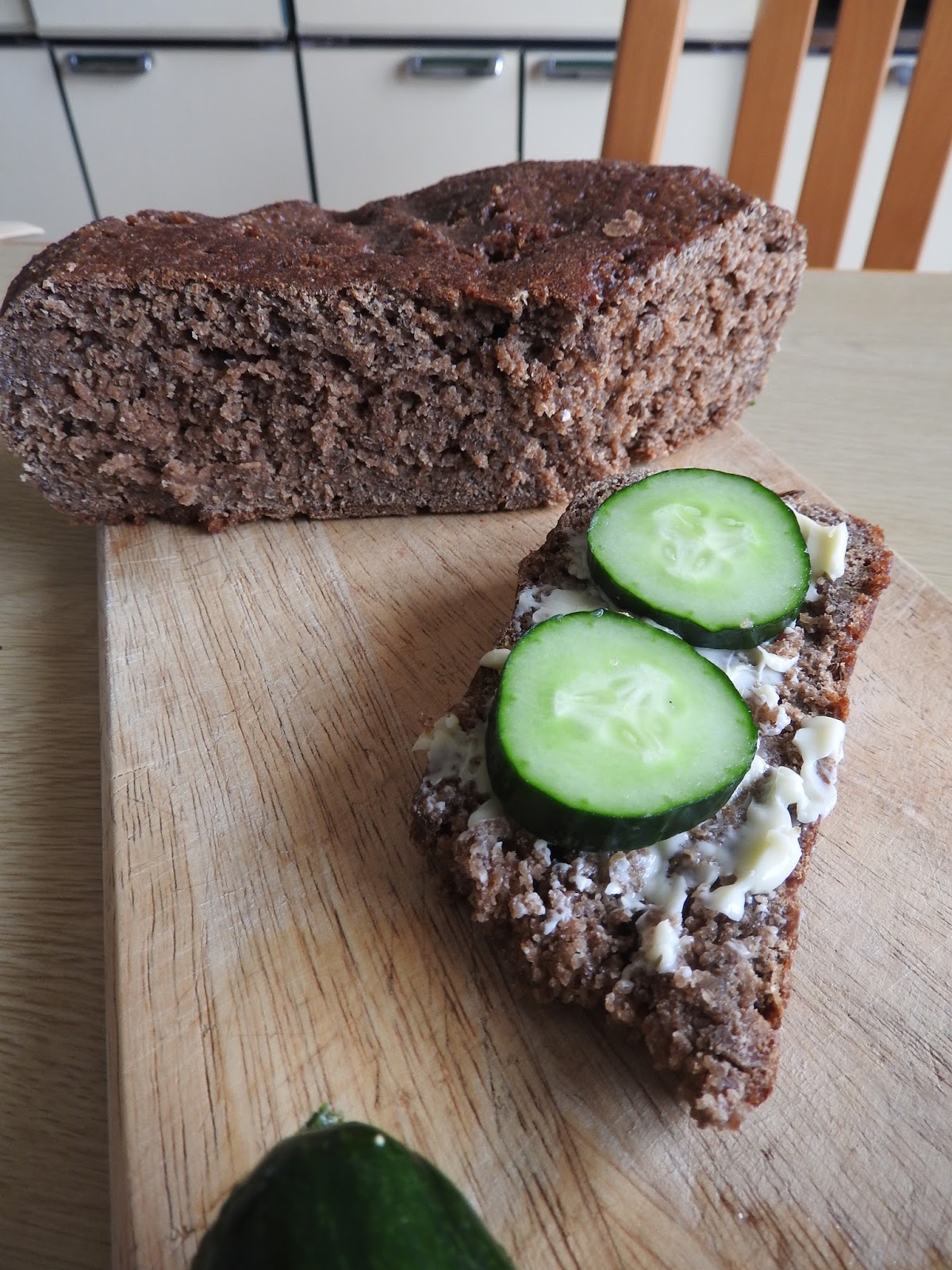
A finished loaf of beer-based sourdough with fresh cucumber and butter.

Taste
Sourdough can have a strong taste. My friend, Sarah, uses a different recipe, and while her bread has a sourdough tang, it is nothing compared to the flavor punch of mine. (Think a particularly pungent blue cheese.) Her methods vary a bit from mine, but it I certainly believe it also comes down to the environment of the starter. Yeast varies by location, so it stands to reason that the resulting flavor of sourdoughs will also vary by location. You are tapping into your microbiome (how cool is that!) after all!

Difficulty
People often express amazement and admiration that I make my own bread or can jam and pickles. Even as I enjoy basking in their adulations, I have to tell the truth: it really isn't that hard. What these tasks require are time, patience, and some attention to detail. However, those, too, are somewhat flexible. I am a little bit lazy and inattentive, so sometimes the dough rises longer than usual, or I forget to take the rind out of the yuzushu. These are not deal breakers by any means. Bread rises while I run off to teach classes or research information for an article or while I sleep. Yuzushu or umeboshi (pickled plums) steep along in a dark cupboard for weeks or months while I travel, garden, write, or spend time with friends. Just be there when it bakes for best results.

These projects certainly can feel intimidating at first and like most things done for the first few times, mistakes will be made. More often, you get to eat the mistakes and learn something in the process. Whether you decide to make bread to feed your family, the resistance or both, don't be afraid. Enjoy the process of exploring, making something with your own two hands, and sharing it with family and friends.

Sourdough Starter Recipe based on Sandor Katz

Ingredients for a Single Rice Cooker Starter
1 cup flour (any flour is fine)
1 cup water*

Mix the flour and water in a bowl vigorously. Cover with cheesecloth and stir at least once a day. After about three days, give or take, you will notice bubbles when you visit. The yeast is there. At this point, add roughly a tablespoon of flour (again, any kind is fine) a day and stir it in. This is feeding the starter. As the yeasts and bacteria feed on the flour, they burp and fart, creating a protective layer of liquid over the top of the starter. Just stir it back in each time you feed.

Keep doing this for about three or four days. By the end of a week, the starter should be a lively, smelly mess in your kitchen. Hooray! It's time to bake!

*Double bock, gone flat, is a nice substitute. (Don't worry. It wasn't a Baird Beer, although I'm sure that would make a lovely bread. I would just rather enjoy it in a glass with my bread.) I've also used the water from making soba noodles and steaming potatoes.


Basic Sourdough Bread Recipe

1 cup sourdough starter
1 cup lukewarm water (beer is nice here again, by the way)
4 cups flour
1 tsp salt
2 tbsp. oil
1/4 cup of sesame seeds, sunflower seeds, or whatever other things you fancy mixing into the bread.

Mix the starter and water (beer) to make a kind of slurry, a.k.a. the sponge. Mix in 2 cups of the flour to get a thick mud. Stir and stir and stir. I recommend 100 strokes at a minimum. Never cut through the middle of the sponge. Just like in the soil, you don't want to bust up the community of things bonding and working away to feed you. Cover and let it rise for anywhere from a couple of hours to overnight wrapped in blankets with a hot water bottle.

The starter has probably doubled in size and looks quite festive by the end of this rising time. That's perfect. Sprinkle the salt over it, drizzle the oil about, and toss in that quarter cup of stuff at this point. Stir without breaking up the dough.

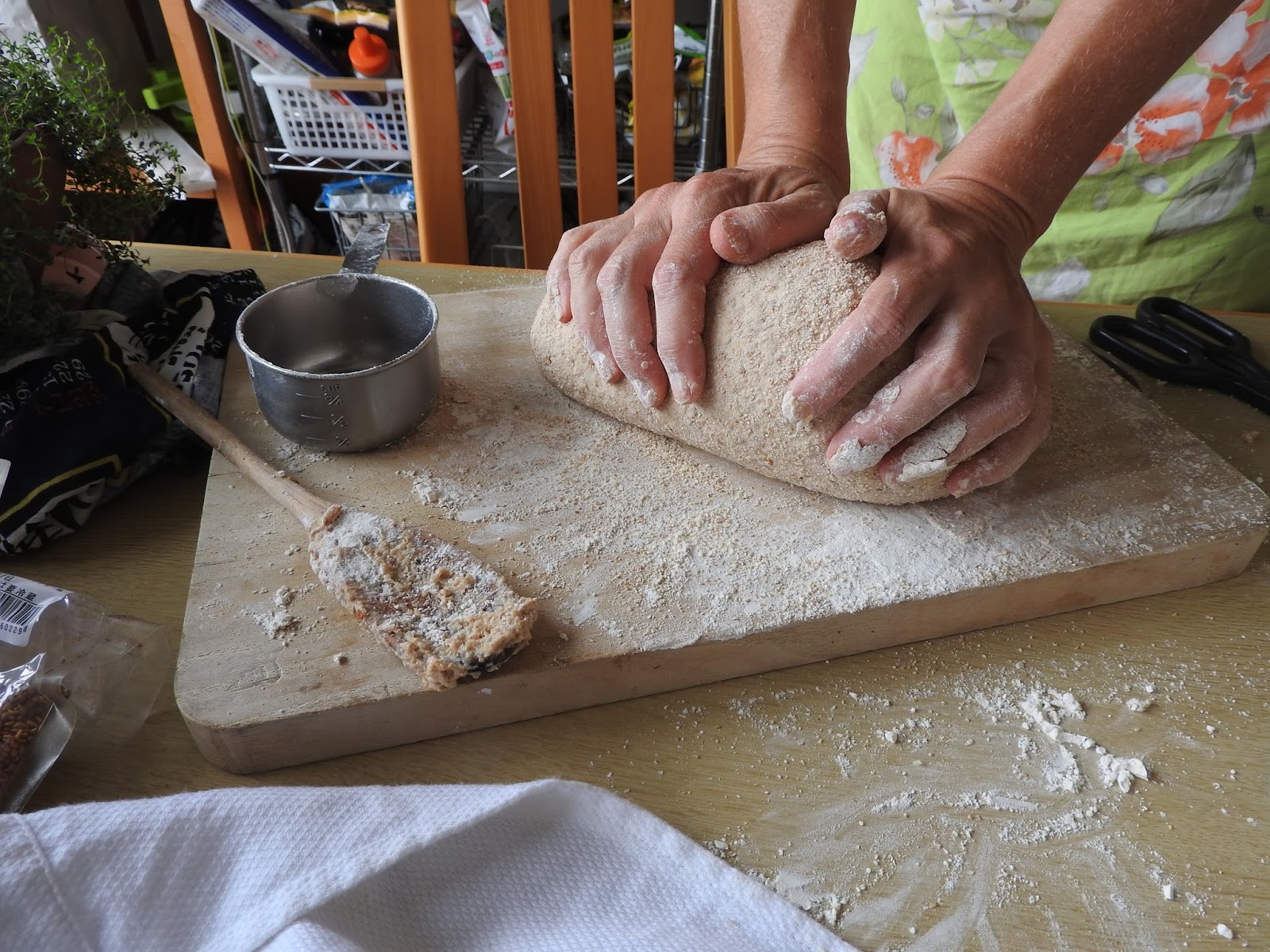
Kneading away and making a mess.
Once things seem pretty well mixed, add the flour gradually and mix thoroughly. Eventually, you will get to a point where you can barely stir. This is when you tip it out onto a floured surface and start to knead. I need for about 10 to 20 minutes, depending on how elastic the dough becomes and how good the podcast is that I'm listening to just then.

Dough rising in the sponge bowl.

Once the dough seems to push back at you, it's time to give it a rest. I lightly oil the same bowl the sponge was in** and set the dough in there, cover it, and wrap it up once more with a hot water bottle. Let it rise for anywhere from two hours to overnight. **Don't bother cleaning the bowl. I always figure the extra bits probably help it feel at home after the trauma of the kneading.

Transfer the dough to a lightly oiled loaf pan. You can punch it down, as I suggest in the other recipe, but it is not entirely necessary. The shock of the transfer causes some deflation as it were, so I sometimes just let it rise. This can vary from a few hours to overnight.

Transfer the pan to the rice cooker and turn it on for a full cycle. Flip over the dough when the cycle ends, and start it up again.
Friday, October 13, 2017

Tokyo and Yokohama Regional Farmers Markets: Saturday, October 14 and Sunday October 15

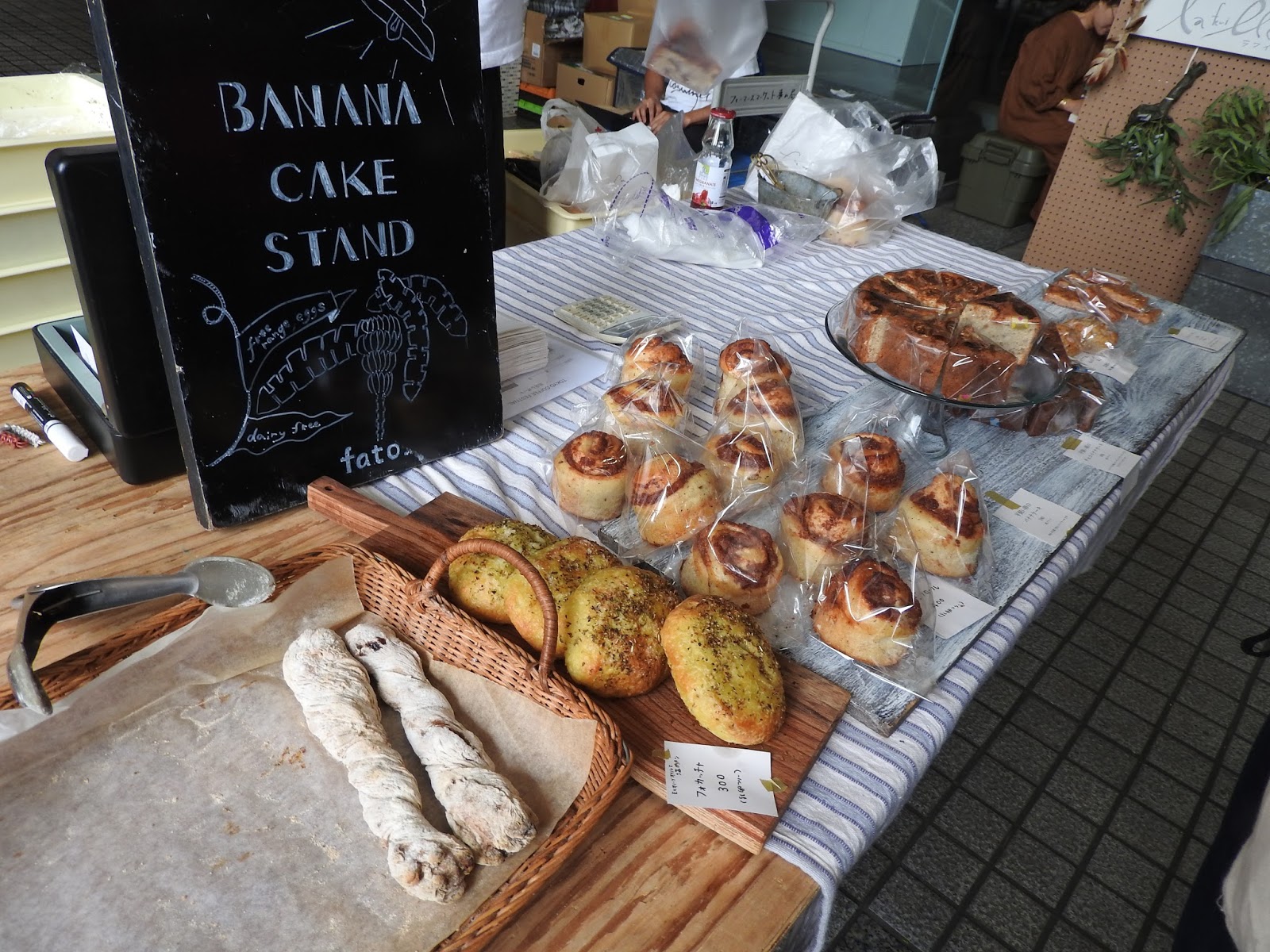
Tasty breads available at the UNU Market's Annual Bread Festival!

Autumn brings it with blooms of color not just in the leaves of trees, but also on market tables everywhere. Look for brightly colored squash, the deep purple of sweet potatoes, and the nearly black skin of the last of the eggplant. Vivid greens, too, will splash over the table in the form of winter greens that go perfectly in the nabe pot or make an excellent salad. Try them all!

Kichijoji Harmonica Yokocho Asaichi
Sunday, October 15
Early birds on Tokyo's west side should count themselves lucky to find this little market in the warren of shops just north of the station. While fruits and veg are a bit lacking, the market is big on craftsmen and women doing interesting work, excellent baked goods, miso, rice, and other tasty treats. It's worth noting that a number of places offer breakfast deals in the market!
Look for my review in Outdoor Japan's Spring Traveler!
7am - 10am

Koenji Farmers Market
Saturday, October 14
Spotted a handful of years ago while riding the Chuo Line, this little market is still going strong. A circle of red awnings in front of the Za-Koenji Public Theatre marks the spot where friendly folks with good food and interesting stories await.
11am - 6pm
Map

Yokohama Kitanaka Marche
Saturday, October 14 and Sunday, October 15
One of the best markets going in the Yokohama area, and it's perhaps no coincidence that they are only moments away from Baird Beer's Bashamichi Taproom. Started by the same folks who created the Market of the Sun, the Kitanaka Marche to be growing steadily with tasty offerings of fresh seasonal veg, fruit, baked goods and preserves. Read my other review over at Outdoor Japan's Traveler Magazine for the full scoop.
10am to 4pm
Bashamichi Station, Exit 2*
Note that the market has moved, so come out of the station, turn right, and take the next right turn. Keep walking past the construction site and keep an eye out for the white tents running along next to the river.

Oiso Farmers Market
Sunday, October 15
This little gem of a community shindig is one of the best things going outside of the Earth Day Market. Started a handful of years ago, it blossomed into a full-on monthly festival that just happens to feature Shonan area produce in its fresh, seasonal form as well as pickled, dried, and prepared-hot-in-a-bowl varieties. In summer, it transforms into a night market, while year-round a much smaller version takes place every Saturday. Lee's Bread alone is worth the journey. Read my full review at Outdoor Japan's Traveler Magazine.
10am to 2pm
Oiso Port Building

Kamakura Farmers Market
Every day
This market is an absolute treasure of a small local affair featuring Kamakura heirloom fruits and vegetables raised in or nearby another one of Japan's former capitals. Head in early to get the best selection and pick up a loaf of Paradise Alley's charcoal-infused bread while you're there. They also make an excellent cup of coffee.
7am until sold out
Map

Ebisu Market
Every Sunday
A small handful of years ago, the Ebisu Market became a weekly Sunday event. Part of the original Marche Japon movement, this market carries on with a nice selection of regional farmers, seasonal veg, baked goods, and the addition of arts and crafts. It does bill itself as all organic, and there are some; however, I recommend asking vendors to be sure. I also recommend a trip to Afuri Ramen to fortify yourself with some of the best yuzu tsukemen in town.
11am to 5pm
Map

UN University Market
Every Saturday and Sunday
A massive weekend affair that started out as the flagship market for Marche Japon busted out on its own a few years back. Now one of the most happening places on the weekend, the market features a variety of fruits and vegetables and prepared products from all over Japan. Winter vegetables can be found here, but produce offerings do vary in amount by season. There is a most excellent selection of food trucks whipping up everything from salad to zingy curry to roast chicken and falafel! Oh, and don't forget the craft beer truck, too!
10am to 4pm
Map

Hills Marche Farmers Market
Every Tuesday and Saturday
The Ark Hills Marche in Roppongi is perhaps one of the best things going in this part of Tokyo. Originally created to serve residents of the nearby high-rise, it is a bountiful and booming event. Don't miss the chance to meet a grower from Tokyo's very own Kokobunji, take in a little music, and sample a variety of other seasonal delights.
Saturday, 10am to 4pm
Tuesday, 11am to 7pm
Map

Yurakucho Farmers Market
Every Saturday and Sunday
Smaller than the UNU Market, the Yurakucho Market takes its cue from the antenna shops located nearby and features a particular region of Japan each week along with an excellent selection of seasonal fruit and vegetables. Growers from nearby Chiba, Kamakura, and Saitama do come weekly, though, with some excellent treats.
11am to 5pm
Directions: Turn left out of Yurakucho Station and cross the courtyard toward Tokyo Kouku Keitan. Look for the fun under the overhang!

Know of a market? Give me a shout, and I'll add it to the list!