Showing posts with label events. Show all posts

Monday, October 23, 2017

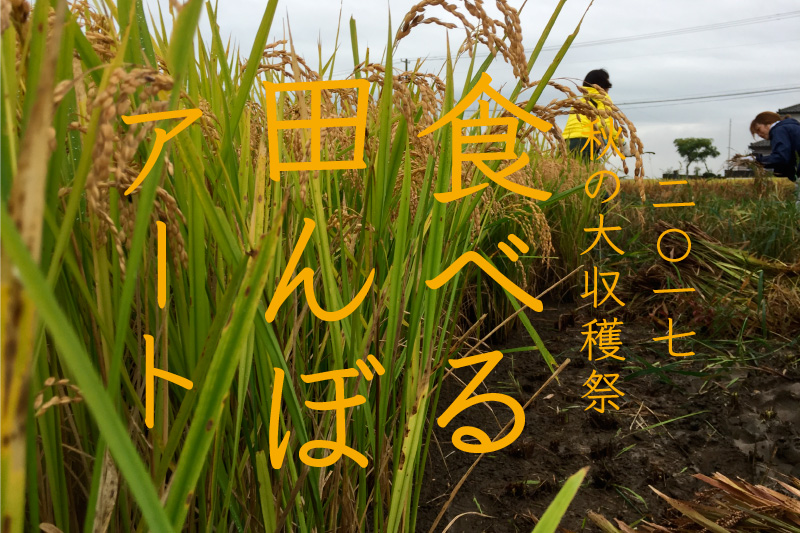
Soma Tambo Art Project: The Harvest

Image courtesy of Soma Tambo Art

I can't even begin to say how excited I am to be going up to Soma this weekend to help with the rice harvest there. The food and company will be more than excellent, and the work will be highly satisfying. I should also mention that the onsen is pretty spectacular, too. Don't miss the chance to go! (Deadline Tuesday, October 24!)


Monday, May 15, 2017

Tambo Art: Help Plant a Painting

Planting rice during the Soma Tambo Art Project.

If there is one thing that is worth experiencing in Japan, it is planting rice by hand. There is nothing so exciting, exhilarating or wonderful as stepping into a rice field, seedlings in hand, and setting them in the soft, silty soil. I know I'm a farmer and all that, but rice, it's planting, harvest, eating, and by-products are integral to Japanese culture. A staple part of the Japanese diet, nuka (the bran from polishing rice) is used to ferment vegetables for pickles and help feed the soil of rice fields. Momigara (rice hulls) makes an excellent mulch for fields or compost ingredient. Wara (rice straw) is an important source of silica for rice fields, is part of the traditional process for making natto, and is another excellent mulch for fields as well as a material for weaving.

Most farmers don't plant by hand any more, but for events like the Tambo Art Projects in Chiba and Fukushima, it is a chance to glimpse, however briefly, the way rural communities used to work. It is also a chance to get dirty, eat good food in the company of excellent folks, and explore parts of the country that don't make it into travel guides.

There is still time to register for and sink your toes in the mud in Chiba this weekend!

Thursday, June 11, 2015

Thursday Snapshot: Tambo Art in Sammu, Chiba

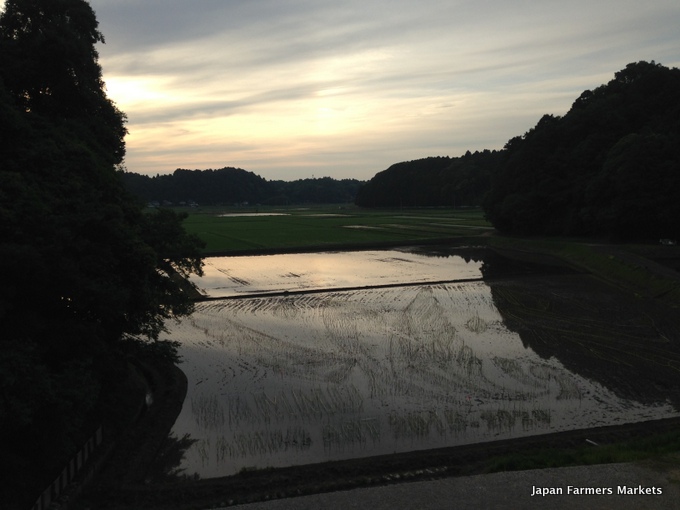
A sunset photo of the newly planted field in Sammu, Chiba.
Our good friends at Minowa Farm grow some of the loveliest rice in the area. They do it with ducks, as well, which means an extra treat for us come fall. For me, the meat is a taste of home and childhood as well as a means to support an eco-friendly means of weeding.

What Tomohito and Nagisa Minowa also do is Tambo Art (rice field art). Various shades of rice - red, black, yellow, and white - are planted by hand in a particular design. Aomori Prefecture started it back in 1993, and since then it has spread. It's another great example of farmer creativity benefitting the community - more than 200,000 people visited the site in 2006 to see the design for themselves - and the local economy.

The Minowas, though, put a slightly different twist on it. Last year, they partnered with farmers in Soma, Fukushima Prefecture, to plant three fields in different designs. Soma, one of the cities hardest hit by the triple disaster in 2011, was planting rice for the first time. A group of farmers wanted to do something special to commemorate this event and raise morale. Sites were chosen along a popular walking path and the rice was planted. It was some of the most fun I've ever had, and I fell in love with Fukushima all over again.

This year the Minowas are again partnering with Soma growers, but they've added another site in Sammu, Chiba, their hometown and a stone's throw from Narita Airport. The idea is to attract folks to Sammu and give those coming and going from the airport something nifty to see. The design, Tsuruonegaishi, is based on a popular Japanese fairy tale, and was crafted by a local artist, Barusa Mikoyasu. My photo above doesn't do it justice, but it should offer a general idea. They'll be weeding in July and harvesting come September. Give a shout if you want to join. Should be loads of good old-fashioned, dirty fun.

Monday, November 11, 2013

Earth Day Farmers Market Tour this weekend!

Meet Minowa Farms and try the rice!
Don't forget to sign up for this fun-filled market adventure this weekend! Email Robin and Diana directly to register or leave a comment here. (I promise not to publish your information.) You'll be glad you joined us!

Two new arrivals to Tokyo, Diana and Robin, are pretty excited about the good green stuff going on all around them here. So much so that they have joined up with the Mexico-Japan Society to create cross-cultural environmentally friendly series of events rooted in Diana's home country of Mexico and Robin's farm beginnings in Australia to share the pleasure in their findings with others. I think good things are in store for all of us!

And, I'm not saying that just because their first event features a farmers market tour with yours truly at the Earth Day Farmers Market on Sunday, November 17th. Mark your calendars, bring a bit of spending money, a backpack (Trust me. You'll be glad you did.), and an appetite. The market promises, as always, to be brimming with the seasons best grown in a manner healthy for the earth and the eater.

What's going to happen
We'll meet shortly before the market opens at 10am on the bridge that leads to Meiji Shrine and Yoyogi Park. I'll introduce myself, the market, and you all will introduce yourselves. Then we're off to meet the growers and producers, sample some seasonal scrumptousness and shop. I'll be loitering about to answer questions or help ask them, and then we'll unofficially gather for lunch. Doesn't that sound great?!?

Details
Sunday, November 17th
Earth Day Farmers Market Tour
10am to 12pm
(No charge, but be prepared to shop!)
RSVP by Sunday, November 10th (I know it's technically past, but try anway!)
RSVP and/or send questions to Robin and Diana

Monday, November 26, 2012

Oxfam Presentation and Earth Day Market Tour Fun

A glorious November Earth Day Farmers Market in Yoyogi.
This past weekend found me talking to folks at Oxfam Japan's monthly educational session about farmers markets and why I think they're worth the effort. Since I can't help but chat a bit even while I'm meant to be all official and everything, we ended up having some really nice conversations about food, memory, family history, and farming. Nearly everyone decided to join me the next day for a visit to the Earth Day Farmers Market in Yoyogi.

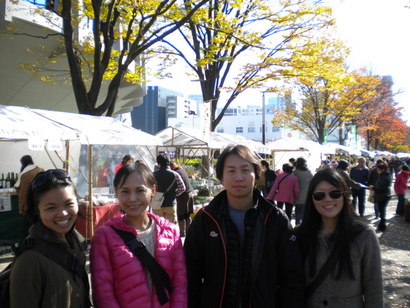
The whole gang ready to discover new food and fun!
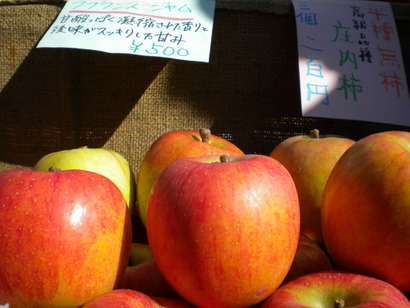
Hello, apples.
Sunday bloomed beautifully sunny with just the right of amount of cold in the air as we headed over to the stalls set up under the elms. Verdant winter greens, carrots of all colors, jams galore (a personal favorite), apples, pears, mikan, daikon, kabu, honey, and more greeted us.

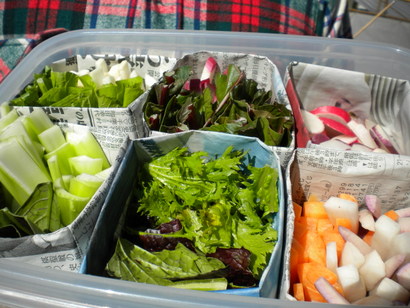
Winter vegetable sampler

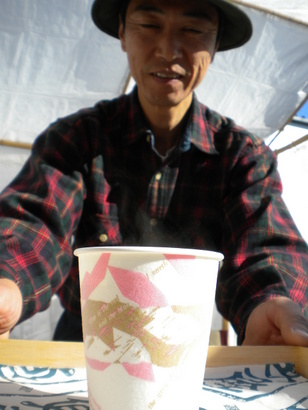
Steaming amezake


Welcoming samples of grilled mochi and cups of hot amezake (A sweet, hot winter beverage made from sake leavings; the bottom of the barrel never tasted so good!) helped us along, and shopping bags gradually began to fill. Cautious at first, my new friends found the prices quite reasonable, the atmosphere awesome, and the selection good. I overheard more than one conversation about what to cook that night and this week. I believe I've created a new bundle of regulars to this lovely little market, and that is the best harvest ever.
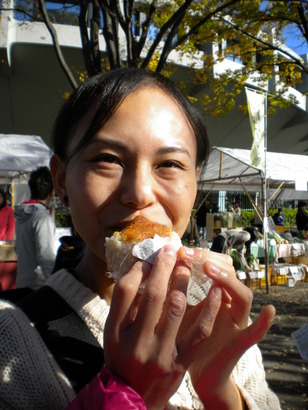
Enjoying miso onigiri.
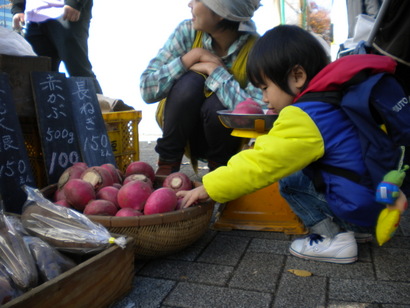
A young shopper at work.

Wednesday, November 21, 2012

Oxfam Presentation and Earth Day Market Tour this Weekend!

Heirloom kabu at the Earth Day Market!
Just a quick reminder that this weekend I'll be giving a talk about farmers markets and why they're such a great idea for farmers as well as those who like to eat. The Saturday workshop will be informative, fun, and interactive, and the Sunday visit to the Earth Day Market will be all of that and more.

Note: The Oxfam International Volunteer Group events page is suffering some technical difficulties at the moment. If you're interested in coming, please leave a comment here with your email and I'll get you registered.

Look forward to seeing you there!


Oxfam International Volunteer Group Awareness Workshop: Why Farmers Markets Matter
Saturday, November 24th
2pm to 4pm
National Olympics Memorial Youth Centre, Central Building, Room #108
1,000 yen (all proceeds to Oxfam!)

Earth Day Farmers Market Tour
Sunday, November 25th
10am to 12pm
Meet on the bridge to Meiji Shrine near Harajuku Station. I'll be the tall woman with glasses and a red umbrella.

Monday, November 12, 2012

Japan Farmers Markets Presenting at Oxfam Japan This Month!

A typical swingin' Earth Day Market in Tokyo!
Oxfam Japan and the Oxfam International Volunteer Group put on an awareness-raising event each month in an effort to let folks know what is happening globally and locally around an issue of import. Inspired by the global organization's GROW Campaign (check out the report on their findings thus far) the November event will be all about farmers markets.

Yours truly will be speaking about why farmers markets matter to producers and consumers of food, rural economies and communities, and more. The following day I'll be taking interested folks around to the Earth Day Farmers Market in Yoyogi to meet some farmers, producers, and new vegetables. Come join in the fun!*

*The events page appears to be troubled at the moment, so just drop me a note in the comments below or via Twitter and I'll get you registered.

Oxfam International Volunteer Group Awareness Workshop: Why Farmers Markets Matter
Saturday, November 24th
2pm to 4pm
National Olympics Memorial Youth Centre, Central Building, Room #108
1,000 yen (all proceeds to Oxfam!)

Earth Day Farmers Market Tour
Sunday, November 25th
10am to 12pm
Meet on the bridge to Meiji Shrine near Harajuku Station.

Monday, October 22, 2012

October Tokyo Farmers Market Outing Full of Sun and Vegetables


The Nippori Farmers Market Gang with their loot!
I like to think of it as a day full of sunshine and vegetables and fun. A handful of folks joined me at the Nippori Farmers Market on Sunday for some good food and conversation. Not a one of us walked away empty-handed, and at least two of us carted home spaghetti squash. (I like to think my trips to the assorted farmers markets around town help prepare me for our various hiking expeditions.)

Some of the yummy delights on hand!
The only disappointment of the day was the absence of Onaya-san and her scrumptious manju, but that was more than made up for by the presence of a group of farmers from Ibaraki. My word, but their produce was beautiful - mizuna, shungiku (edible chrysanthemum greens), negi (long onions), daikon, kuri (chestnuts), and some very cute squash - and they were good fun. Thankfully, I snagged their last bag of kaki (persimmons) and a very nice bunch of red radishes. Our salad doth overflow. I hope to visit them some time in the next year to enjoy their company and help out a bit as I can. I suspect it will be a blast.

Thanks to those who made it out with me to the market and for a stroll about Yanaka afterwards. It was a perfect day!

And, there is a market visit in the works for November. More on that soon!

Monday, October 15, 2012

Tokyo Farmers Market October Outing: Reminder!

Takako Kimura and her awesome veg!
It probably won't be this cold, though, when we go.
Just in case you forgot to mark it in your calendar, I'm here to remind you about another little outing I'm doing this month. We're off to the Nippori Farmers Market, which despite being new on the scene is one of my favorites in the city.Give a shout and join us for a few hours of fun exploring seasonal foods in one of Tokyo's loveliest spots. If it's clear, perhaps we'll even get to see Mount Fuji!


This month I'm inviting people to join me on a visit to the Nippori Farmers Market. This delightful market is tucked away in one of Tokyo's most historic areas and is, in my opinion, one of the hidden gems of marketdom in the city. A two-day monthly affair, the market offers a very nice selection of foodly items to eat there as well as take home. Atsuko Fujita, the market manager, carefully curates the vendors to make sure shoppers have excellent choices as well as ensuring various regions are well-represented. Growers from Aizu Wakamatsu and other parts of Tohoku have been on hand for each of my previous visits giving visitors a chance to support the region's recovery in one of the best possible ways: economically. Throw in some music and dancing, and it's easy to see why this new market is steadily growing.

Questions? Give me a shout. Wondering why you should go? Read this. Then, mark your calendar and come on out!

October Tokyo Farmers Market Outing
Sunday, October 21st
10am - 1pm
Nippori Station - East exit
Meet at the bottom of the stairs of Nippori Station's East exit and we'll walk over to the market. Meet the market manager, the vendors, have a little snack (I recommend the manju.), and do a bit of shopping. We'll head off afterwards to historic Yanaka (same station, just up the hill) for a walk-about, perhaps some lunch, a visit to the Fuji Viewing Street, and general exploring. I may stay longer than the finish time, and folks will be welcome to join me if I do. I love this part of Tokyo!
Deadline to register: Saturday, October 20th. Space is limited to 10. If I get an overwhelming response, I'll set up a second outing.

Register: Drop a comment here with your email so I can be in touch in case of cancellation. Comments are moderated, so I won't publish the one with your address.


Monday, October 8, 2012

October Tokyo Farmers Market Outing

Hello, manju!
Just some of the yumminess available at the Nippori Farmers Market.
Last month's outing found me and a handful of other market die-hards braving torrential rains to do a bit of shopping and exploring at the Earth Day Market in Yoyogi Park. We ate, learned about some new vegetables, said hello to growers and producers, and everyone went home with a little something to eat for the next week. It was quite a lot of fun, if I do say so myself.

This month I'm inviting people to join me on a visit to the Nippori Farmers Market. This delightful market is tucked away in one of Tokyo's most historic areas and is, in my opinion, one of the hidden gems of marketdom in the city. A two-day monthly affair, the market offers a very nice selection of foodly items to eat there as well as take home. Atsuko Fujita, the market manager, carefully curates the vendors to make sure shoppers have excellent shopping choices as well as ensuring various regions are well-represented. Growers from Aizu Wakamatsu and other parts of Tohoku have been on hand for each of my previous visits giving shoppers a chance to support that regions recovery in one of the best possible ways: economically. Throw in some music and dancing, and it's easy to see why this new market is steadily growing.

Questions? Give me a shout. Wondering why you should go? Read this. Then, mark your calendar and come on out!

October Tokyo Farmers Market Outing
Sunday, October 21st
10am - 1pm
Nippori Station - East exit
Meet at the bottom of the stairs of Nippori Station's East exit and we'll walk over to the market. Meet the market manager, the vendors, have a little snack (I recommend the manju.), and do a bit of shopping. We'll head off afterwards to historic Yanaka (same station, just up the hill) for a walk-about, some lunch, a visit to the Fuji Viewing Street, and general exploring. I may stay longer than the finish time, and folks will be welcome to join me if I do. I love this part of Tokyo!
Deadline to register: Saturday, October 20th. Space is limited to 10. If I get an overwhelming response, I'll set up a second outing.

Register: Drop a comment here with your email so I can be in touch in case of cancellation. Comments are moderated, so I won't publish the one with your address.

Monday, September 24, 2012

Damp and Happy: Tokyo Farmers Market Outing Report


Damp squash family members at Earth Day Market.
Photo courtesy of Nicole Bauer.
Indeed, those two words well describe the hearty bunch that braved yesterday's torrential rains to join me at the Earth Day Market in Yoyogi Park. Eight of us total (down from 15 who initially planned to come out) wandered between the stalls surveying the seasonal goodies - a variety of squashes, awesome jams, heaps of good rice and grains, wine, beer, moroheya and other greens, peanuts, and a few early radishes - under our umbrellas and plotting our purchases.

We chatted, learned about  the vendors and their products, indulged in some free samples, and tried to stay relatively try. Tomiyama-san, the Earth Day Market manager, paused in his full rain suit to welcome us and chat for a moment before bustling off to help finish setting up tents and strategize about keeping things dry. Business was brisk despite the weather, and I can only imagine what it would have been if the sun had been shining. We grabbed yummy lunches from the handful of food carts there to talk and laugh together some more. A good day, if I do say so myself.

If lack of a wet suit kept you away, never fear. I plan on doing another soon. Stay tuned!

Saturday, September 22, 2012

Confirming Today's Tokyo Farmers Market Outing!


It is raining cats and dogs out there, but I'm still going. I know the farmers and artists will be there, and I just can't not go. If you're still interested in coming out, please do. Bring an umbrella, rain coat...maybe a wet suit? I'll be on the stone bridge near Harajuku Station at 10am with my red umbrella and orange (or yellow?) raincoat. See you there!
- Joan

Just in case you forgot to put it on your calendar, here's a little reminder about this Sunday's adventure to the Earth Day Market. Join me for a few hours of  fun that are full of good food, interesting people, cool artwork, and most likely some music, too. What could possibly be holding you back? (I won't blame you if you opt out due to the rain. I'll do this again. J)

Tokyo Farmers Market Outing
Sunday, September 23rd
10am - 2pm

Meet on the bridge to Meiji Shrine at 10am. It's right on your way from Harajuku Station to Yoyogi Park. I'll be carrying a red umbrella (for sun or rain!), and will be the slightly dorky looking tall foreign women with glasses and curly hair. We'll walk over to the Earth Day Market where I'll give you a brief run-down of what I know about the vendors, the food available, and then set you loose! Plan to buy lunch there.

A ceramics art fair is on at the same time, which should be just brilliant (albeit damp), too.

Wednesday, September 19, 2012

Don't Forget: Tokyo Farmers Market Outing This Sunday!

Sweet times: honey at the Earth Day Market
Just in case you forgot to put it on your calendar, here's a little reminder about this Sunday's adventure to the Earth Day Market. Join me for a few hours of  fun that are full of good food, interesting people, cool artwork, and most likely some music, too. What could possibly be holding you back?


Tokyo Farmers Market Outing
Sunday, September 23rd
10am - 2pm

Meet on the bridge to Meiji Shrine at 10am. It's right on your way from Harajuku Station to Yoyogi Park. I'll be carrying a red umbrella (for sun or rain!), and will be the slightly dorky looking tall foreign women with glasses and curly hair. We'll walk over to the Earth Day Market where I'll give you a brief run-down of what I know about the vendors, the food available, and then set you loose! Plan to buy lunch there.


A ceramics art fair is on at the same time, which should be just brilliant as well. Pretty bowl for your miso? Nice plate to serve up that squash? How about a nifty glass for that organic wine? Oh, the possibilities!


Monday, August 27, 2012

Tokyo Farmers Market Outing!

A sampling of the farmers you'll meet at the Earth Day Market!
It's been a long time coming, but I'm finally planning a little outing to the September 23rd Earth Day Market in Yoyogi Park. September's Earth Day Market promises to be as good as usual with its fantastic selection of organic and fair trade items with the addition of a ceramic art fair. Nothing wrong with a pretty bowl to serve up those fresh, seasonal fruits and vegetables, I always say!

Earth Day Market Outing Details
Sunday, September 23rd
10am - 2pm

Where: Meet on the bridge to Meiji Shrine and Yoyogi Park at 10am. (I'll have something distinct, like a red umbrella, with me so you can find me.) We'll walk over to the market where I'll offer a brief overview of vendors and produce, and then let you loose. I'll be on hand to help answer questions about various items, too. Surely, though, the vendors friendly faces and great products will speak for themselves.
Lunch: Plan to buy it there. You'll find some of the best onigiri, breads, curries, and more from vendors and food trucks alike.
RSVP : Comment below and leave me your email (I'll keep it top secret, of course.) so I can confirm, let you know about any updates or changes as the date approaches.
RSVP Deadline: Saturday, September 22nd.

Questions? Don't hesitate to give a shout in the comment section below. I'll get back to you as quick as I can, although I will be away and have limited internet access.

Looking forward to seeing you there!


Tuesday, February 28, 2012

Green Leaders Coming Up!


Signed up yet? If not, I can't recommend enough that you get busy and do so. As mentioned in an earlier post, the event will be all in Japanese, but it still presents a great opportunity to meet other people who think about being green in a wide variety of ways. Whether it's a farmer's market, sustainable building, or alternative energy ideas, you're sure to find someone there interested in and working on the same topic.

Here, to further whet your appetite, is a post that first appeared in October, 2010 at greenz offering an overview of a panel discussion about then upcoming COP 10  in Nagoya. (Some links may not work, as greenz sadly closed down their English site.)

On the cusp of the  COP10 discussions now underway in Nagoya, participants a the October Green Leaders Event got a basic primer in the issues at stake and recommended remedies.
Added to the vast web of relationships that is biodiversity, speakers at October’s event  - Masahiro Kawatei from the Citizens Network for the Convention on Biological Diversity; Masako Konishi, Climate Change Leader for World Wildlife Fund – Japan; and Yasunori Tanaka, Itabashi Ward Assemblyman – interwove threads of law, education, funding, and advocacy to create a protective netting to stave off future exploitation and ensure the survival of our planet.
Global Guidelines to Ensure our Survival
Urging the audience to see biodiversity as integral to culture, as well as our livelihoods and ultimate survival, Masahiro Kawatei looks for legally binding international rules. Taking a strong stance in opposition to all genetically modified organisms (GMO), Kawatei’s group believes laws are the best protection.
Such safeguards would not only help level the playing field between developing and developed countries, but encourage global citizenship. According to Kawatei, realizing an individual relationship with biodiversity results in better consumer choices, living a sustainable life, and supporting sustainable work in our communities.
Biodiversity is the basis for all life. All people are users of it, and if they can relate it to themselves they will act voluntarily,” said Kawatei. He advocates using CEPA (the Programme of Work on Communication, Education, and Public Awareness) as the common language to link citizen activism to government and business in support and protection of biodiversity.
We need to move government, and citizens need to keep an eye on government in order to bring business along. Citizens, government and business need to work together on issues of biodiversity,” he said.
Linking Deforestation, Biodiversity and Climate Change
Masako Konishi advocates  for the protection of developing nations and their resources in order to slow climate change and preserve biodiversity. Like Kawatei, she believes regulation and education are key components in this process.
Focusing on deforestation as one of the primary culprits behind climate change and staggering losses in biodiversity, regulations could effectively stall slash and burn agricultural practices as well as illegal logging.  Requiring developed nations to share financial as well as scientific gains with developing countries would ensure funding to reeducation and retraining.
The overlap between climate change and biodiversity in this area is clear,” she said.
Waiting for rules to be made and agreed upon, though, means the loss continues unabated. Projects such as REDD+ and the Forest Carbon Partnership Facility (FCPF) bring people and organizations together to start work for change now and creating models for the future.
Such programs help get not just funds from developed countries to developing nations, although that is key. If a developing country takes action then they get funds. It’s a carrot and stick method,” said Konishi.
Yet, as a member of the audience so aptly put it, the challenge of individual consumer choice remains. “The real drivers of deforestation are the developing nations products. We need to change product consumption and use to something more sustainable,” said her friend during the question and answer period.
How a Firefly Thinks about Biodiversity
As an assemblyman, Yasunori Tanaka thinks about education, advocacy, and regulations every day. Surprisingly, he’s also thinking about biodiversity, but from a slightly different angle: a firefly’s.
Describing the work he’s done in collaboration with researchers and other groups from across the community in effort to bring the much-beloved firefly back to one of its traditional homes now gone ultra-urban, Tanaka guided listeners through the web of biodiversity he regularly navigates with the firefly.
As the clean water, soil, and grassy expanses they rely on gave way to spreading development and changes in agricultural practices, fireflies steadily declined. Reversing polluted conditions and creating green space made it possible for fireflies to begin returning and even thriving.
Restoring their natural habitat, of course, also resulted in improving human habitat. The grassy spaces they call home result in cooler temperatures even in the most urban of areas, while clean air and water speak for themselves. Other indigenous species also returned – such as maruhanabachi ground bees – to assist with pollination as their habitat was restored.
Despite these fantastic results, funding remains an obstacle. To meet this challenge, Tanaka drew in community support by creating a local CSR program. Involving businesses as well as individual community members means educating people about biodiversity and driving change from the ground up.
We need to think about the diverse behaviors of various living organisms and how we are all intertwined. It’s important to address many things to see biodiversity as it exists around us and to see it’s impact on our lives,” said Tanaka.
Missed this one? Never fear!
November Green Leaders Forum (GLF11): Global Green Entrepreneurs
Monday, November 15th @ British Council from 7pm to 9pm (Doors open for snacks and mingling at 6:30pm.)

Tuesday, February 21, 2012

Green Leaders Back on the Calendar!

Green Leaders, a unique forum in Tokyo that brings together from all sectors of the green movement, looks like it's getting ready to get rolling once again after a brief hiatus. A great monthly event, I'm looking forward to getting involved again, catching up with old acquaintances and meeting some new folks, too. And while it's all in Japanese, it definitely is worth a visit. (The snacks are always amazing!)

To further whet your appetite, following is an article I wrote for greenz in November, 2010 covering the panel discussion that kicked off Global Entrepreneurs Week (GEW) in Japan that year. (I don't have the photos from the event handy, so I just substituted something attractive. Enjoy!)

Kicking off Global Entrepreneurs Week (GEW) week in Japan, the November Green Leaders Forum offered up a scintillating tell-all of ecopreneurism. Jacob Reiner, President and Chief Architect of Eden Homes and founder of Earth Embassy, Donald Nordeng, President of Ecocert, Shuichi Ishibashi of Energy Literacy Platform, and Tsuneyuki Fujioka of Fam-Fam (both winners of the British Council’s E-Ideas Competition) joined the British Council’s Huw Oliphant to share their thoughts on doing eco-business in Japan.
Creating Capital
When asked about their greatest challenge as ecopreneurs, panelists responded almost unanimously with one word: capital. From having enough at the right time to finding it to using it wisely panelists viewed capital as a double-edged sword. Fujioka observed that having too much can result in complacency and failure, while Reiner warned against risking too much at one time. Ishibashi, whose group is in the process of conducting a broader test of their product, found the search for capital itself quite challenging.
I’m an engineer. My colleagues are engineers. For the business side we have no one, and we’re creating links now to such resources. We’ve been helped and supported by other organizations, but capital is now our biggest challenge,” he said.
True to their innovative natures, panelists also offered creative ideas for finding the capital needed to move a project forward.
At the beginning you only have passion. Energy is the only thing that exists. We needed advice from various designers, and we could only say, ‘We’ll be able to pay you back when we succeed.’ Maybe people can physically help you in their spare time. Volunteer time has the same value as money,” Fujioka said.
Nordeng suggested creating micro-lending programs like Kiva or those run by the Grameen Bank.
It’s a common capital activity where the neighborhood gives you money and you pay them back as you can. It’s a creative system that gives you money as you need it,” he said.
A Balancing Act
Creating capital of any kind requires determination and drive, which can require compromise. As ecopreneurs, balancing the interests of the planet, the community, and the company may feel overwhelming. Focusing on creating a solid product helps even out the scale.
The issues you face depend on what level your business is at. The first issue is to balance your ideal and reality. If you start from environmental issues you are more idealistic, but the buyer is  not so conscious. If you  have a good product at a good price, the eco factor will be the last push for the consumer to buy it,” said Fujioka.
Nordeng offered similar advice to budding business owners sorting through the maze of opportunities and options.
Know your business and be able to say no to projects or clients that don’t fit your model. Get to know your customers in order to build a network and community of support for yourself. Stick to your niche so people know who you are,” he said.
Invest in Community
Throughout the evening panelists repeatedly pointed to community as a key to  success. Reaching out and forging bonds with investors, volunteers, advisers, mentors and customers can mean the difference between success or failure. Fostering these relationships creates a circle willing to lend support – financial, physical, or positive public relations – at any time.
Reiner attributes much of the success of his company to the community partnerships he forged early on and still maintains.
We’ve been able to do this because of the locals and their support. Make friends with the people around you. Seek mentors and let them help you,” he advised.
Ishibashi agreed.
I think the most important thing is to build a network. Everyday I meet someone new and pioneer new relationships,” he said.
Building that relationship, according to Nordeng, requires solid communication from “the  company to their buyer and finally the customer” of who you are and the kind of work you do.
Think Outside the Box
When asked for ideas that would benefit ecopreneurs in the future, answers varied. Possibly the strongest advocate of community-building, Reiner suggested opening up private spaces for public use. Turning lawns into gardens and filling empty conference rooms with community meetings were just a few of his ideas.
There should be a little alley (in Omotesando) with stalls where start-ups could sell their goods. Factories should open up an end of their floors to share tools. Open up resources to the community to mix a top-down, bottom-up approach to create space for entrepreneurs,” he offered.
Nordeng, perhaps reflecting the recent COP10 discussions in Nagoya, advocated expanding  accounting and accountability systems to include biodiversity.
The value of the biosphere is not accounted for or included in GDP. Sustainability doesn’t just include humans. Incorporating the non-human element will make the GDP more accurate,” he said.
Perhaps an additional challenge ecopreneurs face is not only keeping their doors open for one more day, but remaining a catalyst for societal change as the business evolves and grows. According to Fujioka, small business owners need to be cautious as well as innovative.
Everyday I think there’s no meaning to what I do if it’s not sustainable. There is always a challenge to the balance between the ideal and what works. The most important point is the survival of the business. Provide a service and social innovation should be the outcome,” he concluded.
Tokyo Green Leaders Forum
Tokyo Green Leaders Forum is a free monthly networking and learning event bringing together 100 Green Leaders from all across the community. Check out the next events and come on along!
Saturday, September 17, 2011

C-Cafe's September Organic Buffet

Just in case folks are looking for something a little unique to do this weekend, I'd like to suggest C-Cafe's Sunday Organic Buffet. It's all-you-can-eat all-organic all-local food for the lovely price of 1,000yen, and I promise you won't be disappointed. Feast on seasonal dishes of extraordinary flavor and creativeness, and please don't forget to try the curry. It's seriously one of the most wonderful things I've ever eaten, and that includes my mother's meatloaf as well as her coffeecake. I'd also recommend wearing something with a comfortable waistband. It's that good.

Sunday, September 18th
11:30am - 2pm
1,000 yen

Photo Note: A close-up of Silent Cafe's banana milk and perfectly sweet cookies. More yumminess!

Saturday, August 27, 2011

Mitaka's Organic Food Gem: C-Cafe's Sunday Organic Lunch

If you're not headed out to a farmer's market this weekend, another great option for Tokyo-ites is C-Cafe in Mitaka. The third Sunday of each month they host an outstanding organic buffet (tabe-hodai or all-you-you-can-eat) for a mere 1,000 yen. Featuring vegetables from a local organic farm, it's hard to beat for flavor, health, and fun. And while it is a bit out of the way, Keta-san's curry is enough reward for the effort you'll expend.

Check out my article over at Eco+Waza describing it, and then mark your calendar for the September buffet! You'll be glad you did.

Monday, February 14, 2011

French Twist on Vegetables for Tokyo Locavore

We're still hopping about at home with family and friends, so here's another post from Greenz, another blog where my writing appears, about some interesting food happenings in Tokyo. Delphine's February class is most likely just finishing up at this moment (international date line and all), but there's still time to sign up for March or to check out her CSA offerings that now include fruit! And here's a more recent article I wrote about Delphine, too!)

This post first appeared at Greenz on August 31, 2010.

<span class=

A small group of people focus intently on one woman stirring a mixture of flour and water. At first glance she appears to be speaking to the bowl of front of her as she gives instruction on making pasta by hand, but her devotees hang on every word and motion. These locavores in training are getting a dose of DIY: the art of French cooking with Japanese vegetables.

<span class=

Delphine Cheng began offering these hands-on learning experiences earlier this year to not only showcase the tasty organic produce offered by her CSA - Le Panier de Piu - but to bring people together to share her joy of cooking. Perfect for the beginner or the experienced cook, the classes combine French techniques with Japanese vegetables to produce some tantalizing delights. (My mouth still waters at the memory of finely chopped shiso leaves in cream drizzled over steamed spaghetti squash.)

Perhaps most importantly Delphine also teaches students how to use what's at hand and in season to advantage. The July class centered around zucchini, eggplant, and tomatoes. The September classes will feature some of the summer vegetables again - eggplants, cucumbers, and tomatoes - as well as some of the early fall harvest - komatsuna and leeks. All the vegetables are organic and are sourced from the farm she partners with in Ibaraki-ken or other local growers. The remaining ingredients are organic whenever possible, which lets students know about organic grocers in Tokyo, too.

<span class=

Watching Delphine trouble-shoot challenging moments in the kitchen was undoubtedly invaluable, too. Our initial pasta dough turned out a bit too wet for the machine. As she kneaded in additional flour Delphine commented with reassuring nonchalance, "Of course, you could eat it..." her words fading into the dough in front of her. Feeling the final product and seeing the noodles smoothly emerge gave us a tactile as well as a visual understanding of workable dough we won't soon forget.

<span class=

The shared adventure of cooking turned strangers into culinary friends when it came time for the group meal at the end. (Quite simply, one cannot slice eggplant together without forging some kind of bond.) Sipping a specially selected organic French wine as we savored new tastes of seasonal favorites our conversation turned on farming, travel, family traditions, and a few favorite recipes of our own. As we dried the last dish, snapped the last group photo, and put our aprons away, we left with satisfied appetites and a few new friends to boot.

Ready to don an apron and get cooking?
Visit Delphine's website to learn how to get your hands on those scrumptious organic vegetables from Ibaraki. While there check out the class information and sign up for the next one. Remember, only eight participants per class so get busy!

Classes last about two to three hours and teach recipes for an appetizer, a main course, and dessert with a side dish or two thrown in for good measure. Class size is limited to eight ensuring everyone gets an opportunity to dice, slice, steam, and wash. Instruction is given in French, English, and Japanese with a bilingual summary including full recipes and tips in full emailed within a day.

Joan Lambert Bailey writes about her food, farming, and gardening adventures at Popcorn Homestead and Everyday Gardens. Check out her other nifty greenz posts, too!

Wednesday, June 9, 2010

Slow Business Event Serves Up Area Flavors


Just north of our apartment on the west side of Tokyo is a beautiful old Japanese farmhouse or kominka. It's long low profile sits back from the road behind a burnt wood fence, a smattering of trees - Japanese maples, zelkovas, and even a cherry or two - with a small kitchen garden just outside the front door. Built by early settlers here (similar to the farmers I work with) it is currently rented to a very community-minded family. On weekdays, the house is open to and used by senior groups for various activities, and on weekends small events or concerts fill the courtyard with happy sounds and feet. It seems to have become a little pocket of community here in the burbs.

We first found it last fall after being handed a flyer while at the Earth Day Market. It advertised a small harvest festival promising live music, good food, and fun. That's all we needed to mark our calendars and head on over. We found a treasure chest of fascinating growers, producers, and craftsmen and women all doing amazing things at this intimate (yet public) event.


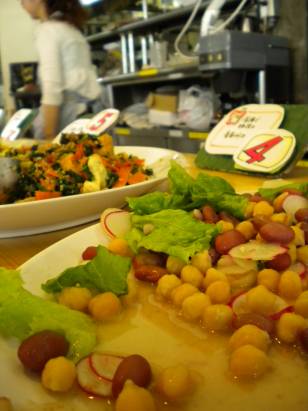
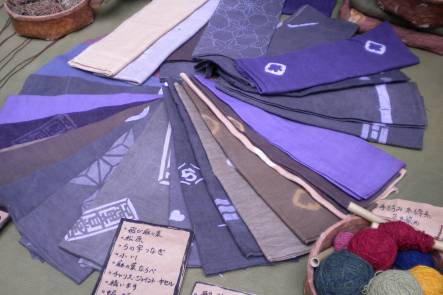
This time was no different. Organized by Slow Business - a group that takes its cue from Slow Food and features businesses focusing on locally made, hand-crafted items - this event featured a similar mix that again made for great atmosphere. Serenaded by a rotating schedule of musicians as we strolled among vendors offering everything from baked goods to naturally-dyed handmade textiles to organic rice and tea, we snacked on fresh roasted spring vegetables and sipped sweet sake. Big enough to offer an interesting selection of items to eat, drink, and learn about the festival remained small enough that it was easy (even in very poor Japanese) to chat with growers and producers about their work and passion while children played tag among the tables. Diners seated inside enjoyed a seasonal meal of fish, miso, rice, and vegetables in the massive tatami room overlooking the courtyard and where an ikebana demonstration also took place.

Perhaps what I liked best about this event was that while it was about commerce (slow business or not, trade is essential in order to be able to continue honing your craft) it was also about building community and the pleasure of work. The men and women present, whether farmers, body workers, brewers, bakers, or musicians were passionate and enthusiastic about their creations and eager to engage with customers about it.


A Few Favorites

Who can resist organically grown green tea served up by the grower? Not me, that's for sure. I should be saving it for a present to take home, but I'm enjoying every last leaf, I confess.

Ryando
Beautifully crafted tenugui made with natural dyes such as zelkova, kaki, and onion skin, Fukuoka-san's original designs based on nature and tradition are a feast for the eyes.

A La Main de Mariko
Considering how tasty the sample cookies were I'm still glad I came home with a loaf of Mariko's brown rice sourdough. Chewy and soft we couldn't bear to toast it (a rarity in our house), and a field trip to the shop in Kodaira may soon be on the calendar.

Four kinds of rice, rock salt, non-toxic mosquito coils and honey were just some of the offerings at this table. While not locally grown or produced, the source for these products is part of their appeal. Yukkuri Mura is an intentional community based around the farming methods of Masonobu Fukuouka, a seminal figure in Japanese and world agriculture. A field trip here may also soon be on the calendar to see Fukuouka's methods in real time. Meanwhile, we're enjoying the tasty rice!