Showing posts with label heirlooms. Show all posts

Monday, June 19, 2017

Farm-to-table in Tokyo: My article at Savvy Tokyo

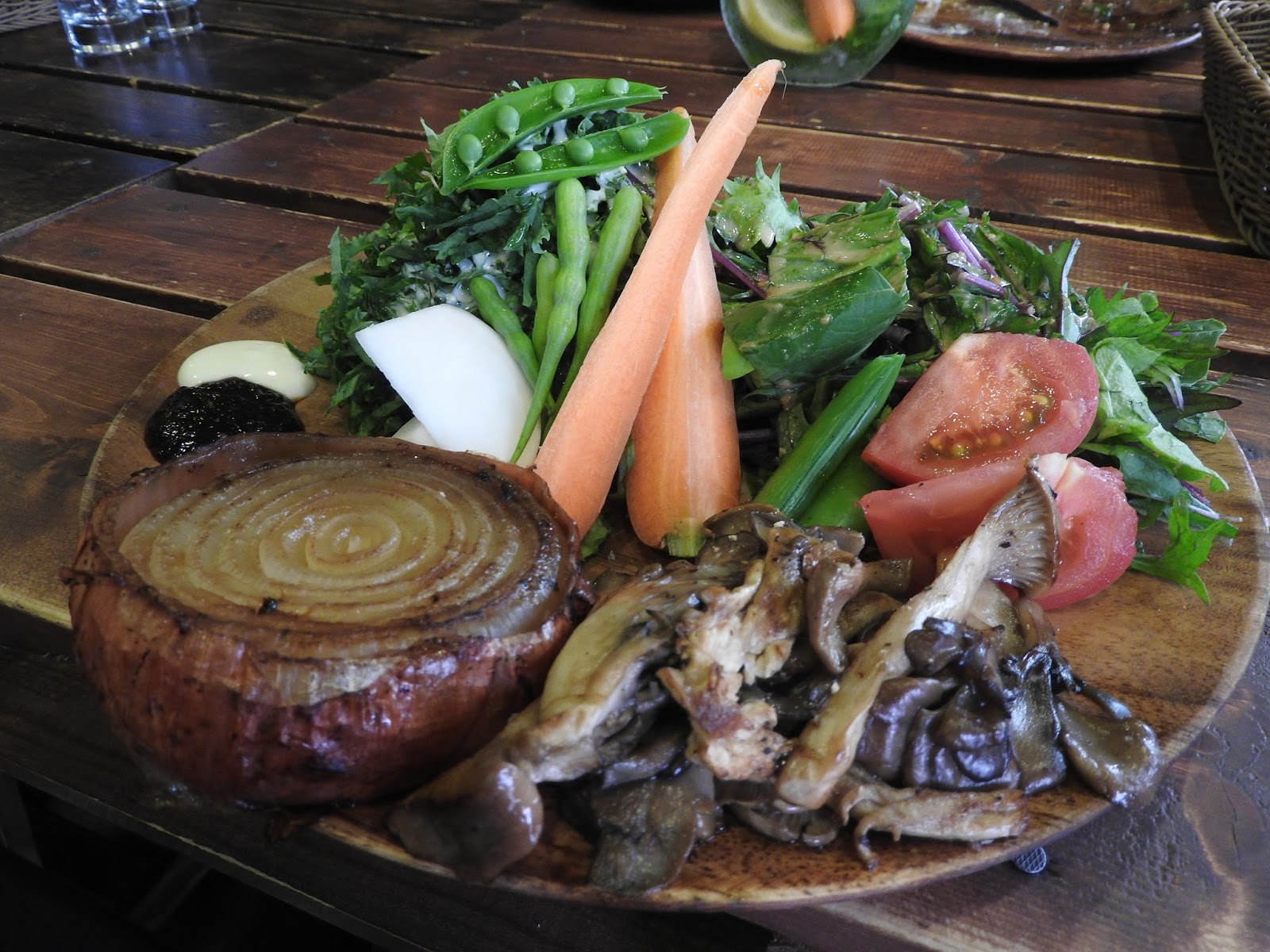
My meal at We Are The Farm's Standby Farm in Ginza.

As a big advocate of farmers, I was very excited to learn of these two restaurants, Noz by T.Y. Farm and We Are The Farm, doing farm-to-table in Tokyo in a very special way. Both offer excellent fare at their restaurants, but the twist on the story is that both do it using ingredients from their very own organic farms. Read the whole story here at Savvy Tokyo, and then head out to both to sample what good stuff they have in store. You will not be disappointed.

Friday, December 2, 2016

December Farmers Markets in the Tokyo and Yokohama Regions

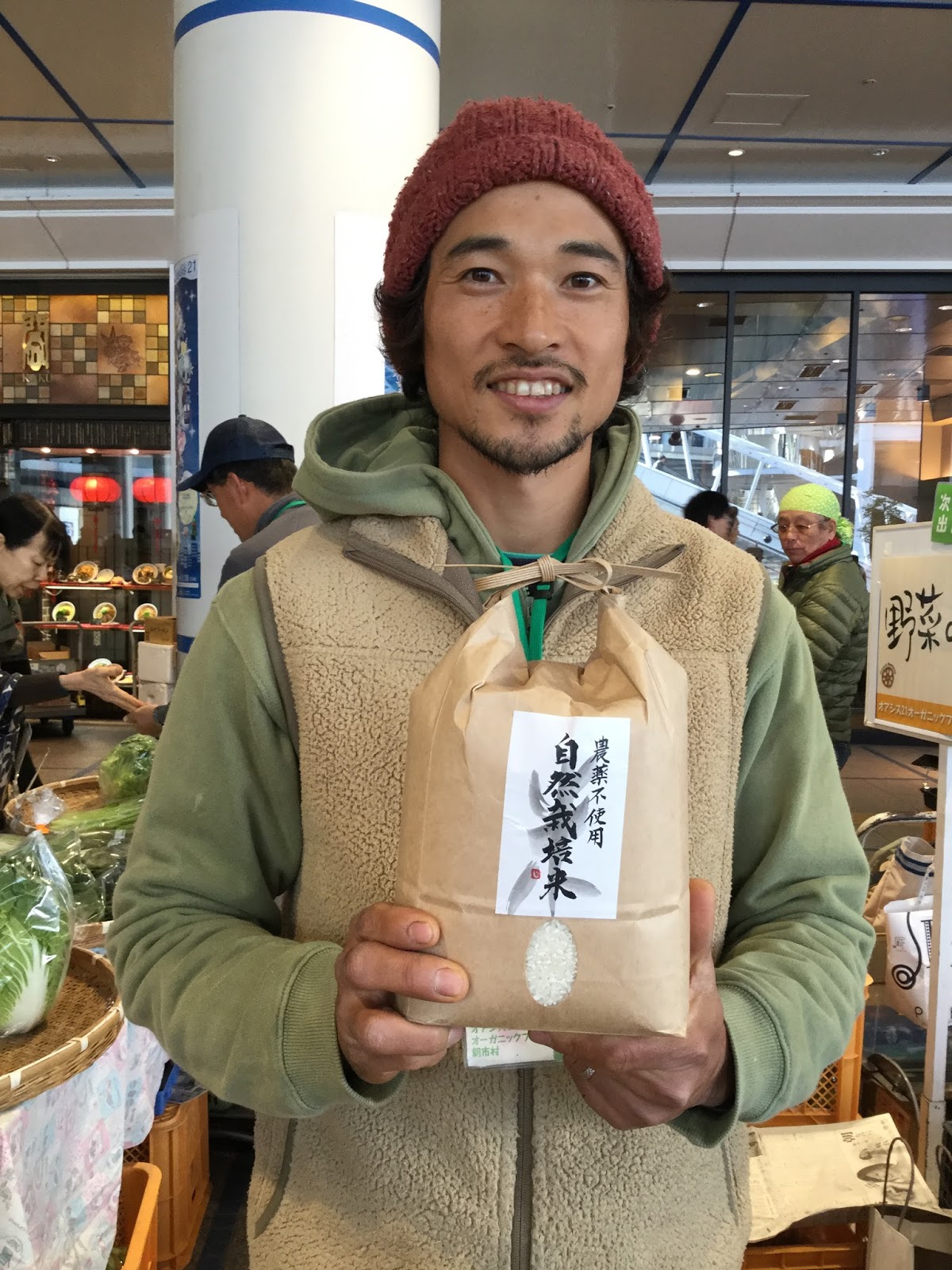
Atsu Suzuki from Nice Time Farming at the Nagoya Organic Farmers Market.
Winter may be arriving in fits and starts, but the fields are pouring forth some of the best produce yet. Look for rice harvested this fall along with daizu (soy beans) in all colors, shapes, and flavors, as well as vibrant winter greens and the first wave of sunny citrus. Holiday shopping, it should be noted, is made easy with a visit to any of these markets. Presents or simply stocking the cupboard will be a delight!

Market of the Sun
Saturday, December 10th and Sunday, December 11th
The newest of Tokyo's farmers markets at two years old, Market of the Sun (a.k.a. Taiyo Marche), professes to be one of the largest. A short walk from Tsukiji Market and its wonderful surrounds, this market is worth a visit for its lovely selection of foodly and crafty items that rivals the goodies found at the UNU Market.
10am to 4pm
Step out of Kachidoke Station at Exits A4a or A4b and look for the tents.

Kichijoji Harmonica Yokocho Asaichi
Sunday, December 18th
Early birds on Tokyo's west side should count themselves lucky to find this little market in the warren of shops just north of the station. While fruits and veg are a bit lacking, the market is big on craftsmen and women doing interesting work, excellent baked goods, miso, rice, and other tasty treats. It's worth noting that a number of places offer breakfast deals in the market!
7am - 10am

Koenji Farmers Market
Saturday, December 17th
Spotted a handful of years ago while riding the Chuo Line, this little market is still going strong. A circle of red awnings in front of the Za-Koenji Public Theatre marks the spot where friendly folks with good food and interesting stories await.
11am - 5pm
Map

Nippori Farmers Market
Saturday, December 17th and Sunday, December 18th
This charming market in the heart of old Tokyo abounds with a sense of community and friendliness as well as good food. Small but lively, particularly on Saturday, it features a monthly geographical theme although regular vendors include Tohoku growers and some of the best steamed manju in the world.
No map, but just head out the East Exit and look for the green awnings
10am to 5pm

Yokohama Kitanaka Marche
Saturday, December 17th and Sunday, December 18th
One of the best markets going in the Yokohama area, and it's perhaps no coincidence that they are only moments away from Baird Beer's Bashamichi Taproom. Started by the same folks who created the Market of the Sun, the Kitanaka Marche to be growing steadily with tasty offerings of fresh seasonal veg, fruit, baked goods and preserves. Read my other review over at Outdoor Japan's Traveler Magazine for the full scoop.
10am to 4pm
Bashamichi Station, Exit 2*
Note that the market has moved, so come out of the station, turn right, and take the next right turn. Keep walking past the construction site and keep an eye out for the white tents running along next to the river.

Oiso Farmers Market
Sunday, December 18th
This little gem of a community shindig is one of the best things going outside of the Earth Day Market. Started a handful of years ago, it blossomed into a full-on monthly festival that just happens to feature Shonan area produce in its fresh, seasonal form as well as pickled, dried, and prepared-hot-in-a-bowl varieties. In summer, it transforms into a night market, while year-round a much smaller version takes place every Saturday. Lee's Bread alone is worth the journey. Read my full review at Outdoor Japan's Traveler Magazine.
10am to 3pm

Every Saturday
10am to 12pm
Oiso Port Building

Earth Day Market
Sunday, December 4th
I could wax on forever about how great this market is and how important it is for the future of Japanese farming and global food security. However, I'll just insist that folks go and see for themselves what great things the market and these innovative growers are doing. Come find some good food and fun!
10am to 4pm, Rain or shine
Map

Kamakura Farmers Market
Every day
A small local affair featuring Kamakura heirloom fruits and vegetables raised in yet another former capital city, the Kamakura Market is a treasure. Head in early to get the best selection and pick up a loaf of Paradise Alley's charcoal-infused bread while you're there.
7am until sold out
Map

Every Sunday
Ebisu Market management are going all-out this month and hosting a market every Sunday. They've been recruiting more staff and hunting up vendors, so head on out to be part of the action. A recent visit showed this always lovely market remains charming as ever with an excellent selection of seasonal fruits and vegetables, scrumptious looking snacks, and crafty items. I'd also recommend a trip to Afuri Ramen when you're done for some of the best yuzu tsukemen in town.
11am to 5pm

Every Friday
A charming little weekly market tucked conveniently just outside the turnstile at Futamatagawa Station in Yokohama where a nice selection of fresh, seasonal fruits and vegetables await. Joining them are baked goods, rice, miso, and all the other fixings one might need for the week or just a good snack. Plenty of Kanagawa goodies, too, so be sure to ask!
10am to 6pm
Look for the tables when you step out the gate!

Every Saturday and Sunday
A massive weekend affair that is great fun and features a variety of fruits and vegetables and prepared products from all over Japan. Plus, there's a most excellent selection of food trucks offering everything from salad to zingy curry to roast chicken to falafel!
10am to 4pm

Every Saturday
Back up and running after a refurbishment of the market space, the Roppongi Farmers Market is as booming and bountiful as ever. Don't miss this chance to meet a grower from Tokyo's very own Kokobunji and sample seasonal bounty.
10am to 4pm (Usually. Do check their website for schedule fluctuations.)

Every Saturday and Sunday
Smaller than the UNU Market, Yurakacho features a particular region of Japan each week along with an excellent selection of seasonal fruit and vegetables. Growers from nearby Chiba, Kamakura, and Saitama are also on hand to help fill the larder.
11am to 5pm
Directions: Turn left out of Yurakacho station and cross the courtyard toward Tokyo Kouku Keitan. Look for the fun under the overhang!

Know of a market? Give me a shout and we'll add it to the list!

Monday, October 10, 2016

Finding Heirloom Seeds in Japan

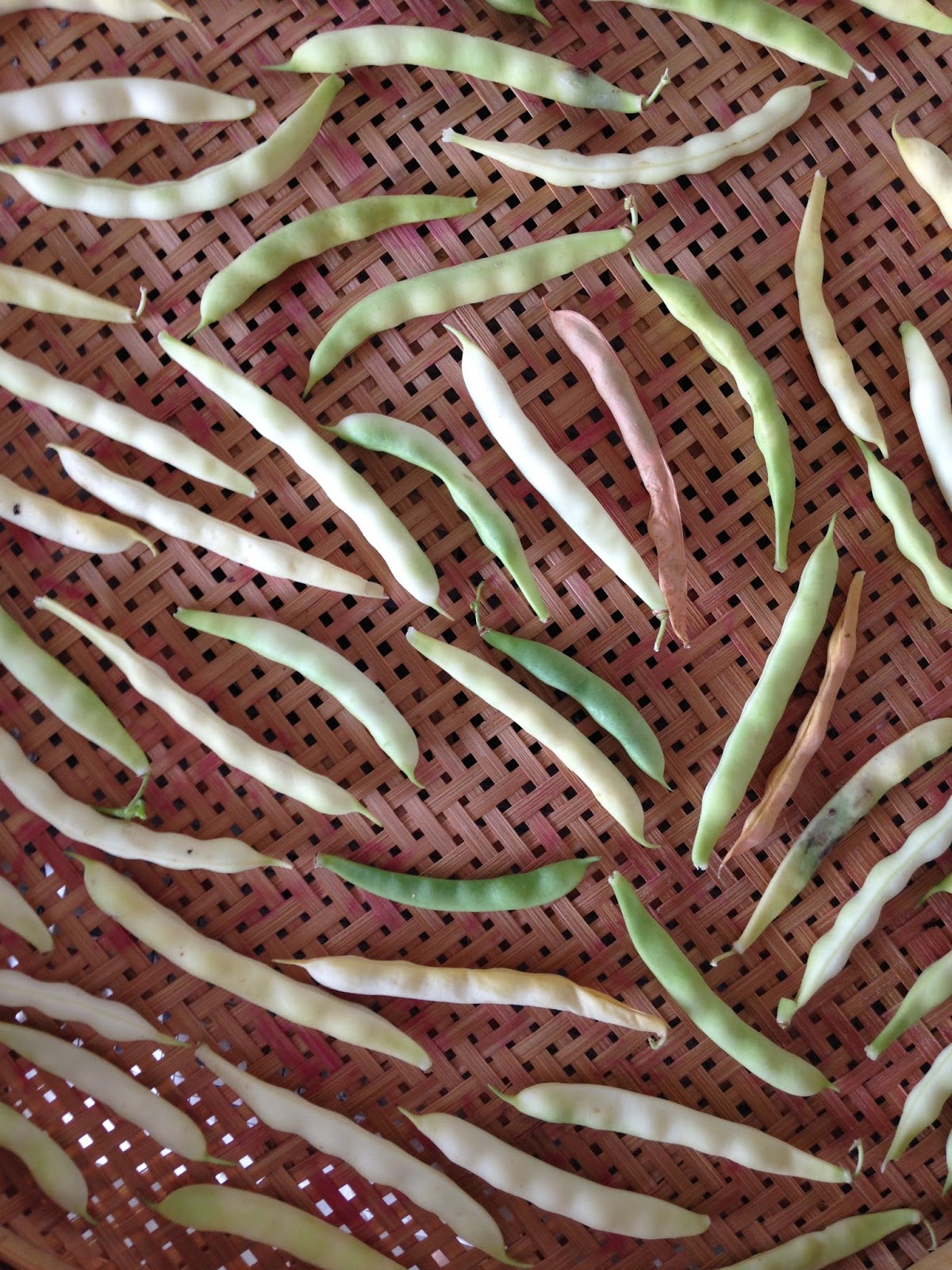
Drying pods of heirloom Hutterite Soup Beans.

Since moving to Japan eight years ago, one of my greatest challenges as a farmer-gardener has been to find heirloom or open-pollinated seeds. The majority of seeds available are not GMO (genetically modified organisms) as Japan, at this point, doesn't accept this material. Most seeds, though, are nearly all F1 varieties.

Heirloom and F1 Varieties
In plant breeding, F1 is the name given to the first generation of a cross between two true breeding parents. For example, if I decide to cross an Amish Paste Tomato with another heirloom variety tomato such as Emmy, in hopes of getting a gold paste tomato, the resulting generation of fruit is F1.

In order to get that tomato of my culinary dreams, I'll need to choose members of that first generation that are headed in a direction I like - early ripening, medium-sized fruit, good taste - and save their seeds. I'll plant them and repeat the process again and again over time until I get the one I want. (I will, of course, be eating my mistakes as I go, which isn't all bad.) The result is a vegetable that I like, that is tailored to my soil and climate, and that I can share with neighbors, friends, and even total strangers who also daydream about a golden paste tomato.

Today, though, F1 often stands for plants that are not the first generation of a cross between two true breeding parents, but rather somewhere further down the line from that original pair. Seeds saved from these F1 hybrids will not grow true. (Seed can be saved and eaten, but it just won't be the same as that first one. Patient gardeners can hack their way through the hybridization process to get something they might want. Those who want to try their hand at that should check out Breed Your Own Vegetable Varieties by Carol Deppe.)

Open-pollinated or heirloom varieties, though, do grow true. If you plant, for example, an Amish Paste tomato, save the seeds, and plant them the next season, an Amish Paste tomato will grow. These varieties have survived and been passed down from generation to generation, literally from hand to hand, because they are reliable, taste good, store well, and are integral to local foodways.

Japanese Heirloom Seeds
Japanese heirloom seeds can be found in Japan through two main organizations. Tane no Mori specializes in organic seeds of traditional Japanese vegetables, but also European and American ones. This seed company is popular with a number of organic growers and producers. They also run a number of events and a monthly market near their home base in Saitama Prefecture.

The largest selection, though, is available from Noguchi Seeds. Also headquartered in Saitama Prefecture, Noguchi Seeds offers the widest selection of traditional varieties I have found yet. Many are Edo yasai (Edo vegetables) that were once common and even famous, but are now not well-known at all.

Other sources I use are asaichi (literally translated as morning market, these are traditional farmers markets) and western-style markets, michi-no-eki (roadside stands) and chokubaijo (vegetable stands). Many of the growers selling at these places continue to save their own seed and grow it. It's worth asking!

Joan Bailey writes about food, farming, and farmers markets with a little bit of travel thrown in for good measure. Get in touch to learn more about food in Japan or read some of her other work here.

Thursday, August 13, 2015

Thursday Snapshot: An American Heirloom in Japan

Hutterite Soup beans drying.
I have long wanted to grow my own dry beans. Since I am lucky enough to have found a community garden space out here in Kanagawa, I decided this was the year. Hutterite Soup Beans were planted a wee bit late alongside the popcorn and left to their own devices. I managed to forget to thin them, and still they thrived.

Somewhere in the first week of August I picked the not quite dry pods and set them to dry on the zaru I use for umeboshi and popcorn. I'm visiting in the US and won't be in Japan to rescue them from typhoons, marauding tanuki, or anything else that may come along. We'll see what happens.

Friday, March 27, 2015

Tokyo and Yokohama Regional Farmers Markets: Saturday, March 28th and Sunday, March 29th

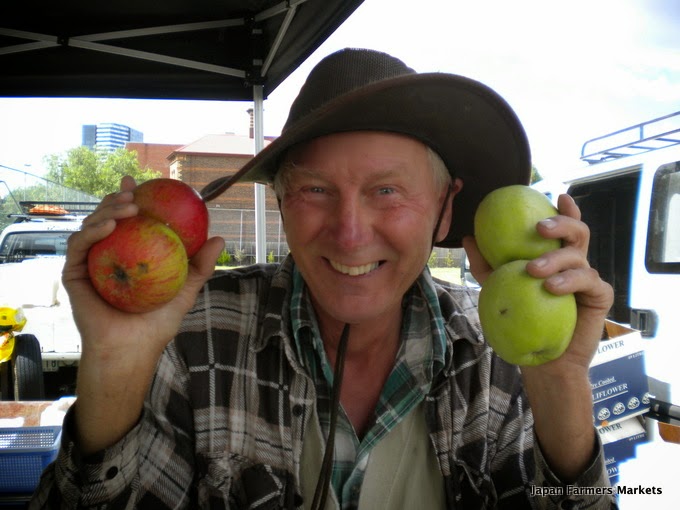
John Howell with some of his lovely apples at Melbourne's Flemington Street Market.
John's apples, along with his daughter, can also be found at Melbourne's Slow Food Market.
The sakura are bursting at the seams outside my window, which is surely one of the earliest flutterings of Spring's cape as she starts round the corner. Pick up some of the best grub going at a farmers market this weekend for hanami delights or better yet settle in at Beernista just around the corner from the Earth Day Market. This two day market and craft beer extravaganza is seriously the best scene in town. Pick up your salad fixings and head on over!

Saturday, March 28th and Sunday, March 29th
I could go wax on forever about how great this market is and how important it is for the future of Japanese farming and global food security. Instead, I'll just insist that folks go and see for themselves what great things the market and these innovative growers are doing. This month the market will be a a three-day wonderland of organic and fair trade goodness not to be missed. Come frolic and enjoy!
10am to 4pm, Rain or shine!
Map

Kamakura Farmers Market
Every day
A small local affair featuring Kamakura heirloom fruits and vegetables raised in yet another former capital city, the Kamakura Market is a small but wonderful venue. Head in early to get the best selection and pick up a loaf of Paradise Alley's charcoal infused bread while you're there.
7am until sold out
Map

Futamatagawa Farmers Market - Yokohama
Every Friday
A charming little weekly market tucked conveniently just outside the turnstile at Futamatagawa Station in Yokohama where a nice selection of fresh, seasonal fruits and vegetables await. Joining them are baked goods, rice, miso, and all the other fixings one might need for the week or just a good snack. Plenty of Kanagawa goodies, too, so be sure to ask!
10am to 6pm
Look for the tables when you step out the gate!

Every Saturday and Sunday
A massive weekend affair that is great fun and features a variety of fruits and vegetables and prepared products from all over Japan. Plus, there's a most excellent selection of food trucks offering everything from salad to zingy curry to roast chicken to falafel!
10am to 4pm

Every Saturday
Back up and running after a refurbishment of the market space, the Roppongi Farmers Market is as booming and bountiful as ever. Don't miss this chance to meet a grower from Tokyo's very own Kokobunji and sample seasonal bounty.
10am to 4pm (Usually. Do check their website for schedule fluctuations.)
Map

Yurakucho Farmer's Market
Every Saturday and Sunday
Smaller than the UNU Market, Yurakacho features a particular region of Japan each week along with an excellent selection of seasonal fruit and vegetables. Growers from nearby Chiba, Kamakura, and Saitama are also on hand to help fill the larder.
11am to 5pm
Directions: Turn left out of Yurakacho station and cross the courtyard toward Tokyo Kouku Keitan. Look for the fun under the overhang!

Know of a market? Give me a shout and we'll add it to the list!

Wednesday, August 21, 2013

Natural Farming Article in Permaculture Magazine

Cover of Permaculture Magazine, Issue 77.
Our visit this past spring to Hamma Farm in Nara Prefecture is one of the most amazing trips I've taken yet. While there were no great peaks to scale, rushing rivers to cross, or kilometers to bike, it was an adventure in food and farming that I adored. Kazuto and Erina Hamma, the brother and sister duo that run the farm, opened their natural farm to my husband and I for four days of good work, great food, and lovely companionship. I left feeling like I'd been reunited with long lost friends and with a renewed sense of sustainable farming.

Permaculture Magazine (a UK publication worth every penny a subscription costs) felt my story was worth sharing with their readers. The most recent issue includes an account of my visit there and the Hamma's story. It's a great bit of reading, if I do say so myself, and will hopefully inspire others to look at natural farming more seriously. (You'll have to buy the issue if you want to read it.)

Monday, August 5, 2013

A Review of David Buchanan's Taste, Memory: Forgotten Foods, Lost Flavors, and Why They Matter

These days I spend a fair amount of time reading books for review with a few thrown in for pleasure. One of the latter is Taste, Memory: Forgotten Foods, Lost Flavors, and Why They Matter by David Buchanan (Chelsea Green, 2012). After reading an excerpt on Chelsea Green's website, I was so entranced by Buchanan's writing that I bought myself a copy. (Full disclosure: I regularly receive Chelsea Green books for review.)

I read much of it on our flight from Chicago to Tokyo this past March, which speaks volumes about Buchanan's ability to tell a story. The only other author to hold my attention on that interminable flight was Philip Pullman, and Buchanan manged it with nary a fantastical being in sight. Taste, Memory explores what place heirlooms and the raising of them have in this modern world of farming and food. Of particular interest for farmer types like me is his exploration of whether or not it's practical.

Most people, especially anyone reading this, is thinking "Of course it matters." with a few including a why-do-you-even-need-to-ask snort or, at the very least, raised eyebrows. But I think Buchanan's question is extremely relevant. Even as people begin pushing for non-GMO foods and farmers markets expand, those who do the growing face the same outrageous odds they always have.

Farming is hard work that pays little. It's a job done not because one imagines finding fame and fortune, but out of a love for land and food. It's a 24-7 job with an impatient product, only a smattering of days off, and has Mother Nature as an unpredictable business partner. It's easy to see why few people choose the field (pun intended) and why many farmers opt for seeds and crops that grow reliably and with relative ease. 

Heirlooms are old, often traditional varieties grown for flavor and regional suitability. This tomato or peach grows well in this valley. This cucumber is a favorite in this county. Buchanan mentions the Marshall, a nineteenth century strawberry that barely makes it from field to market, but with an incredible flavor. Some heirlooms are disease resistant and others are not. Some may not be pretty but they make a mean pickle or a good pie. More often than not heirlooms are open-pollinated varieties cross-bred by generations of farmers who thought this or that breed mixed with another might prove interesting. Seeds were saved and passed down and over fence lines. The stories are countless and fascinating, and as an avid grower and collector Buchanan sweeps us along with many a tale.

Buchanan also takes readers on various adventures as he explores avenues for turning his passion for heirlooms into a viable business venture. He searches for a legendary cider tree and taste tests experimental homemade ciders. He visits potential farm sites and joins meetings convened for the purpose of selecting fruits or vegetables for inclusion in Slow Food's Ark of Taste. Admittedly, there are times when Taste, Memory feels like a farmer version of Eat, Pray, Love, where we move with the writer through various levels of enlightenment, blah, blah, blah. Despite these foodlier-than-thou moments I still liked it.

Buchanan presents as frank, friendly, enthusiastic, slightly bumbling, passionate, and thoughtful. He admits his mistakes (building a house and garden in the wrong spot) and shares what he's learned (growing for market can be lucrative but reduces the number of varieties he's inclined to plant). He tries to be realistic about making his dream come true, always stepping back to assess what he's doing and why. A tale of a visit with a realtor to a beautiful old farmstead as he searches for land is heart-breaking as he reads and researches and calculates the lingering effects of chemicals on the land. In the end, he makes a very different choice. 

What I liked best, though, about Taste, Memory is that Buchanan's final answer as to whether or not heirlooms are worth the effort is cautiously affirmative. He's a good example of gut instinct mixed with careful reflection and practical thinking. He is a passionate but cautious farmer, a fine example for all of us overly-enthusiastic growers who plant two rows too many or bring home twelve too many seedlings.

We leave Buchanan still finding his way, continuing to set out the stones of the path even as he's walking it, still contemplating the best way to bring these old varieties to life for his customers. His theory is that by sharing these plants with others (by selling them in one form or another) he increases the variety's chance of survival and plants a seed (pun intended) of heirloom passion. He's also increasing the diversity of locally grown edible crops, which can only be a positive thing. His continuing experiment takes a surprising number of forms: nursery stock, smoothies, cider, seedlings.

Buchanan also makes the case that doing things on a large scale isn't the right answer. Old models of large scale monoculture don't work in so many ways for the soil, the farmer, the eater, and the local economy. Monoculture means an eventual need for sprays and fertilizers to fend off disease and pests that can run rampant in such environments. Sprays and fertilizers damage soil, water, and air used by everyone above and below the soil including wildlife, pollinators, microbes, the farmer, and the neighboring community. The very soil the farmer relies on, the gift bestowed by previous generations and Mother Nature, dies. The consumer loses another source of local food and flavor.

Buchanan, thankfully, shows a viable alternative. Small diverse farms are more resilient economically and biologically. If one variety of strawberry or peach fails, another is there to fill the space. Buchanan grows enough to turn a profit, but not so much that he stretches himself too thin. Make no mistake: Buchanan is busy researching, weeding, sorting, brewing, planting, writing, photographing, harvesting, preserving, but not perversely so. He's not getting rich, but he's making a living. He's also happy and enjoying himself. Sweet strawberries, fun at the farmers market, and cider sampling – what's not to like?
Saturday, December 31, 2011

A Few of My Favorite Moments

Erika Dreifus recently tweeted this blog post from Lisa Romeo that varied slightly from the usual year-end reflection concept. Rather than thinking solely about New Year's resolutions, the author suggests focusing for a moment on what was accomplished. The idea struck a chord with me as 2011 has been a busy one with extra teaching responsibilities and an increased effort on writing while still attempting to farm, garden, visit farmer's markets in Tokyo and beyond while studying Japanese and trying out new recipes while perfecting some old ones. It's all been good fun, but it's also no surprise that our winter Hokkaido vacation finds me leaning towards the nap as a favored activity.

Daizu Revolution and Takashi Watanabe Interview
I first met Takashi Watanabe in January at an eco+waza event at Earth Day Market headquarters in Tokyo. Intrigued by his story and the birth of Tozaiba, a non-profit organization bringing people together in fallow fields to grow heirloom varieties of daizu (soybeans) along with a little bit of community, I later followed up with an interview for a Real Time Farms blog post. I don't see soybeans the same way any longer.

Osaka's Odona Farmer's Market
We self-evacuated after the March earthquake to Osaka to take a break from the aftershocks and to see what might happen in those early days. I was on crutches from a dancing injury (don't ask), and it seemed like a safe choice. Not one to let earthquakes, nuclear disasters or a strained Achilles keep me away from vegetable exploration I bumbled my way over to a market I'd missed during our January visit. Wow. My visit to this rockin' market went up a few days later on Summer Tomato.

Satoyama
One of Japan's most unique farming practices is that of satoyama - a farming practice that leaves itself a buffer of half-wild, half-managed land between it and the surrounding wilderness - that offers a viable enough set of sustainable techniques that an international organnization, The Satoyama Initiative, began implementing and studying similar practices and projects around the world. My assignment from eco+waza to cover it was another eye-opener.

Blogathon Year Two
Perhaps one of the most formative blogging experiences I've had yet, participating in WordCount's annual Blogathon shaped my writing life and introduced me to a great community of fellow writers. The challenge of writing a post a day every day for the month of May always sounds easy, but it isn't. Inspiration occasionally runs dry, and a busy schedule of planting and teaching sometimes means a post written in the haze that settles over me just before bed. All that, and I'm looking forward to doing it again in 2012.

Ludlow and England
September found us tromping about with some of our favorite people in the world on their home turf: England. They introduced me to the Ludlow Food Festival, and I am nearly desperate to return in 2012 to sample, meet, sample, and learn. It was just amazing. The resulting pleasure of eating at The Talbot Inn after picking perry pears at Oliver's Cider and Perry were two unforgettable highlights that I shamefully have not written about yet. (I know. Focus on what was accomplished, but I loved doing those two things so much.) Next year, maybe a trip to the Eden Project, the RISC Roof Garden, and another day perry picking would be a dream. The four extra kilograms I put on are worth the risk.

Hokkaido Bike Tour
No big hiking trip this year due to that darn Achilles, so we opted to try biking instead. We folded up our bikes, packed them on a plane, and made our way north. After a glorious week of cat-sitting, we packed our backpacks, unfolded our bikes and hit the road for places like Akeshi, Nemuro, and Hamanaka. It was glorious, albeit exhausting, and I'm hoping to find myself doing it again this summer, too. (The leg was fine, by the way.)

Too Much Other Good Stuff
The list is getting too long, so I'm going to wrap up and get ready to greet the year of the Dragon on our current trip to Hokkaido. The year is ending well as I meet weekly with a good friend working on a first book to talk about writing and goals, and hope to visit farmer's markets again in Aizu Wakamatsu and Sendai to see how farmers in areas affected by the March 11th disaster are faring. See you then!

Got a few highlights of the year? Let's hear it!

Monday, December 5, 2011

Toziba's Daizu Revolution


This past August I had the good fortune to interview Takashi Watanabe, founder of Toziba, an innovative non-profit that is one of the most sock-rocking food-farm-community organizations out there. We first met at an Eco+Waza event in January where I was deeply impressed by his story and the motivation for founding Toziba. (I do write for Eco+Waza's website and magazine, by the way.) Munching on early edamame from the farm, I recalled meeting him and decided he'd be an interesting person to interview.

And, so, with the help of a good friend translating we sat down at the Earth Day Market and talked about soybeans (daizu), the importance of heirlooms, and the effects of March's triple disaster on food and how people in Japan are thinking about food. You can read the full article over at Real Time Farms, another sock-rocking food-farm-community organization, for the full scoop.

Sunday, May 22, 2011

Green Curtain: Variations on a Theme

Even before Japan's current energy concerns due to the earthquake, green curtains could be spotted everywhere. Usually constructed from goya (Okinawan bitter gourd), the vines twine their way up netting to provide an extra bit of shade during the summer months. (The most famous of these is the one clamoring over the Suginami Ward Office.)

This year, of course, as a result of the problems at the Daiichi Plant and the closing of Hamaoka for precautionary reasons, the summer may be hotter yet. Word on the street has it that people are advised to set their thermostats at 28-degrees Celsius (82.4 Fahrenheit) if they feel a need to run their air conditioners. Companies and households are asked to strive for a 15-percent drop in overall energy consumption, with large users facing a fine of up to 1 million yen if they fail to comply.

As they have since the March 11th quake, Japan is responding with extraordinary resolve. The university where we teach switched to Cool Biz wear (i.e. short-sleeve shirts with the optional tie) policy a month early. They've also put reflective material on the west facing windows of many of the buildings to keep the interiors a bit cooler. People are talking about purchasing ice pillows (pillows popped in the freezer and then slept on for a cooler night), eating more ice cream (maybe that's just me), and hanging bamboo shades over windows and to protect walls from direct sun exposure. Many of my adult students also mentioned growing a green curtain for the first time ever, too, and I've seen more and more of them going up around the neighborhood.

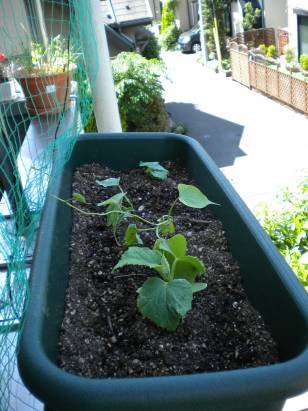
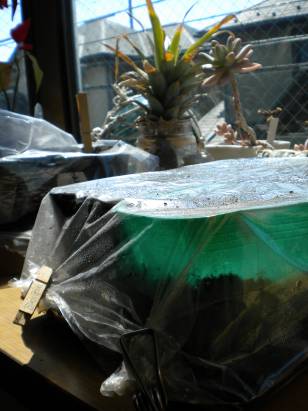
Our green curtain is also underway, but with a few changes this year. The goya vine is sending tendrils out already, but I mixed in morning glory, cucumber, and on a whim: scarlet runner beans. The last should add some terrific foliage, lovely red flowers, and some tasty beans, to boot. I'm also betting they'll add a nice bit of nitrogen to the pot, which the other plants will appreciate as they season goes along. (FYI, the seeds are still lying in wait in the top photo. Meanwhile, the other plants are working on climbing higher to enjoy their sunny view of the neighborhood.) Since I mix edible and ornamental in the garden it seemed only logical to bring that same philosophy to my balcony garden.

Use plants for shade or energy conservation techniques? If so, do tell! This summer promises to be a hot one, so I'm looking for all the ideas I can find.

Friday, April 1, 2011

Better Late than Never: Seeds Potted Up!

Our month in America followed in short order by a strained Achilles and Soleus muscle, the earthquake, and a trip to Osaka, means I've gotten a bit behind on garden work both at the farm and on our balconies. While I've managed to get a bit of tidying done at the farm garden, there's still plenty to do:
  • a yuzu tree that is looking to move to a larger pot with some spruced up soil
  • empty window boxes that need to be prepped with green curtain fixings
  • seeds that need to be started for the garden as well as the green curtain
  • garden diagrams to be drawn up with a list of crops for this year (need to reference garden journal to make sure I get the rotation right)
  • a compost bin to build so I can...
  • turn over the compost in the bin
Sunday's task, though, was to get some seeds started. Potted up and sun-bathing in our bay window even as I type are pots of cardinal climber, calendula, and Brandywine tomatoes. Next up will be some chili seeds my gardening partner from Singapore likes, cilantro, morning glories, cucumbers, and zucchini. And maybe one or two more. Once I get going, it's hard to stop.

Tuesday, August 24, 2010

Squash Crop Update


While the popcorn harvest dries in the kitchen I've been out working in the garden to tidy things up and get ready for winter crops. And as I mentioned it's been a bit of a difficult year for me. Aphids jumped all over my zucchini and kole crops, so there wasn't much to reap there. The garlic harvest was also rather lackluster for any number of possible reasons, and for some time I've been more than a little concerned about the squash. Yellowing leaves along with blossom and fruit drop had me worried that yet another crop was about to simply contribute to the compost heap.


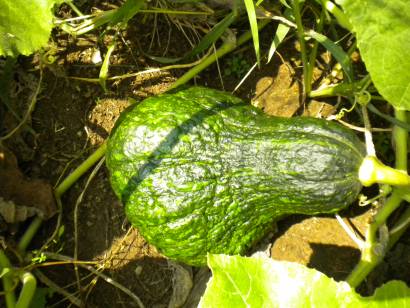
The popcorn has lifted my spirits, and much to my pleasure at least six squash - some Chirimen and some Shishigatani - are nestled under the leaves and growing steadily. I took a few photos the other day while weeding (nothing like a vacation for the weeds to move right in!) and like any proud parent I'm showing them off. Now, fingers are crossed that they make it all the way to harvest without mishap!

Saturday, August 21, 2010

The Popcorn Harvest

Vegetables wait for no one. This is a lesson I learn every year, every season, and every crop. The vegetable does not care if I have a blog post or article to write, daily household chores to do, an appointment to keep, a phone call home to make, or in my most recent lesson - a flight to Hokkaido to catch to visit friends and hike for a week. Working with the weather, the soil, and their own biological clock, they do what they must most single-mindedly.

At home in Michigan my popcorn crops stay on the stalk until perhaps late September or October. There they dry in the long summer days with an occasional dousing by storms and showers. I also watered quite religiously there while here I barely water at all. Our hose reached the garden and a rain barrel made daily watering a breeze. Here, the spigot is on the other side of the farm, and I must circumnavigate the eggplant field with its sometimes floppy sorghum border, blueberry bushes, the tomato and bean fields as well as a double row of magnificent sunflowers that rings the farm. Not so arduous, but with the heat and an army of mosquitoes, weeding and harvesting, I lacked the gumption more often than not.

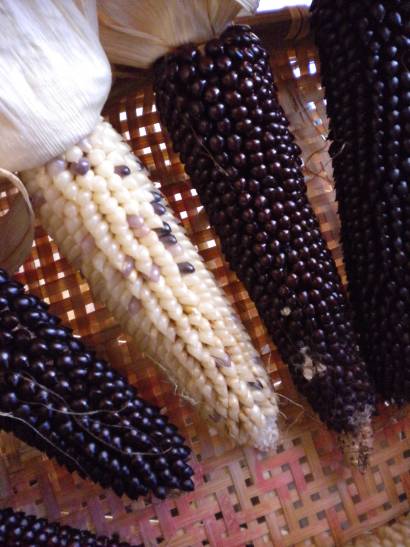
At this moment my theory is that the long, hot dry days characteristic of the weeks after the rainy season perhaps sped the ripening and drying process. I don't know Dakota Black well, so it may be something with the variety, too. Regardless, my umeboshi were replaced by long dark cobs of Dakota Black the morning our plane took off.

Most of the cobs are a deep rich black, but two are variegated with specks of purple and lavender and one is nearly all white. Perhaps cross-pollination occurred - most likely with the Takashi's corn - or I wonder if heirloom seeds sometimes simply produce an occasional rogue fruit. I mean, why not? Humans do.

My other great surprise that morning? Well, there are two. A successful harvest at last (if drying goes well) from the garden is much-needed for my gardening morale. My zucchini trials and some trouble with the Brandywines brought me down a bit, I have to say. This harvest means a great deal. The second? Spying a fat Shishigatani squash happily growing while husking the corn!

Tuesday, July 27, 2010

American Heirloom Tomatoes in Tokyo


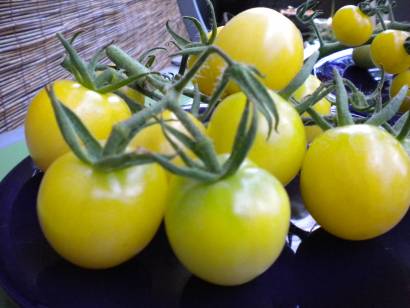
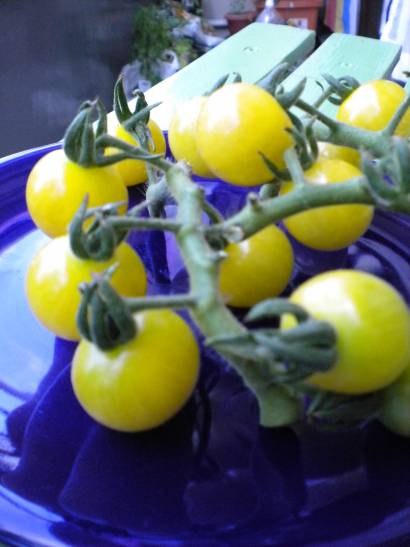
We harvested these lovelies this morning from the greenhouse. Started from Project Grow seeds, we had no idea what to expect. Heirlooms, like my Brandwines, tend to have great names and good flavor. These are no exception. The larger of the two (pictured above) are called Snow White, and have a soft, sweet taste. They're about the size of ping pong ball. The other variety - Lemon Drop - is much smaller and always makes me think of a gooseberry when I look at it. The flavor, though, is pleasantly smooth.

Monday, July 26, 2010

First Brandywines Harvested in Tokyo

I confess to being on pins and needles about my tomatoes. It's been a bit of a rough year in the garden so far, which means plenty of lessons learned. It also means some heartbreak. Some crops didn't pan out and others simply never made it to the pan. Bugs, a little bit of disease, a little bad timing, and weeds that nearly took me down with them have been a few of my teachers this year.

The tomatoes - four Brandywines and four Black Zebras - are American heirlooms that I'm growing for the first time in my Tokyo garden. I'd grown Brandwines in Michigan and dearly loved them. (Frog Holler Organic Farm did turn me on to a couple early ripening heirlooms, but Brandywines remained near and dear.) Growing these tomatoes and anticipating the joy of sharing a taste of home with friends here gives me more pleasure than I can describe.

Seeing the plants under stress and attacked by critters literally wakes me up at night. Did I do something wrong? Did I forget to do something? Did I do something too early? Too late? The list goes on, and I toss and turn. Then there are the warnings about birds, urban wildlife, and general concern about attempting to grow American vegetables in a totally different climate.

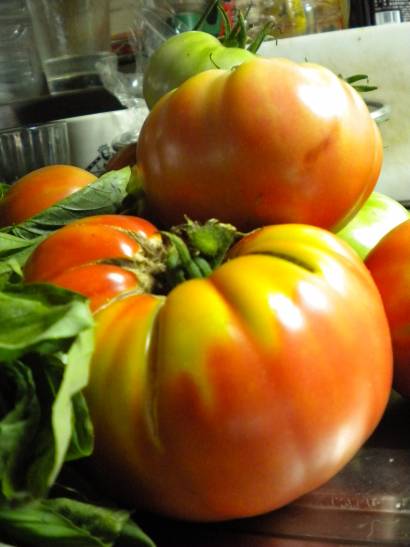
Well, in spite of (or despite) my worrying, the tomatoes just gave up their first fruits. Harvested a little early, these misshapen beauties are all that I could have hoped for and more. Burly fruit that tastes of home and all the best of summer, I can barely wait for tonight's dinner where we'll devour them sliced with a bit of sugar or just plain. A feast for homesick taste buds.

Monday, November 16, 2009

Researching the Squash

As reported earlier, our pumpkin plants didn't make it this summer. Whether or not it was the extremely hot and humid Tokyo summer or late planting wasn't immediately clear. However, while reading an article from Organic Gardening about Heirloom Pumpkins, the answer seems to be emerging.

Variety
Amy Goodman, author and an heirloom enthusiast/expert, explains in her article that there are varieties of squash better suited to a tropical environment. Cucurbits moschata (think butternut) specializes in growing in hot tropical areas. (The light bulb is blazing over my head.) A little research on Seed Savers Exchange, Wikipedia, Google, and whatever other resources I can harness while without an English library revealed to me that this could be the answer to my question. The following is a list of Japanese heirlooms (with one exception) that I hope to find this spring and give a shot.

Futsu
A unique Japanese heirloom squash that I've not yet seen here. I learned about it in a roundabout way after reading the above article in Organic Gardening. It looks and sounds delicious, and I'm quite hopeful to find seeds here for spring planting.

Shishigatani
One of the coolest looking vegetables I've not met yet here in Japan. I'm hopeful, again, to find seeds locally rather than ordering from an American seed company.

Kikuza
Another one that I'm dying to find the seeds for locally, and then grow and eat. The description in this seed catalog made my mouth water!

Chiriman
A squash I, again, don't believe I've met yet here, but I can hardly wait. (It seems I may only be growing squash next year...) This lengthy article in Mother Earth News is some of the best information yet that I've found about heirloom varieties of squash for Japan. It also happens to hit on all the things that I LOVE about heirloom varieties, so I fell hook, line and sinker for this one.

Long Island Cheese
Perhaps the squash listed here with the most unfortunate name, this is the one I'll grow if all else fails for some reason or another. Not a Japanese heirloom but still one with a great little history, this squash sounds quite promising for its tasty flesh, charming appearance, and great texture.

A Good Read?
Amy Goldman, author of several books on heirloom vegetables including her most recent one about heirloom tomatoes, wrote one about squash appropriately titled The Compleat Squash: A Passionate Grower's Guide to Pumpkins, Squashes, and Gourds. It sounds like recommended reading for an heirloom grower, and I'm giving it some thought.