Showing posts with label flowers. Show all posts

Thursday, May 4, 2017

Thursday Snapshot: Volunteer Poppy

Volunteer poppy getting ready to bloom.

I used to go to my grandmother's house every Thursday after school. My mother worked at a local insurance office, and that was the one night a week the agent stayed open late. I would walk over the hill from my grade school to her house where there was always a Tupperware container of homemade cookies waiting and my grandmother. Often, one of my great aunts Esther, Ruth, or Viola would be there with my grandmother, talking and crocheting, the smoke from their cigarettes curling up next to their cold glasses of beer. (I am from Wisconsin, after all.) I would sit down to listen, sneak extra cookies, and laugh at their stories.

My grandmother grew flowers and vegetables, and I always recall that along the beds that lined the walk to the garage full of daisies and poppies. Surely, there were other flowers, too, but those are the ones I remember most and fondly.

So, when these little beauties made their appearance in my garden, I was not about to give them the boot. I see them, and I think of all those afternoons so long ago and smile.

Thursday, July 2, 2015

Thursday Snapshot: Ajisai (Hydrangea) in Bloom

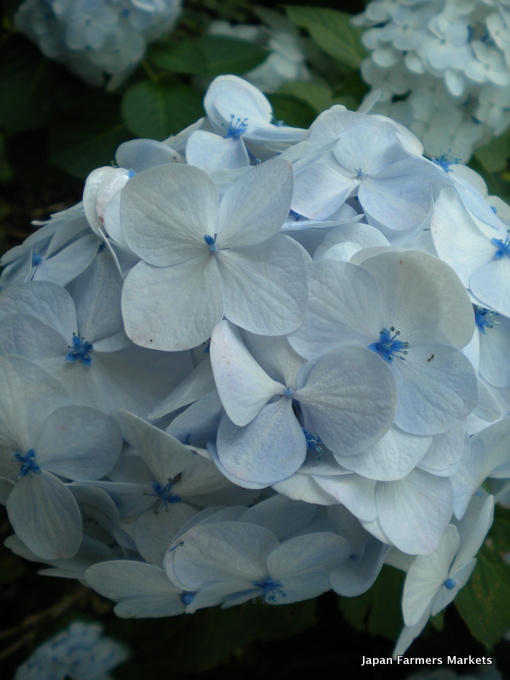
Ajisai (hydrangea) making its little fist of joy.
Tsuyu (rainy season) is very nearly defined by this lovely bloom. A native plant of Japan and Asia in general, hydrangea have never been a favorite of mine. Frankly, I always thought they looked rather stupid. I couldn't understand the fuss over these basketball size blossoms that had no character or charm.

Even after moving to Japan I'd somehow managed to remain indifferent to these flowers, smiling and making the appropriate noises when others pointed them out to me. They were more interesting, but still a bit dumb, I thought while swatting mosquitoes as my companion would gesticulate enthusiastically at the blooms.

But it wasn't until hiking in Daisetsuzan Koen that I fell in love.

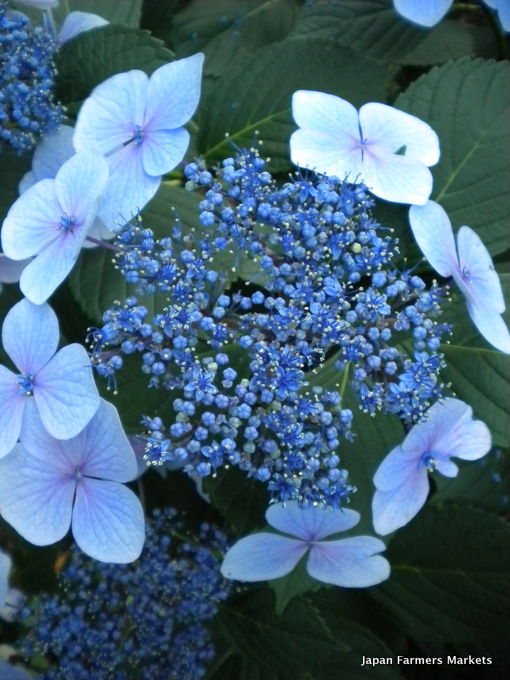
Lace cap hydrangea during a recent mountain hike.
We were hiking next to a small stream, winding our way through a narrow canyon when I happened to look up. There, high in the rock wall above me, I saw a round blue ball of flowers, its stem gracefully reaching up and out to the light, emerald green leaves filled with sunlight. It was then I understood that this was a native plant, not some lame ornamental trophy specimen. I took a photo, which turned out badly, before continuing on.

Now, of course, I can't stop taking their picture. I find them beautiful in all stages, but especially as they fade. There is something particular graceful about those flowers tinged with brown, the color dripping away until the blossoms stand dried on the stems, little treasures to be discovered on a winter hike.

Thursday, May 14, 2015

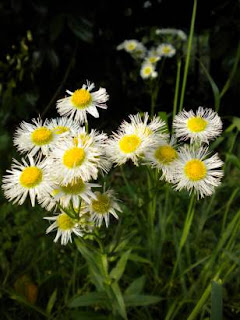
Thursday Snapshot: Fleabane Daisy


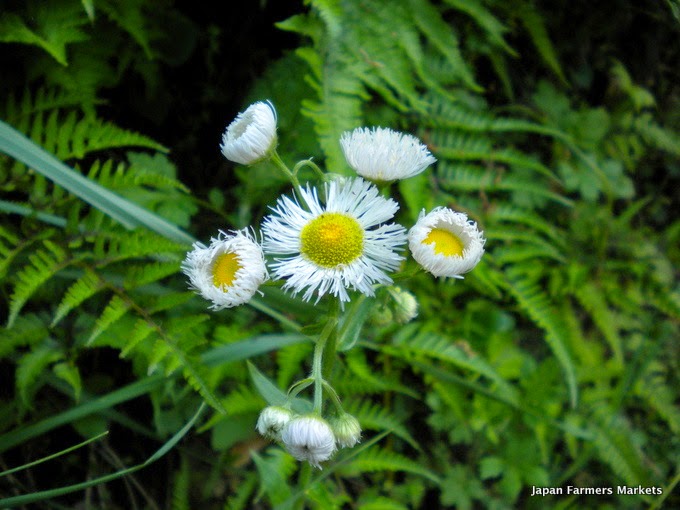
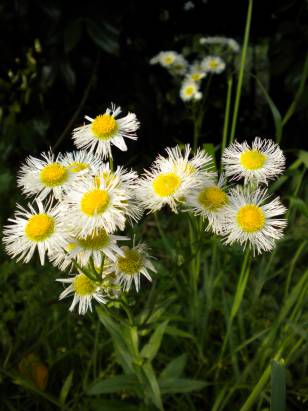
Always a favorite flower, I caught this little cluster on a recent sunrise hike with a friend. They are one of the handful of volunteer plants I try to not weed out of the garden or anywhere else. They are far too cheerful to remove.

Thursday, April 30, 2015

Thursday Snapshot: Brunia Blossoms


Spotted at the TasFarmGate Market in Hobart, Tasmania, these Brunia Albiflora blossoms were too extraordinary not to snap up in photo form. Native to South Africa, these pine-reminiscent "blossoms" must be popular. When I came around again with my regular camera, they were gone.

Thursday, September 11, 2014

Thursday Snapshot: Blooming Port-a-potties


Morning glory curtain
I have long stated that my favorite toilet ever was a toilet set on a hillside behind my friend's house in Guatemala. There were no walls or roof, just me and the valley swooping away before while the far green mountains ran along the other side. If it rained, I took an umbrella and sat. If it was sunny, I wore a hat.

The entrance.
This set of port-a-potties comes in at a close second, though, with its drapery of cool green leaves and bright blue blossoms. I gave serious thought to 'taking a rest' here even though I had no real need. Across the street from an elementary school and next to a mechanic's shop, I am sure it is something of a neighborhood constitutional institution.

Thursday, September 4, 2014

Thursday Snapshot: Crocosmia or the lovely orange flower

Crocosmia crocosmiliflora in bloom
This little orange bloomer is a member of the iris family that started out in South Africa and has since wandered the globe in ever varying forms. It is not a native, of course, of Japan, but can be found in almost every garden. I do love those cheerful blooms, a hallmark of summer that I enjoy inifinitly more than the oppressive heat and humidity. September will see them start to fade, but I'll eagerly search them out next year when summer drives me out in search of ice cream.

Thursday, August 14, 2014

Thursday Snapshot: Negjibana (sprial flower) in the garden

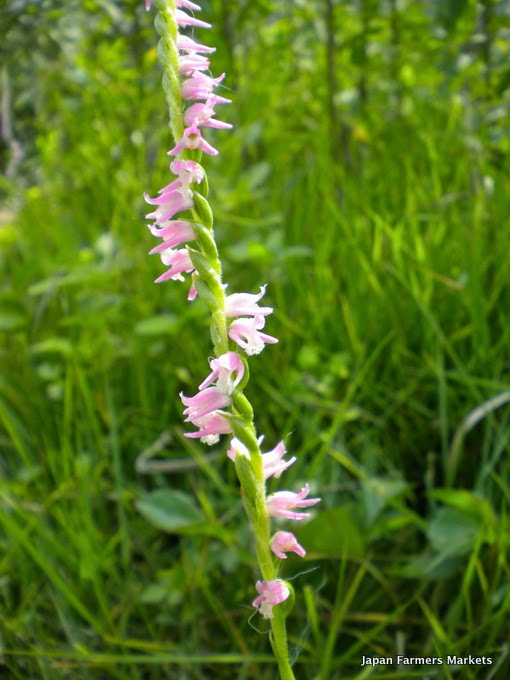
Nejibana (twisting flower) in my garden.
This lovely flower, perhaps no taller than 7cm, greeted me one morning in early July as I walked in the garden at our place in Kanagawa. A member of the orchid family, Nejibana (twisting flower) is a member of the Spiranthes family. Relatives can be found globally, although it seems the Japanese branch of the family prefers pink.

Thursday, August 7, 2014

Thursday Snapshot: Ajisai (Hydrangea) in bloom

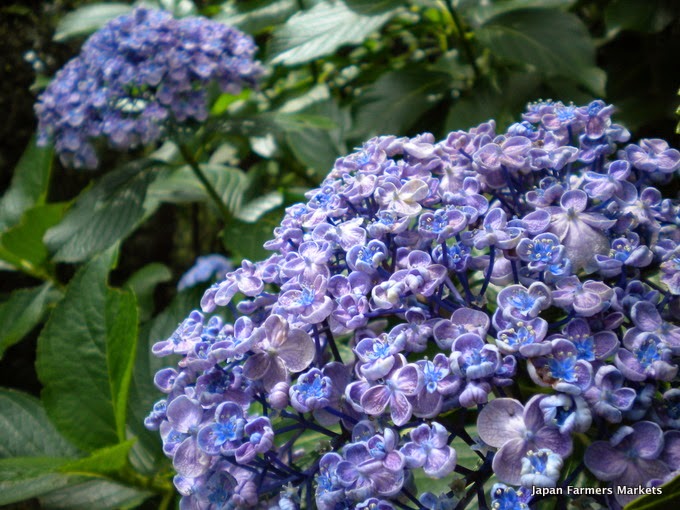
Ajisai (hydrangea) in bloom in early July.

Ajisai (hydrangea) are long done, but this variety was too interesting to not share. Spotted on a hike near our home in Kanagawa, this one featured the tiny and slightly curled blooms seen here. The resulting visual texture intrigued my fellow hikers enough that I had to wait in line to snap this.

Thursday, July 24, 2014

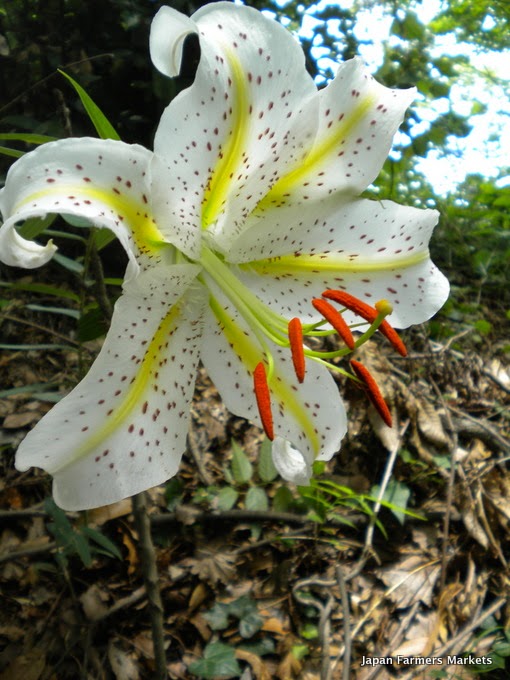
Thursday Snapshot: Yamayuri or Mountain Lilies

Yamayuri (mountain lily) snapped recently on a trail near our house.
 Yamayuri (mountain lilies) are some of the most dramatic of Japan's wildflowers. The end of rainy season marks the end of ajisai (hydrangea), another native plant here, and the beginning of these tall, slim beauties. Their time will be fleeting, but well worth the trek out to the mountains and foothills to catch a glimpse of them lighting up the forest floor.

A close-up of the decadent bloom.

Thursday, August 29, 2013

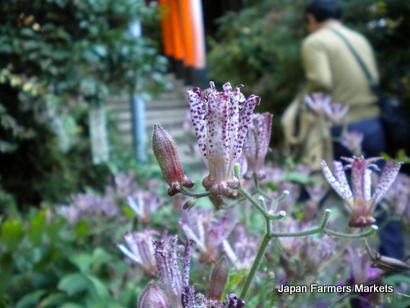
Thursday Snapshot: Tiny Orchids at Fushimi Inari Shrine

Little orchids on the trail at Fushimi Inari in Nara.
It was while hiking at the Fushimi Inari Shrine in Nara that I spotted these little lovelies last October. Set in a pot outside a quiet little tea shop alongside the trail their leopard spots proved irresistible. A maze of trails runs up the hillside through the cemetery behind the shrine, and when we are there we always give them a wander. It is a beautiful and peaceful place that I can't recommend enough. Plus, there's a fantastic eel restaurant just near the bottom. Perfect.

Monday, April 15, 2013

Living Mulch for Containers

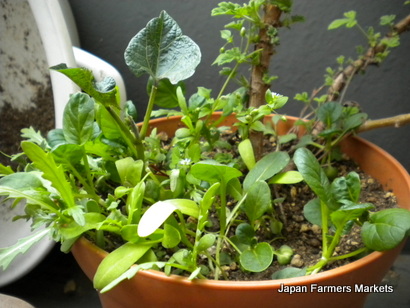
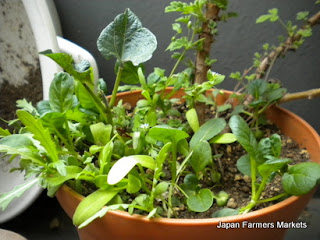
The little riot of green, a.k.a. living mulch, in one of my pots on the balcony.
The same inspiration - spring, packets of seeds for sale everywhere, and the current flow of work at the farm here in Tokyo - that led me to see my egg carton in a new way, led me to read this article by Ari LeVaux in a different light. LeVaux wrote about a beautifully simple idea she had for old seeds: mix them together, spread them on the garden bed in fall, rake them in, and then as they sprout in spring and the rest of the seasons eat them as you need room for new plants. Brilliant. And exactly the kind of thing I've been wanting to hear.

At our farm the standard practice is to use a black plastic mulch that gets laid down by a heavy machine. It works well as a means to heat up the soil in cooler weather, keep down weeds, and retain moisture. But its plastic, requires fuel to be made and applied, and gets trashed at the end of the season. My farmers put it down for me each season after they till in whatever organic stuff I've spread on the soil. I see the appeal, but this year I'm opting out. The farm has grown and my farmers are crazy busy. The plastic and the fuel to make it and lay it out are expensive, and I don't want to cause them undue expense. They would never complain or deny it to me, but I still worry about it. And it's time to find an alternative.

These past years I've also done a fair bit of book reviewing for Permaculture Magazine and reading on my own about farming and gardening. The consistent message is that soil does best when left to its own devices. If I don't till, then the matrix that lives there only gets stronger and healthier. This in turn gives me healthier vegetables, herbs, and flowers, which makes them less susceptible to pests and disease. If I feed this matrix periodically with things like urine, leaves, straw, and my very own compost, it builds up, literally and figuratively, even more. (My garden beds where I've put some of these techniques into practice sit a full ten inches higher than the surrounding land.) If I grow a diversity of plants rather than a monoculture, this gives them an even further boost as pollinators and predators have a place to live and eat while pests and disease have less of an opportunity to settle in and wipe out a crop.

Ok, there's the philosophy. I dug out my old seeds and dumped them all in a jar, per LeVaux's advice. It's not fall, but who cares? They're seeds. I'm a farmer-type. There's open dirt in my garden. I set it next to my compost bucket headed to the farm the next day.

Then I set about repotting a few balcony plants. I'm scaling back pretty severely this year as we will be moving in March, but there are a few old friends and favorites I'm keeping around. As I filled the pots and gently patted down the fresh dirt, the seed jar caught my eye. "Open dirt," my farmer-self thought. Why not?

I opened the jar, sprinkled a handful of seeds over the surface of the soil in the pot, covered it over with a layer of dirt, and gave everybody a drink of water. Experiment underway.

Flash forward three weeks. The seeds have sprouted in a little riot of green that fills my heart with pleasure. Shungiku, scarlet runner beans, daizu, beets, and komatsuna are just a few of the things reaching for the sun at the moment. I'm not sure yet if it's the cosmos or the dill seeds that have sprouted, so I'll have to wait to report on that. Meanwhile, my mouth is watering.

How this will exactly play out once I start eating I don't know. Will I scatter more seeds? Will I just leave it be? How big will I let the seedlings get? Excellent questions all.

My advice so far, though, is to do it. Seriously, why not? For those that don't have a garden, this is a nice solution for old seeds and pots that dry out quickly. Mix in some legumes, i.e. peas, beans, daizu, sweet peas, etc., that will offer up some nitrogen to the soil and their companion plants. Herbs, greens, vegetables, and flowers are all fine. The worst that happens is you get a riot of green and color that could be mostly edible. (Don't eat the sweet peas, please.) Mulch away!


Monday, September 19, 2011

London's Garden Museum


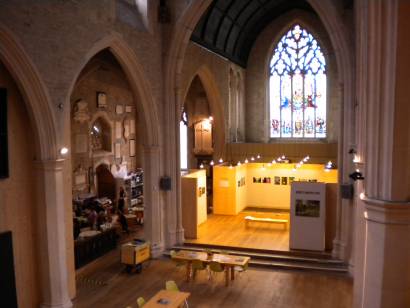
While staying in London on this trip to England I had the great pleasure to visit The Garden Museum. One bridge over from Big Ben and the Houses of Parliament, the museum is a little green treasure. Dedicated to the history of gardening n England, it is utterly satisfying despite being such a small thing tackling such a large subject. In my few hours there, whole new worlds opened up and I found it rather challenging to leave even after I'd seen everything, eaten at the cafe, and done a bit of shopping.

The permanent collection includes a variety of items ranging from a catalog of John Tradescant the Elder's amazing collection of flora discovered while traveling in pursuit of new specimen's for his employers to a thumb pot (a watering can that released water only when the thumb is removed from the top) to an early lawn mower to a seed dispensing machine. Joining these items are an assortment of drawings and paintings of gardens and gardeners, tools for the working as well as the gentleman gardener, and special exhibitions.

Tradescant's catalog deserves a short word as it is thought to be the first of its kind to be published in Great Britain and it is the keystone around which the museum was formed. Published in 1656, this little volume recounts in short entries what must have been an extraordinary life of travel and adventure for the elder Tradescant and his son, John, who followed literally and figuratively in his father's green footsteps. The Garden Museum copy, once owned by diarist John Evelyn, sits rightfully untouchable in a light and temperature controlled space, but thankfully still readable. Peering in visitors can find for themselves what some of the specimens were and where they were collected. The museum's first acquisition, it was an absolutely thrilling read for a gardening geek like me.


The knot garden, through the cafe and out a back door, is another of the gems of the museum. As Big Ben chimed the hour I walked the paved paths past samples of some of the plants the Tradescant's collected as well as their grave. (Captain Bligh of Mutiny on the Bounty fame is also buried here. According to a docent, he lived in the neighborhood after retirement and was an avid gardener in his own right.) Markers, of course, give common and Latin names as well as when the specimen was first collected and where it can be found. Regions represented include North America, West Asia, Europe, and even southern Turkey and Central Iran with dates ranging around the mid to late 1500's. It is staggering to imagine the journey out to find and gather it as well as the return journey with loads of plants, seeds, leaves, and flowers carefully stored in hopes of settling in a new home.

The museum cafe seems as popular as the museum itself. A steady stream of customers flocked in for a latte, a fat brownie or a vegetable tart with soup and salad. I opted for the butternut squash and leek soup with a slice of fresh bread with a plate of one of the more unique looking salads I'd ever seen. Peas, baby radicchio and chard, string beans, red onion, and a few arugula leaves all drizzled with olive oil were the perfect companion to my lovely deep bowl of squashy-leeky goodness. (I still regret not asking for the recipe.) If the series of talks, events, garden tours, and upcoming exhibits wouldn't be enough to make me a regular, the cafe would certainly seal the deal.

From my spot I surveyed the reading tables on the central floor and the gift shop offering an excellent range of gardening books, postcards, seeds, and other gifts of the useful and fun variety. Long wooden reading tables for adults and children alike spread evenly across the hardwood floor making it easy for someone even remotely enthusiastic about gardening to want to while away the hours reading and exploring. Needless to say, I did eventually have to leave, but it wasn't easy.

Lambeth Palace Road
London SE1 7LB

Tuesday, May 31, 2011

Louise Erdrich Planted My Geraniums

While checking out a post at Red, White and Grew (RW&G) about garden update photos (the idea is that readers and bloggers will share pictures of current happenings in their little patch) I quick scanned the comments. One reader asked if RW&G grew marigolds for their rabbit repelling abilities, and her response struck a chord:

"Bunnies aren’t an issue for us. Marigolds are in part an homage to a passage in “Places Left Unfinished at The Time of Creation,” a non-fiction book by a San Antonio author. =)"

People grow things for many different reasons. I grow fennel because it attracts pollinators, and because each time that licorice-y flavor fills my mouth I think of Frog Holler Farm's salad mix and all the wonderful days I spent working and playing there. I grow zinnias and cosmos because they're pretty and attract pollinators, but also because the sight of them transports me to my mother's garden in Wisconsin. (And when I was a fussy non-gardening child there, but that's another story.) I grow kale because it's so tasty and good for me, but also in honor of my first ever CSA membership at Henry's Farm. There I also met another now old friend, Swiss Chard. The immigrants in The Earth Knows My Name fill their gardens with tastes, sights, and sounds of home, and RW&G plants in part because of a book.

Louise Erdrich brought me geraniums. Before her gift, I dismissed them as a flower old people planted in cemeteries. I avoided them in nurseries. I thought they were "common." Their unattractive selves came only in a bad shade of lipstick red or a neon that hurt my eyes. They smelled funny, too. I wanted no part of them until Louise Erdrich with one turn of a sentence transformed them into a flower I had to have.

"Clouds flew across the sun. Light shuddered in and out of the room, and the red mouths of the geraniums on the windowsill yawned." (page 81, The Master Butcher's Singing Club by Louise Erdrich. Harper Collins, 2003)

My library book club read The Master Butcher's Singing Club one winter when we still lived in Michigan. I didn't like it that much, but I could never forget this image from Delphine and Fidelis' first meeting. There, in a kitchen I imagined to be just like the one in the farmhouse where my mother grew up, something fantastical happened in the everyday world. Geraniums yawned not with fatigue, but because the power of this meeting was enough to ripple space and time. That spring I bought my first geranium. Red, of course.

Geraniums in Japan can be very expensive. Running anywhere from 300 to nearly 1,000 yen ($4 to nearly $12, give or take), they represent something of an investment. They overwinter well in Tokyo, sometimes standing three feet high with stems that ought to be in all fairness referred to as trunks. I resisted until I spotted a sickly one on sale for a mere 100 yen. A little nursing along, a pretty pot in a sunny spot, and two years later it yawns winter away on my windowsill and summer on the balcony. I feel certain I can never be without them again.

Ever decided to grow something because of a book? I'd love to hear the story!
Saturday, May 21, 2011

Ki Shoubu or Yellow Flag Iris: Another Beautiful Invasive

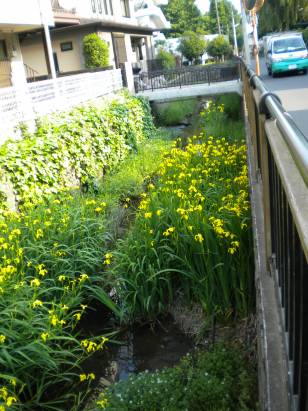
The landscape of Tokyo is laced with waterways large and small. Built to bring water to the city for drinking, irrigation, and sewage purposes many of them still exist as green ways of one sort or another. They also serve as precious wildlife havens where the city's wildlife - civets, snakes large and small, salamanders, ducks, herons, fish, along with an assortment of smaller birds - can move about, feed, nest, and generally enjoy life. (People enjoy them, too, as bike or walking paths.)*

One such small canal near the university where I teach is in magnificent bloom at the moment. I snapped these photos of Ki Shoubu (Yellow Flag Iris) on the way to class as their show of color is nothing short of brilliant. Like fleabane daisy, this iris is technically an invasive here. There are native varieties of iris about as well, but the yellow flag seems to be dominating the scene at the moment with their three elongated petal heads. Again according to Kevin Short's Nature in Tokyo, the yellow flag's favorite place is along the shores of ponds or waterways, and they can grow to be a meter tall. These fit the bill perfectly, nearly filling the channel in their enthusiasm.

*Thanks to Tokyo Architours for opening up a whole new world of waterways! We hope to see you here again someday.
What's your favorite invasive in bloom at the moment?

Thursday, May 12, 2011

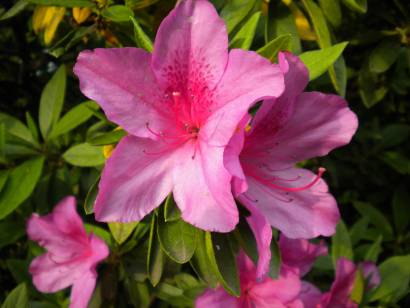
Azalea Blooms Make Jewel Toned Streets


Starting with ume (Japanese plum) in February, Mother Nature starts unrolling a carpet of texture and color that Japan follows madly along until collapsing with exhaustion in the heat and humidity of summer. Ume are followed by the beloved sakura, and then the scene rapidly becomes more crowded with blooms of all shapes, sizes, and colors.

Roses, wisteria, and hydrangea are but a few, but at this moment it is the native azalea that holds center stage with its bright pink or white flowers. Usually arrayed along streets and sidewalks here in Tokyo they migrated down from the mountainsides over the centuries to participate in festivals and weave themselves into a series of complex traditions. Trimmed up boxy they make a fantastic hedge that remains green throughout the year as well as a nice little hideout for urban wildlife.

Wednesday, May 11, 2011

Suspect's Name: Hakuunboku

A bike path near our apartment is lined with citrus, evergreens, hydrangea, roses, as well as an assortment of grasses and plants. I presume that underneath runs an old canal now covered over by the path and nearby road. The path crosses the Tamagawa Josui, a larger canalway that in its day brought much-needed water down from the mountains west of Tokyo to the center of the city. Something is always in bloom or leafing out or fading from view, and benches and little tables dot the sides for pedestrians to loiter as they wish. It's also home to a few favorite vegetable stands, so I traverse it a fair amount.


I spotted this tree while out walking the other evening, and I suspect it's hakuunboku a.k.a Styrax obassia or Fragrant styrax. The silvery gray bark slides smoothly over the musculature of the trunk like a tight fitting sleeve, and tucked under it's veined oval leaves were these lovely white blossoms. If it is indeed hakuunboku, it is a tree native to Japan as well as Korea and China. (It's in the same family as Japanese snowbell (ego-no-ki) or Styrax japonicus.) I'd never noticed it in bloom before although I've always found the bark quite eye-catching. It reminds me of Ironwood, a.k.a. American Hornbeam Carpinus caroliniana, another smooth barked tree that I know from long walks on the family land in Michigan.

The blossoms pictured here should also be quite fragrant, although I confess I did not pause to sniff, only photograph. If they are indeed as delightfully smelly as they are purported to be I would suspect they are a pollinator favorite. I'd also like to think that the ever-increasing number of butterflies I see floating about the city find the tree a good home complete with a pleasant drink bar. Any ideas?

Sunday, May 8, 2011

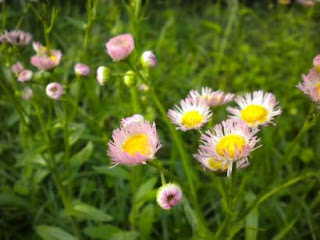
Fleabane Daisy: My Kind of Volunteer


Garden volunteers are one of the most wonderful surprises nature can offer up. Sometimes they come in the form of escaped seed sprouting between the rows or one that made it through the composting process somehow or another to sprout in odd nooks and crannies of the bed. Purslane is a favorite volunteer that also happens to be edible as well as a very nice, light feeder that also helps keep soil in place.

Volunteers also arrive because for one reason or another I choose to ignore them when I'm weeding. Sometimes it's because I can't remember exactly where I put in a perennial or I can't remember exactly what that perennial is supposed to look like. (This is where keeping up on my garden journal would be a good idea...ahem.) And sometimes I just think it might be interesting to see what happens.

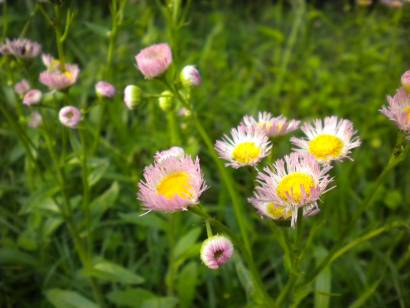
Such was the case with a set of fleabane daisy erigeron speciosus plants that currently reside in my west wall bed. Introduced to them by a good friend when I was first learning about native plants, I've delighted in spotting them almost everywhere. It was an especially pleasant surprise then to see them here in Japan attracting pollinators as madly as they do at home. (Despite the fact that I should not be pleased given that they're an invasive.) Members of the aster family, the plants sport long stems topped with small bristly looking flowers that come in white, pink, and purple.

According to author Kevin Short in his most fantastic tome, Nature in Tokyo: A Guide to Plants and Animals in and around Tokyo, the fleabane daisy I see growing in my garden as well as along the nearby Tamagawa Jyousui (Tamagawa Canal) is an escapee version (a.k.a. an invasive plant) of the American variety. The spring variety haru jo-on has a hollow stem, and the summer variety, hime jo-on has a solid stem. I don't know which I have as it would mean plucking a flower, and I'm not quite ready to do that. Since the necessary demise of my flowering komatsuna and mizuna plants, I fear the bees have been thirsty. My goal is to give them all I can until I've got a few other plants going in the garden, and keep them coming back for more.

While Tokyo is surely one of the greenest ginormous metropolis' I've ever lived in (and the only one I've lived in, truth be told), I worry a great deal about our little pollinators. Since the demise of the majority of the farmhouse's original landscape in a family debacle and the subsequent loss of the chestnut orchard in a move for more growing space, I feel a personal responsibility to give those little critters a place to call home. And I want them to pollinate my Brandywines again, so I'm not entirely altruistic, of course. (Douglas Tallamy's Bringing Nature Home haunts me still, so I'm doing all I can to support my local wildlife and food chain.)

Wednesday, January 12, 2011

Plum Blossoms and Tiny Daffodils


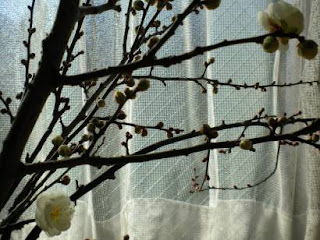
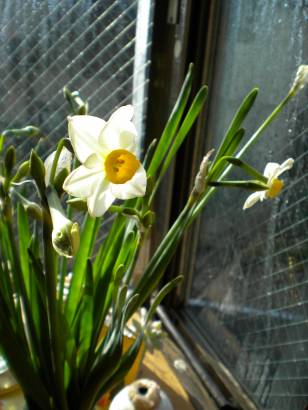
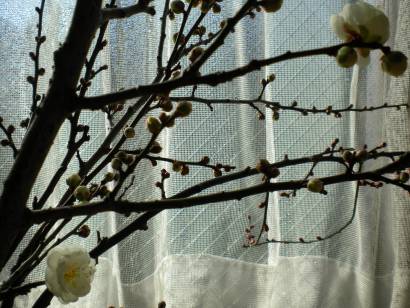
One of the traditional "three friends of winter", the plum blossom usually doesn't arrive until some time in February. Until then, plum blossoms are usually depicted using pink and white bits of paper or even colored mochi on bare branches.

This year, though, what seems like somewhat unseasonably warm winter weather encouraged a plum tree at the farm to begin blossoming. The daffodils that line the wall behind the greenhouse are also standing tall these days, and just before New Year's C-Chan cut a few of each for me. The daffodils are now in the compost pile, but the plum branches continue to bloom on our windowsill.

Monday, November 15, 2010

End of the Morning Glories

On my back balcony I've had a small yet lovely conflagration of morning glories. The leaves and flowers seemed to fill and absorb a whole section with green and purple. While they didn't create much shade for our kitchen (too far over to be effective) they did successfully shade the potted kale and made an otherwise nondescript space enticing for morning coffee.

So, with gratitude and a touch of sadness I'm preparing to take them down and compost them. I'll save some seeds back and maybe add them to our green curtain mix for next summer. Meanwhile, I'll also freshen the dirt in the pots and perhaps set out some cilantro, parsley, calendula, and violas for our winter salads.

Monday, November 8, 2010

More Bouquets in Unlikely Places


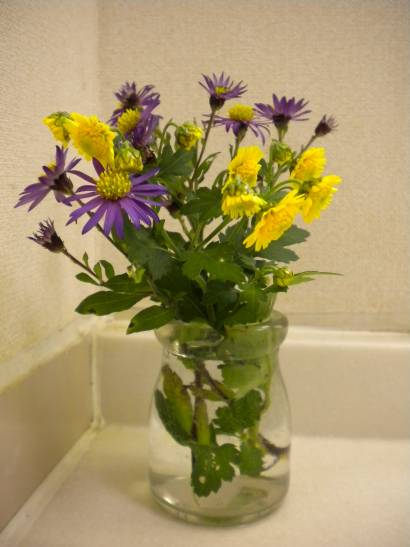
Last week while visiting Nikko I found this lovely little bouquet in one of the restrooms. Less surprising perhaps than those spotted at a highway rest stop on the way to Hakuba (it is a World Heritage Sight, after all), I was still pleasantly taken aback.


On it's own the restroom was pleasant - tidy and well lit with soap - but the flowers softened the institutional edge, and made me grateful to whoever took the time to pick, arrange, and put them there. There were no flowers in the nearby garden - just trees with leaves running from green to red to gold to orange - so these were brought in specifically for this purpose. Another simple thing that transformed a space!