Showing posts with label Kanagawa. Show all posts
Thursday, September 14, 2017
Thursday Snapshot: Local Fire Ceremony
Just down the hill from our apartment is a small shrine. Surrounded by tall zelkova, it looks like every other rural area shrine - brown, tidy, and quiet. It's where our annual Obon festival is held and a handful of other festivals throughout the year, too, but usually it's just there. We had seen a plaque that described a fire festival, but we didn't have a chance to see it for ourselves until last September.
Local men and women carry the mikoshi (a portable shrine that houses the local god) along a set path, passing it over burning bundles of wara (rice straw) along the way before bringing it back to the shrine where a huge bonfire is lit. They run back and forth from the fire to the temple with the mikoshi to celebrate our local god and ask for its protection once more throughout the year. It is an event unlike anything else I have ever seen here.
The whole neighborhood and then some turn out to witness this event, which feels raucous as well as reverent. The fire department, of course, is on hand in case things go awry.
Thursday, September 7, 2017
Thursday Snapshot: Stolen Seeds
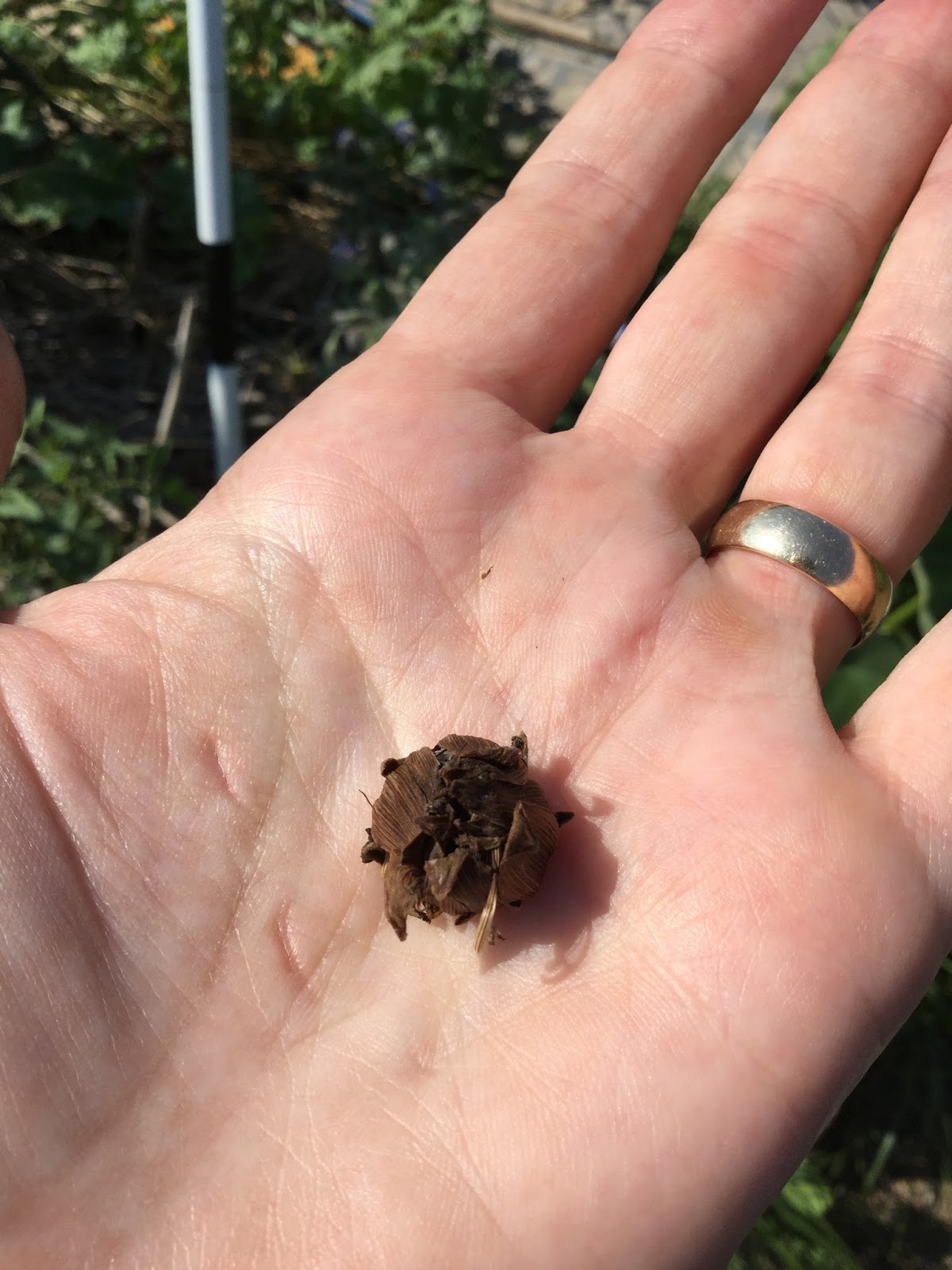
| Coreopsis seed head at the ready. |
Ok, stolen is kind of a strong word. I happened to be walking to the garden one morning and noticed that a stand of coreopsis I admired had some seed heads. They bloom next to a guardrail along the road and are a cheerful greeter each time I walk to and from my garden. I plucked a head in passing and tossed it into the garden near the rhubarb. On the way home, I grabbed another and tossed it onto the soil near my compost bin. A couple days later, I snagged another and plopped it in a different location in my garden. I felt a little guilty, but my neighbor put my mind at ease.
"Every gardener does that," she said when I confessed my crime one morning when we met while tending our respective plots. So, I grabbed another on my way home and eyeballed a clump of nira that were blooming, too. After all, I'm a gardener, I thought as I mentally marked the location.
Monday, March 6, 2017
My article on Kanagawa Prefecture at ACCJ Journal
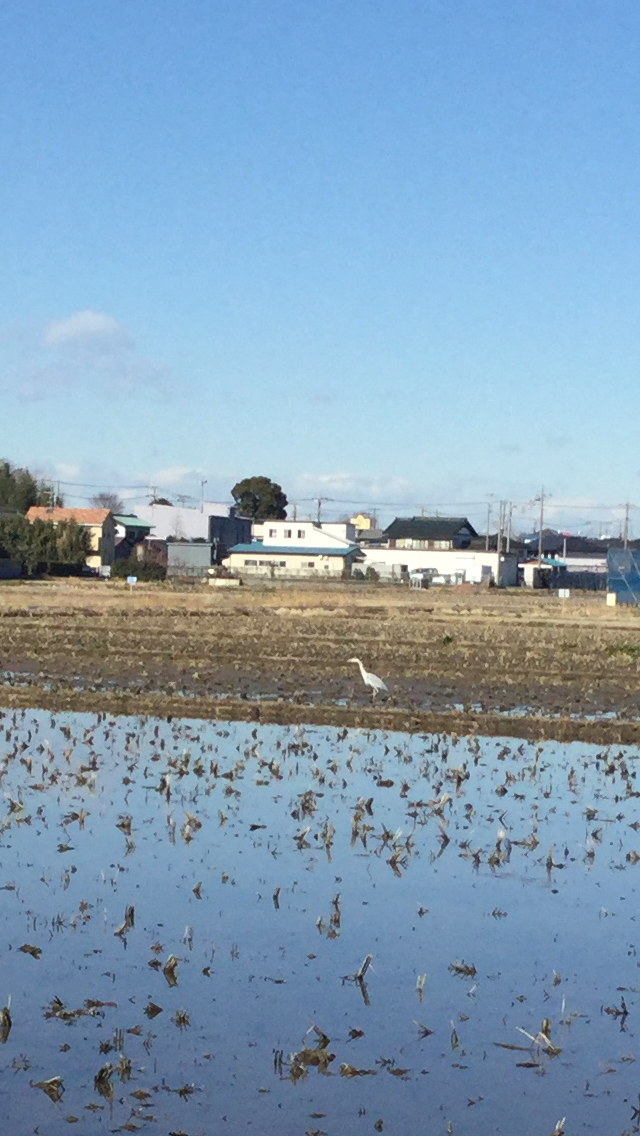
| A heron (look closely!) wandering the rice fields near Izumibashi Sake Brewery. |
It has been a busy time of traveling here at home as well as in Japan. Thankfully, I often get to write about what I discover. My latest adventure in Japan took me not too far from home to a few special spots in Kanagawa Prefecture. Read the whole article and find out what fun there is to be had!
Monday, November 7, 2016
Hadano Early Winter Garden Update and Ramble
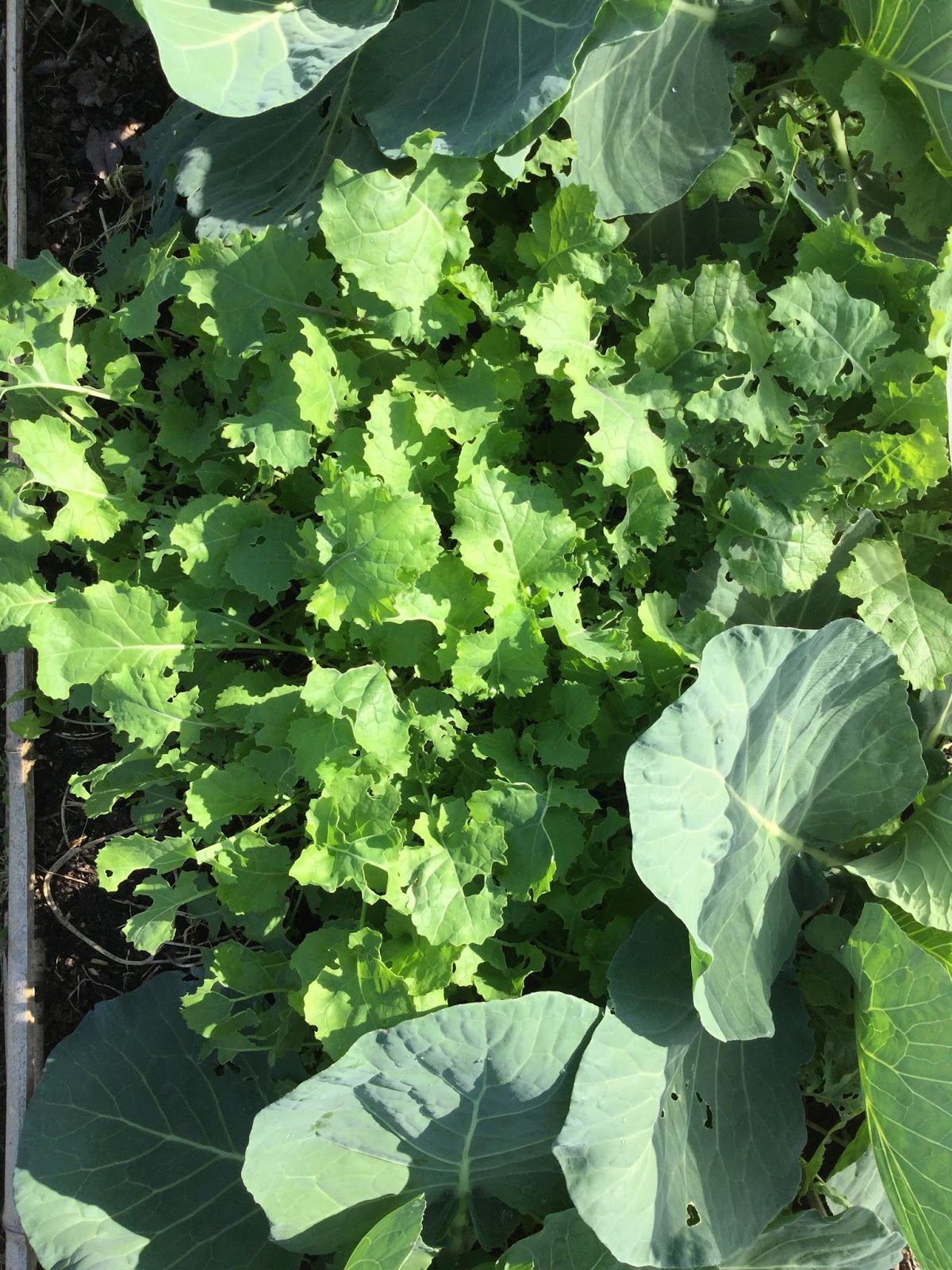
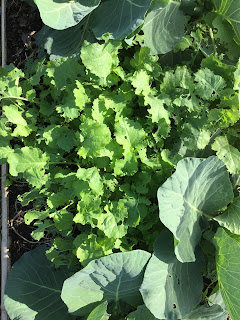
| Living mulch of volunteer kales and norabo between cabbage plants. |
The cabbage and broccoli seedlings are lifting the row cover up some, and soon I'll have to remove it. Under their broad leaves an assortment of kales and norabo spread a green carpet that I harvest almost daily. I'd laid the dried stems from this past season's plants on the soil and let them compost. This was exactly what I had hoped for: a living, edible mulch pretty as a picture. The leaves are well nibbled by other creatures, but I'm happy to share a little.
A nice volunteer crop of parsley has sprung up where I again laid the dried stems from a spent plant. It has popped up in a few other places, too, and those that jumped my bamboo fence have been brought back into the fold.
The second round of chioggia beets in well-sprouted, so I added two rows of a long cylindrical beet at the east end of the broccoli. Why not? The worst that happens is they do not sprout or are eaten by the furry caterpillar that emerged when I watered them. The best, of course, is a round of delectable beets on my table in the next few months.
I was inspired by an older couple out in their garden the other night. She passed him pea seedlings pot by pot as the sky turned pink and watched as he carefully set them in the soil. I then dug out a bag of purple podded peas I got while on our Shimanami Kaido trip. The seeds are a couple of years old and have been imperfectly stored at best, but I am optimistic. The other peas I planted may be preparing to sprout, but it has been two weeks and there is little sign of them. Just like this election, though, I am hopeful but prepared for the worst.
The cosmos and straw flowers are blooming nicely. Cosmos in Japan are a signature autumn flower, and so I planted two because they remind me of home. I think of my mother's garden and my own Michigan garden, both far away in time, place and memory. However, those wide happy blossoms never fail to raise my spirits.
Straw flowers have, I believe, no particular significance here, but they are happy and bright. Too often, I think, gardeners and farmers forget that joy is integral to our work. We take satisfaction in the plentiful harvest, tidy rows, and well-laid plans, but it is just as important to remind ourselves of the inherent beauty we cultivate and are capable of crafting together with Mother Nature. I need to grow things that are pleasing to the eye and refreshing to the soul. They are like a tiny oasis for my heart in a place that already feeds me in multiple ways.

Wednesday, May 4, 2016
Interview in the Garden
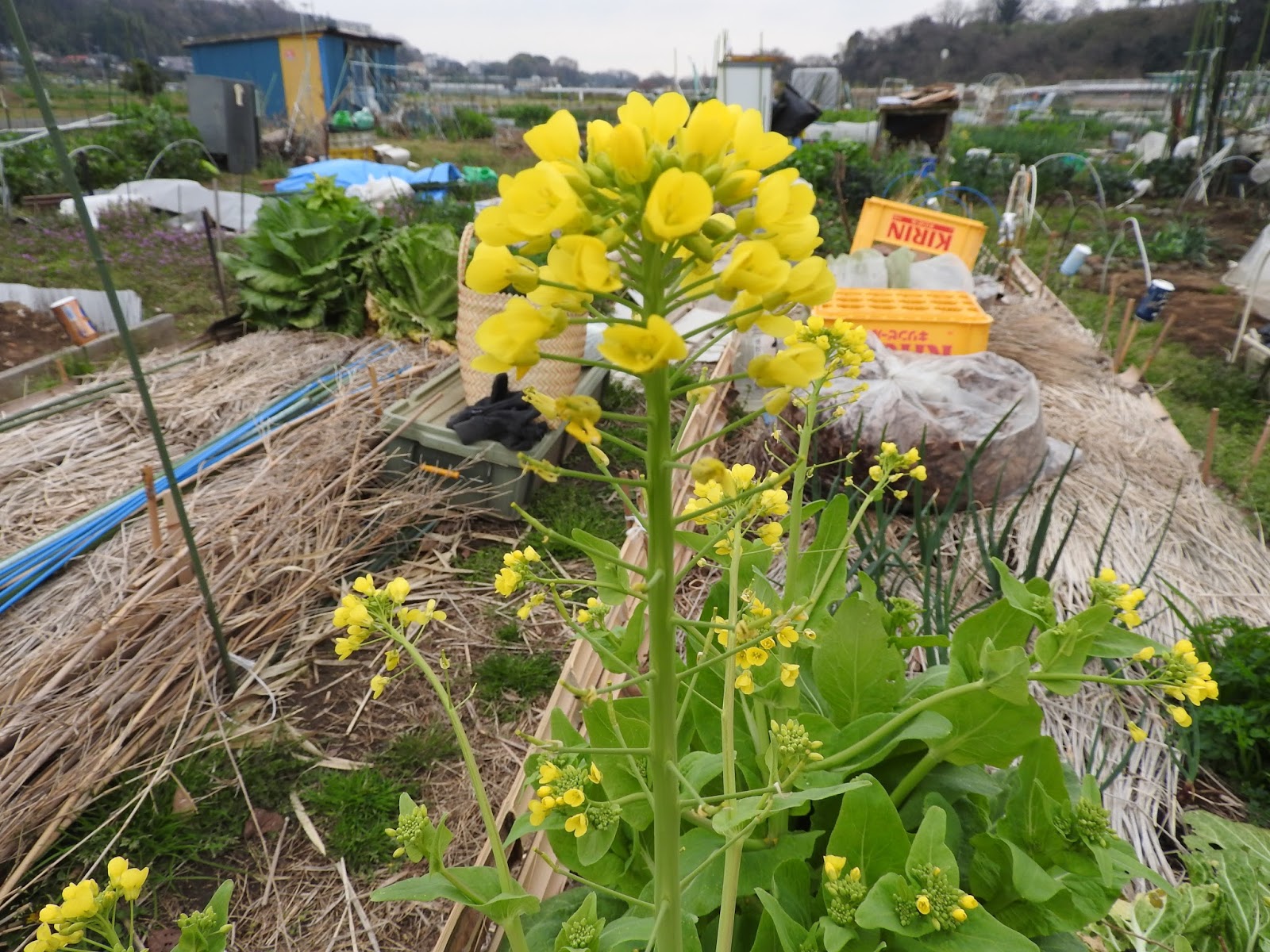
| Haksai in bloom. |
Monday, March 28, 2016
Blanching Greens: Easy Preserving for Those Without a Pressure Canner
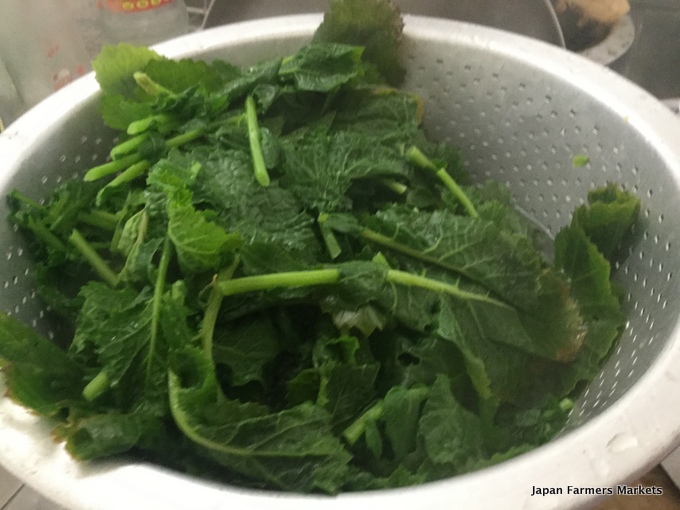
| Hello, greens. |
The four plants I started last spring went to seed in a glory of yellow flowers that turned to crisp brown pods that seemed to burst even when glanced at. I let them be, perhaps foolishly, but busied myself with other parts of the garden. I soon noticed small norabo seedlings sprouting everywhere, and let them come. They arrived in summer's heat, so I watered and nurtured them along and delayed topping up that section of the bed even though it would be more convenient. They'd worked so hard, I thought. They deserved a chance. And, to be honest, I wanted to eat them.
Come fall, they were big leaved and could be harvested almost daily. We ate them in soups, salads, and gave away the extra. It was glorious. However, spring is here again, and I really need to prepare for the season. It was time to say goodbye. I cut the leaves free of their stems and left the not so nice ones behind to compost in place. The rest went into bags that I hauled home with plans to blanche them.
Blanching is a means of quickly cooking, usually a green, that preserves much of the original flavor, texture, and nutrients. I use it to prepare my greens for freezing, which is my only option of preserving as I don't have a pressure canner or dehydrator. It turns them a brilliant shade of green and makes for a handy stash of deliciousness in the freezer for the future.
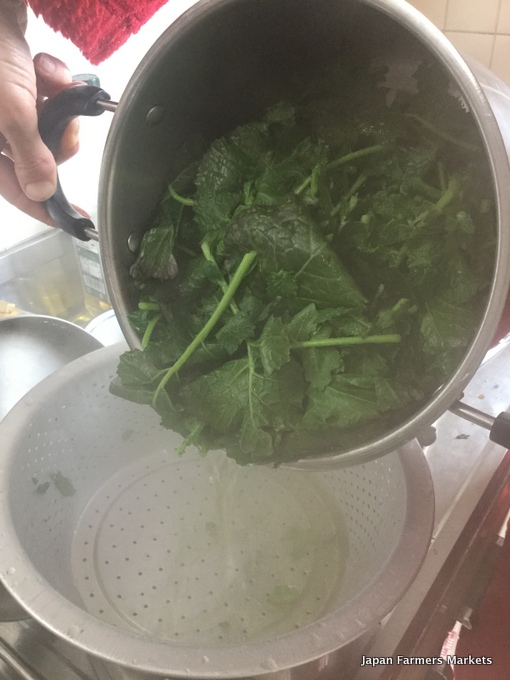
| Keep that water for soup or the next round of blanching. |
1. Wash the greens. Give them a good plunge and drain.
2. Bring water to boil in a large pot.
3. Plop in the greens (be careful!) and immediately set the timer in this case to 1:10.
4. Remove from heat and drain, but be sure to catch the nutrient-rich water in a pot. You can reuse it for a second batch or for a soup later on. It will also freeze nicely.
5. Plunge the boiled and drained greens into cold water to stop the cooking process.
6. Drain again.
7. Pack into portion-size freezer bags and freeze for later.
Monday, March 14, 2016
Bamboo Walls for the Garden
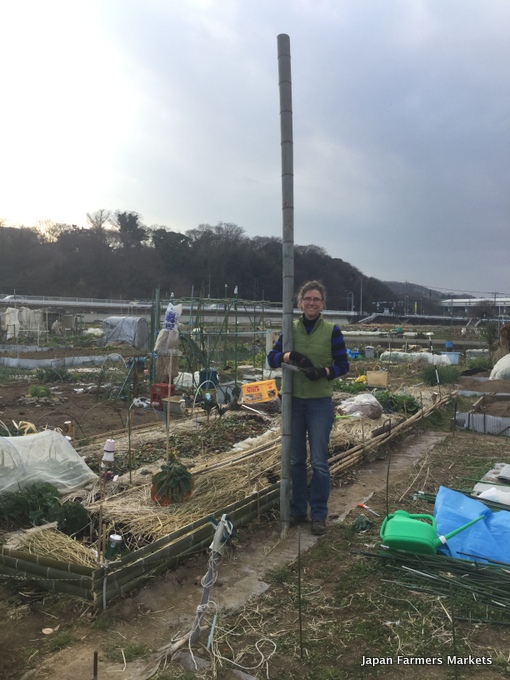
| Me, my garden wall, and a bamboo log. |
My goal is to make use of what I have on hand or can find not so far away for free. Bamboo is one thing that appears in abundance. Bamboo would have been found on traditional Japanese homesteads as a source of food as well as a handy building material. It also would have been turned into charcoal, which in turn would have been turned into a kind of insecticide, a home deodorizer, and a soil additive.
These days, though, bamboo runs a bit wild where it still exists. Many of these traditional stands have been cleared to make way for new homes, bigger farm fields, or simply let go. They quickly become impassable masses that have a charm and beauty of their own, but they can also crowd out other species.
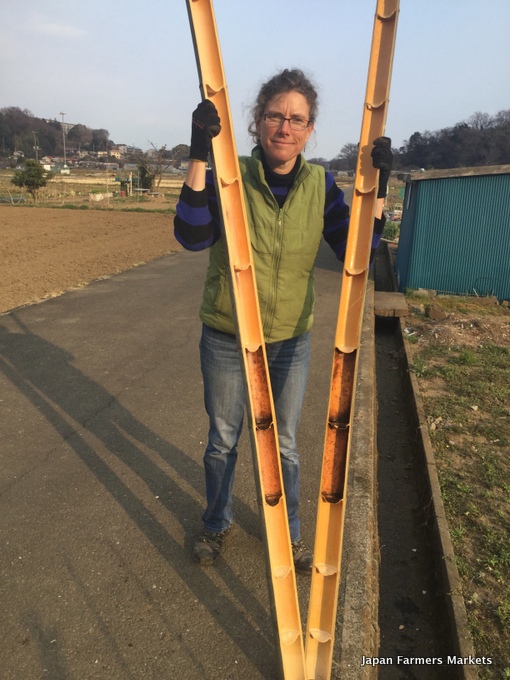
| Me and a split log. Isn't it beautiful?!? We usually split it at least once more to make the pieces for the wall. |
The system isn't perfect. There are gaps between the pieces sometimes, and it doesn't always ride evenly over the surface of the soil. However, all of this pales in comparison to the fact that the fence is a natural material that critters can skitter along happily or even make their nest upon if they wish. (I'm not a fan of plastic these last few years despite its ready availability and cheap price. I think that whole concept a load of non-compostable manure.) It also looks quite nice and is even cheaper than the plastic.
Thursday, March 10, 2016
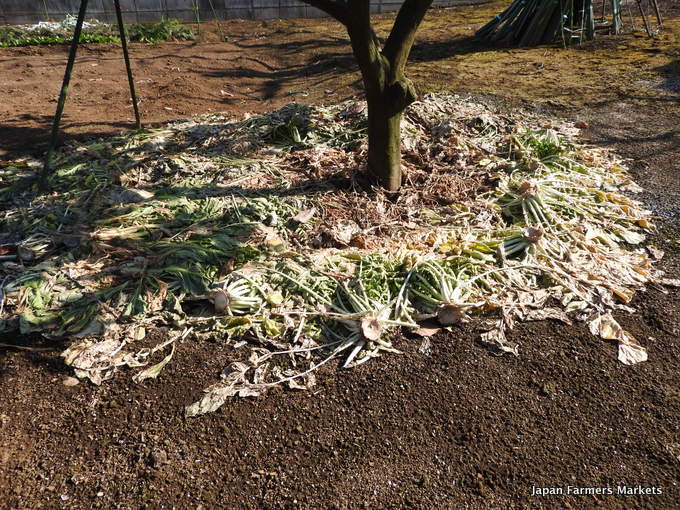
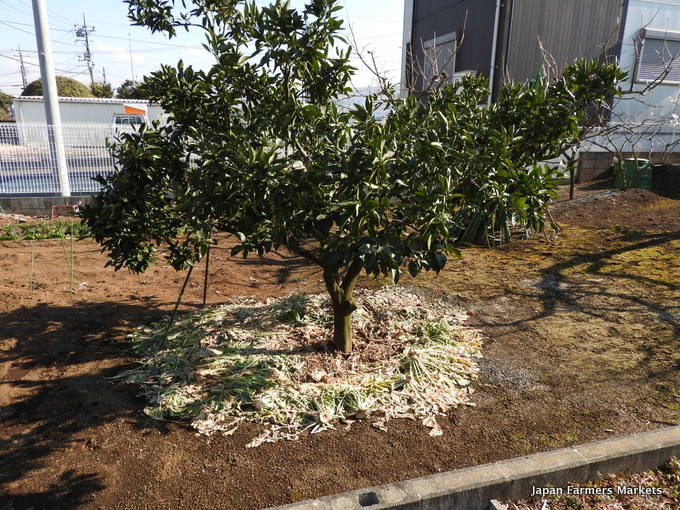
Thursday Snapshot: Mottainai Daikon
| Daikon leftovers mulching away. |
| Cozy up, said the fruit tree to the daikon. |
Thursday, March 3, 2016
Thursday Snapshot: Orchard Vines Against the Sky
| Grape vines against the blue. |
Thursday, February 11, 2016
Thursday Snapshot: Ume Blossoms
| Ume blossoms to cheer any day. |
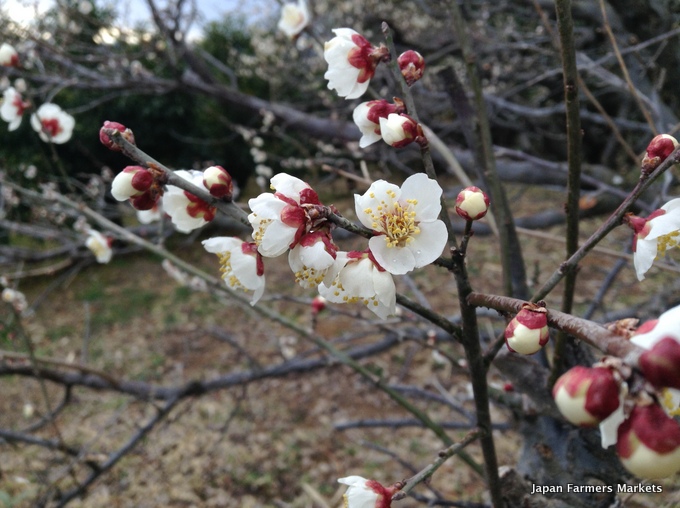
I met just a few flakes, none of which stayed long, but I was grateful. For company I had the mountain birds, many of which are returning to start new families and sing their way through the daylight. I also met these lovely ume blossoms, which are not snow, but shimmer with a special life all their own. I was grateful.
Thursday, December 24, 2015
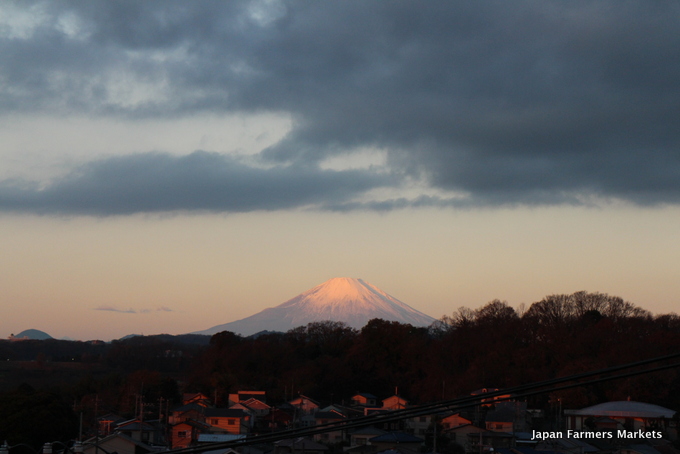
Thursday Snapshot: Fuji-san at Sunrise
| Fuji-san at sunrise. |
Monday, December 21, 2015
Satoimo Mothers: Planning for Spring
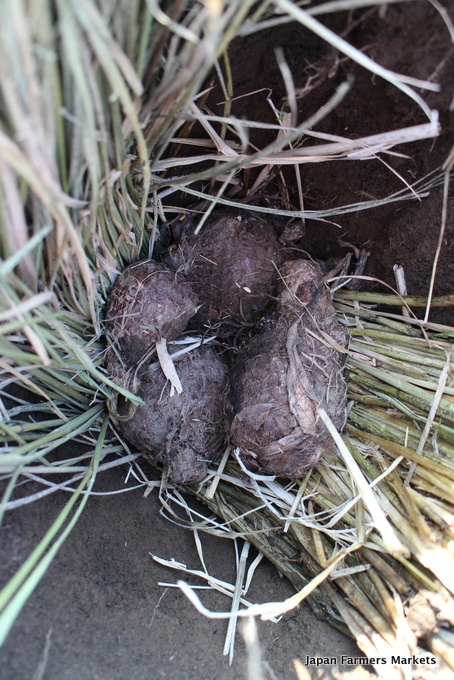
| The ladies snuggled in for their long winters nap. |
That day, though, he had something else in mind. "Do you like satoimo?" he asked, and of course I said yes. This slimy potato, also known as taro, is a nice addition to our diet, and while I haven't always been a fan I appreciate its flavor and texture more now than ever. We walked over to his garden where I stood admiring his daikon and assorted winter greens while he gathered up a bag of the roots.
"Would you like to grow it?" he asked, holding up an enormous satoimo for me to examine. Anywhere from two to four times the size of the regular satoimo, this larger version is known as the "mother." If the mother satoimo is kept cool, dry and comfortable throughout the winter, she can be planted in the spring to grow new satoimo. "I have too many. My neighbors," he said gesturing to the other nearby gardens, "run away now when they see me. They know I want to give them satoimo."
I laughed and told him people who grow zucchini often suffer from the same problem. "I'd be happy to help you out," I said.
I dug a hole about 50cm deep at one end of my garden and wrapped the satoimo mothers in wara and covered them back up with soil. Come April, I'll dig them up and replant them for a fresh crop. Next year, I suspect my neighbors may start running away from me...
Monday, December 7, 2015
Mottainai: Rice Straw as Mulch
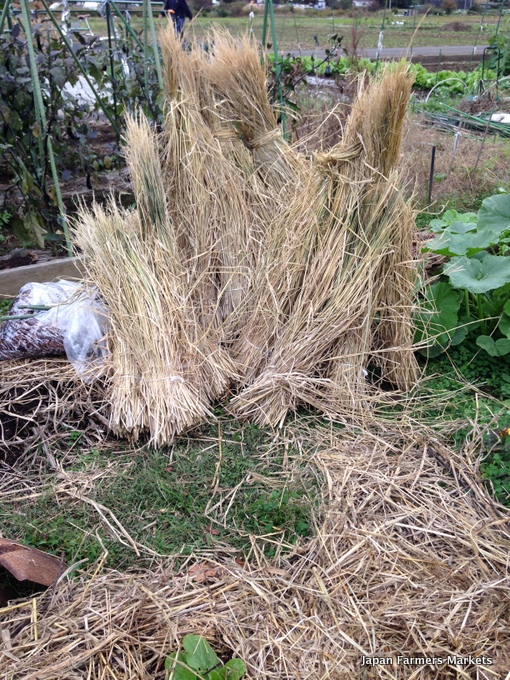
| Wara ready and waiting in the garden. |
Traditional rice harvesting practices cut the plants at the base and then hang them to dry on bamboo racks in the fields. Growers like Kazuto Hamma believe that sun-drying intensifies flavor and nutrition while also taking advantage of a naturally available energy source, which is why he and his sister, Erina, sun dry everything from tea to beans to shiitake. Once the rice is dried it is threshed, and the straw is again gathered in bundles, tied, and either hung or stood in groups of four to dry. Modern harvesters are reminiscent of a lawnmower in that finely chopped straw is spewed out behind and left on the field where it will be tilled in in preparation for the next growing season.
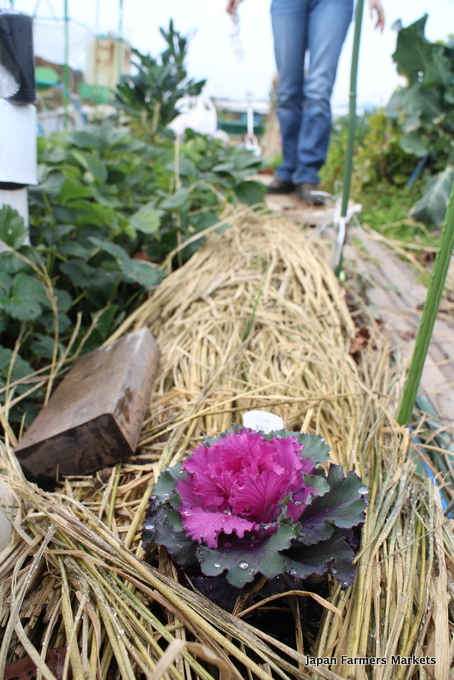
| Wara laid snug around habotan (ornamental kale.) |
It also turns out that wara is jam-packed with silica, which helps plants develop strong stems and leaves as well as ward off disease and pests. As the wara breaks down (sheltering and feeding various beneficial creatures in, on, under, and around my garden in the meantime) and is ultimately buried in my no-till practices, that it gives up its silica meaning healthier plants and a better harvest.
Thursday, July 23, 2015
Thursday Snapshot: Possibly Blue-Eyed Grass in the Garden
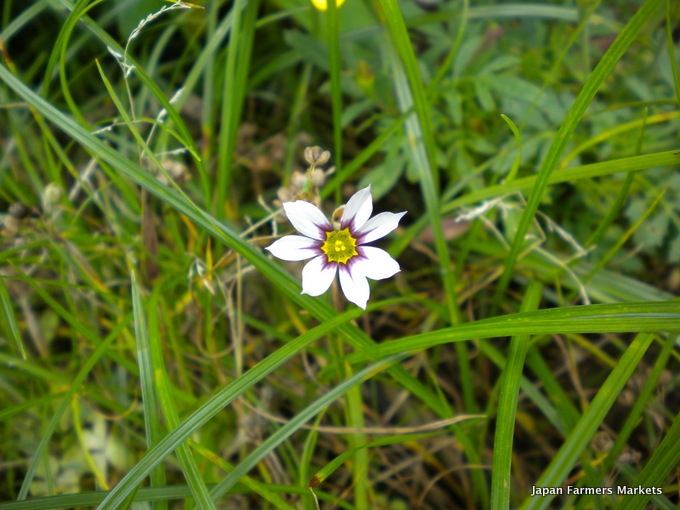
My community garden plot has been full of surprises. There were the tulips, a volunteer onion, and a lovely cherry tomato plant. The best surprise, though, were these little bloomers skimming the Northwest corner. Delicate blossoms that started in late Spring and greeted me even this morning when I ran down to check on things before the heat of the day firmly set down its foot.
A native of the Midwest, Blue-Eyed Grass is a favorite of mine from home. How it got here exactly I don't know, nor do I know absolutely that it is the flower I think it is, but for now I'm choosing to believe that's what it is.
Monday, July 20, 2015
The Case of the Extra Eggplant
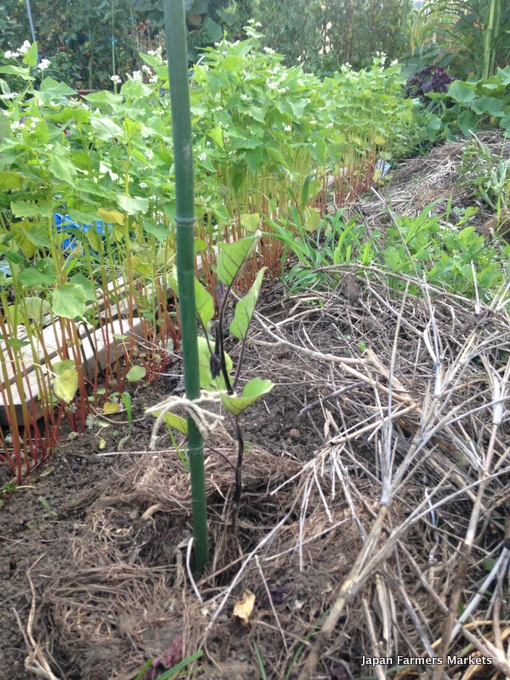
| The mysterious eggplant in the old potato bed. |
My husband, though, scurried down once or twice during a break in the rain to get greens for our salads. One day he took photos. "How's the popcorn?" I asked, reaching for the phone to see the pictures. "It's out of control," he said as he started making the salad for our lunch.
Sure enough, it was. The popcorn, Smoke Signals, is said to grow to about 8 feet in height, and these plants are living up to their reputation. It loomed in the back of the photo, just behind the now empty potato bed.
Except the potato bed wasn't empty.
Monday, July 13, 2015
My Article about Hideki Mochizuki and Atsugi Brewery in Metropolis Magazine
| Hideki Mochizuki and one of his brews. |
My latest piece, The Craft of Beer at Metropolis Magazine, introduces Atsugi Beer and its brewer, Hideki Mochizuki. It was a real pleasure not just to drink his beer, but to roam about the brewery itself with him. It was so much fun, and I left thinking about brewing beer at home. I'm over that for the moment, but it's a sign of real passion and skill when another person and their work inspire that feeling. Try it for yourself and see what happens.
Thursday, June 25, 2015
Thursday Snapshot: Ichijiku (Fig) Season Aproacheth
Ichijiku (figs) are a fruit I have never seen fresh until now. Here in Japan, though, fig trees appear on field edges or in front yards seemingly on a whim. Related to the mulberry tree, popular with silk worms, the fig bears a similarly interestingly-shaped leaf and the fruit themselves seem to magically appear on the trunk. I am not a huge fan of the fresh fig, but dry them and I come running.
Friday, May 15, 2015
Tokyo and Yokohama Regional Farmers Markets: Saturday, May 16th and Sunday, May 17th
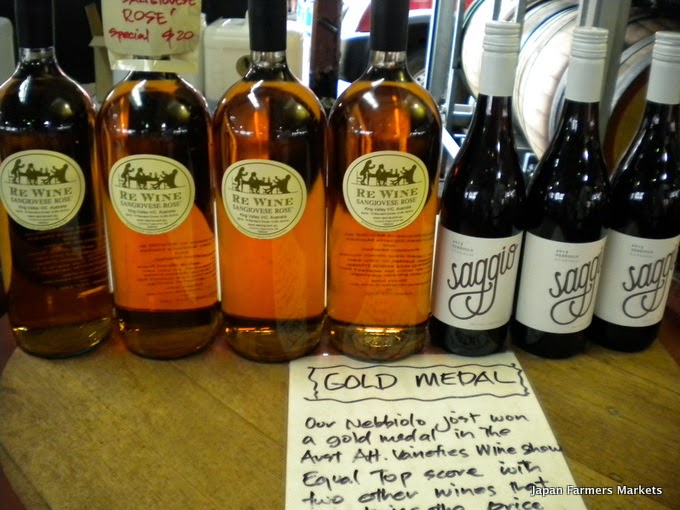
| ReWine at the Victoria Market in Melbourne. Genius. Pure genius. |
Ebisu Market
Sunday, May 17th
There is a wee bit of an extravaganza at the Ebisu Market this month with their Life is Delicious event. In celebration of the Golden Week holidays, the market is going full-tilt with vegetable and foodly fun. Don't miss the opportunity to head to a nifty part of the city where on these sweet Sundays you'll find farmers and producers galore. (One even comes from Okutama with a lovely array of vegetables and a vegetable-based spread that will knock your socks off.) It's worth noting, too, that Do One Good, an animal NPO will be on hand with some of the cutest dogs ever waiting to go home with you!
11am to 5pm
Map
11am to 5pm
Map
Koenji Farmer's Market
Saturday, May 16th
A new market I spotted while riding the train on a Saturday morning into the city center. That circle of red awnings in front of the Za-Koenji Public Theatre could only mean one thing! Sure enough, I found a small group of area growers and producers, and the bounty surely continues!
11am - 5pm
Map
Nippori Farmer's Market
Saturday, May 16th and Sunday, May 17th
Another great market in the city found with a little help from friends, this one is sure to not disappoint. A small but lively market, particularly on Saturday, it is well worth the trip. Plus, Tohoku growers are on hand sharing their best-of-the-best, so come on out to be part of the recovery and get something good to eat.
No map, but just head out the east exit and look for the green awnings!
10am to 5pm
Oiso Farmers Market
Sunday, May 17th
This little gem of a community shindig is one of the best things going outside of the Earth Day Market, and I don't say that lightly. A nice little community affair started a handful of years ago, it blossomed into a full-on monthly festival that just happens to feature Shonan area produce in its fresh, seasonal form as well as pickled, dried, and prepared-hot-in-a-bowl. In summer it turns into a night market, but in fall it will swing back to regular daylight hours. More than worth the trek down to see what's going on!
10am to 3pm
Oiso Port Building
Oiso Farmers Market
Sunday, May 17th
This little gem of a community shindig is one of the best things going outside of the Earth Day Market, and I don't say that lightly. A nice little community affair started a handful of years ago, it blossomed into a full-on monthly festival that just happens to feature Shonan area produce in its fresh, seasonal form as well as pickled, dried, and prepared-hot-in-a-bowl. In summer it turns into a night market, but in fall it will swing back to regular daylight hours. More than worth the trek down to see what's going on!
10am to 3pm
Oiso Port Building
Kamakura Farmers Market
Every day
A small local affair featuring Kamakura heirloom fruits and vegetables raised in yet another former capital city, the Kamakura Market is a small but wonderful venue. Head in early to get the best selection and pick up a loaf of Paradise Alley's charcoal infused bread while you're there.
7am until sold out
Map
Futamatagawa Farmers Market - Yokohama
Every Friday
A charming little weekly market tucked conveniently just outside the turnstile at Futamatagawa Station in Yokohama where a nice selection of fresh, seasonal fruits and vegetables await. Joining them are baked goods, rice, miso, and all the other fixings one might need for the week or just a good snack. Plenty of Kanagawa goodies, too, so be sure to ask!
10am to 6pm
Look for the tables when you step out the gate!
Every Saturday and Sunday
A massive weekend affair that is great fun and features a variety of fruits and vegetables and prepared products from all over Japan. Plus, there's a most excellent selection of food trucks offering everything from salad to zingy curry to roast chicken to falafel!
10am to 4pm
Every Saturday
Back up and running after a refurbishment of the market space, the Roppongi Farmers Market is as booming and bountiful as ever. Don't miss this chance to meet a grower from Tokyo's very own Kokobunji and sample seasonal bounty.
10am to 4pm (Usually. Do check their website for schedule fluctuations.)
Map
Back up and running after a refurbishment of the market space, the Roppongi Farmers Market is as booming and bountiful as ever. Don't miss this chance to meet a grower from Tokyo's very own Kokobunji and sample seasonal bounty.
10am to 4pm (Usually. Do check their website for schedule fluctuations.)
Map
Yurakucho Farmer's Market
Every Saturday and Sunday
Smaller than the UNU Market, Yurakacho features a particular region of Japan each week along with an excellent selection of seasonal fruit and vegetables. Growers from nearby Chiba, Kamakura, and Saitama are also on hand to help fill the larder.
11am to 5pm
Directions: Turn left out of Yurakacho station and cross the courtyard toward Tokyo Kouku Keitan. Look for the fun under the overhang!
Every Saturday and Sunday
Smaller than the UNU Market, Yurakacho features a particular region of Japan each week along with an excellent selection of seasonal fruit and vegetables. Growers from nearby Chiba, Kamakura, and Saitama are also on hand to help fill the larder.
11am to 5pm
Directions: Turn left out of Yurakacho station and cross the courtyard toward Tokyo Kouku Keitan. Look for the fun under the overhang!
Know of a market? Give me a shout and we'll add it to the list!
Thursday, May 14, 2015
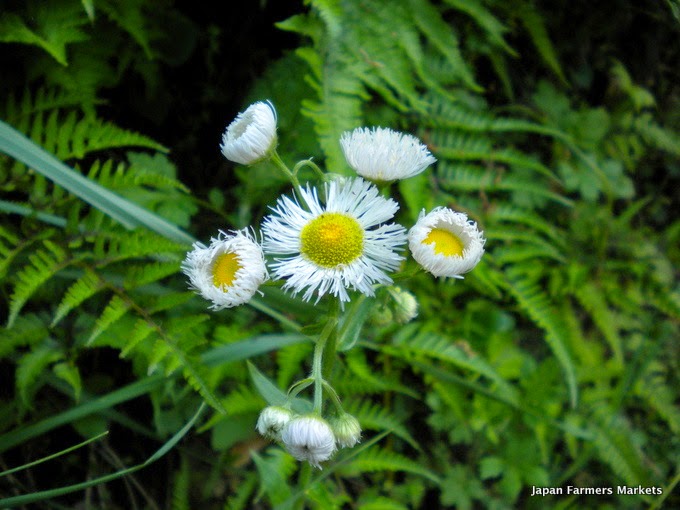
Thursday Snapshot: Fleabane Daisy
Always a favorite flower, I caught this little cluster on a recent sunrise hike with a friend. They are one of the handful of volunteer plants I try to not weed out of the garden or anywhere else. They are far too cheerful to remove.
Monday, April 20, 2015
Kanagawa Garden Update
![]() |
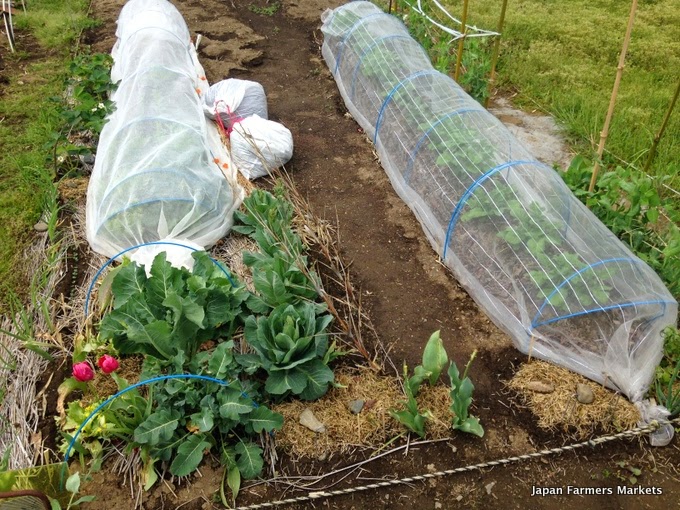
| Current state of my Kanagawa Garden. |
Friends I'd made in a nearby community garden suggested I see about renting a spot. We talked to the manager, and he said some were available. My friends helped me choose one. This was in winter. "You can't plant anything now," said the manager. I said I would just do some planning. Then one by one other members of the plot came over to say hello. They, of course, brought with them seedlings from their own gardens. Within the span of two hours I went from no garden to a garden with a handful of plants (lettuce, broccoli, cabbage, onions, and strawberries) and mulch.
Since then I have puttered and potted up seeds, fretted and fertilized with well-composted manure, gathered leaves and grass clippings for mulch. I have a garden journal with a tidy diagram of what I plan to do and on another page is a messy diagram of what actually happened. Seedlings fill the living room, the garden itself, and I'm already planning to order more. I am pathetically happy.
What has been added since that time are potatoes (on the right under netting to help hold the leaf mulch in place), peas to the right of the potatoes, and tulips in the front left by the previous owner. Under the netting on the left are a few cabbage and broccoli as well as karashina, swiss chard, kale, and beets. The strawberries are in the back of the photo on the right side of the netting. Cilantro is there, too, as are alyssum and a sprinkling of radishes here and there. Further back is where the tomatoes and popcorn will go along with the squash and watermelon. The two white garbage bags hold my assorted bits of mulch. I repeat: I am pathetically happy.
Subscribe to:
Posts (Atom)