 |
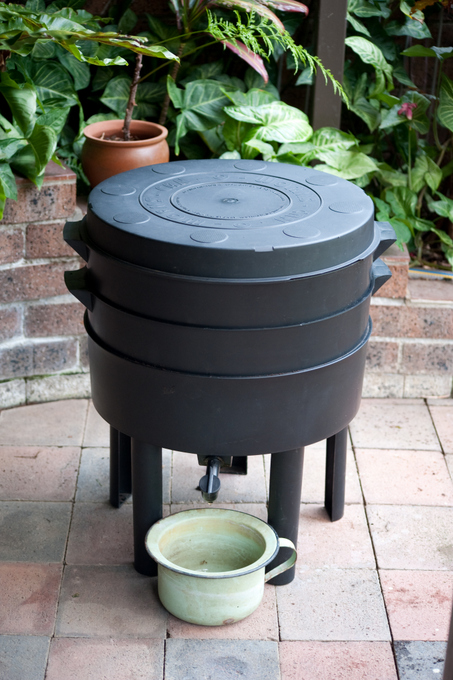
| Photo courtesy of James Kemp. |
Budding vermicomposters can make their own bins or order a kit from a variety of sources. Kits usually include a container, worms, and plenty of instruction and support needed to get comfortable with your new little helpers.
Bins can be made from plastic storage containers where holes have been drilled in the bottom or constructed from scrap wood for a custom-made fit and look. The possibilities are only limited by your imagination, the materials at hand, and the space available.
Do your research.
James Kemp, importer of Australia's Can-O-Worms composter, says a little reading goes a long way when it comes to vermicomposting. They are, he says, living creatures.
“It's important to read the manual, and there is plenty of advice and info on the internet,” he said. “The failure rate is for beginners is fairly high, though” said Kemp. “People don't follow the instructions or they feed them the wrong food."
Worms Eat My Garbage by Mary Appelhof (Flower Press, 2003) is a charming guide to vermicomposting offering tips on building your own to long-term management and problem-solving.
Websites like Kemp’s (Japanese only) and Can-O-Worms offer plenty of useful advice and contact information if a vermicomposter runs into trouble. Other sites such as UNL and OneMore can fill readers in on the joys of vermicomposting.
A Few Things to Keep in Mind
Vermicomposting is relatively easy, but there are a few things to avoid and some best practices, too, to keep worms healthy, happy, and composting.
- Choose the bins location carefully. Worms don’t like extremeness in temperature, so find a slightly sheltered place on the balcony or in a garage for the bin. “You need to be aware of your environment. Worms don't like to get too hot, so if your worm farm is in direct sunlight all day during summer, then they will almost certainly die” warned Kemp.
- Don't use insecticides or sprays around your worm bin. Worms are quite sensitive to chemicals, even those commonly used for cockroaches or dani. If you must use these items, then remove the worms and wait until returning them to the environment.
- Don't use garden soil as bedding for the worms. It may seem logical, but garden soil is an unpredictable medium for the worms.
- Don't be afraid of visitors. After you've had your worm bin established, you may notice other creatures besides the redworms, especially if you keep your bin outdoors. Most of these are beneficial because they help breakdown the materials. These helpful creatures include springtails, sowbugs, pill bugs, and millipedes.
Remember, vermicomposting is a great way to reduce household waste and turn it into something your plants will love. Have fun!